White House and Leavitt Clash Over Iran's Existential Threat as Tensions Escalate
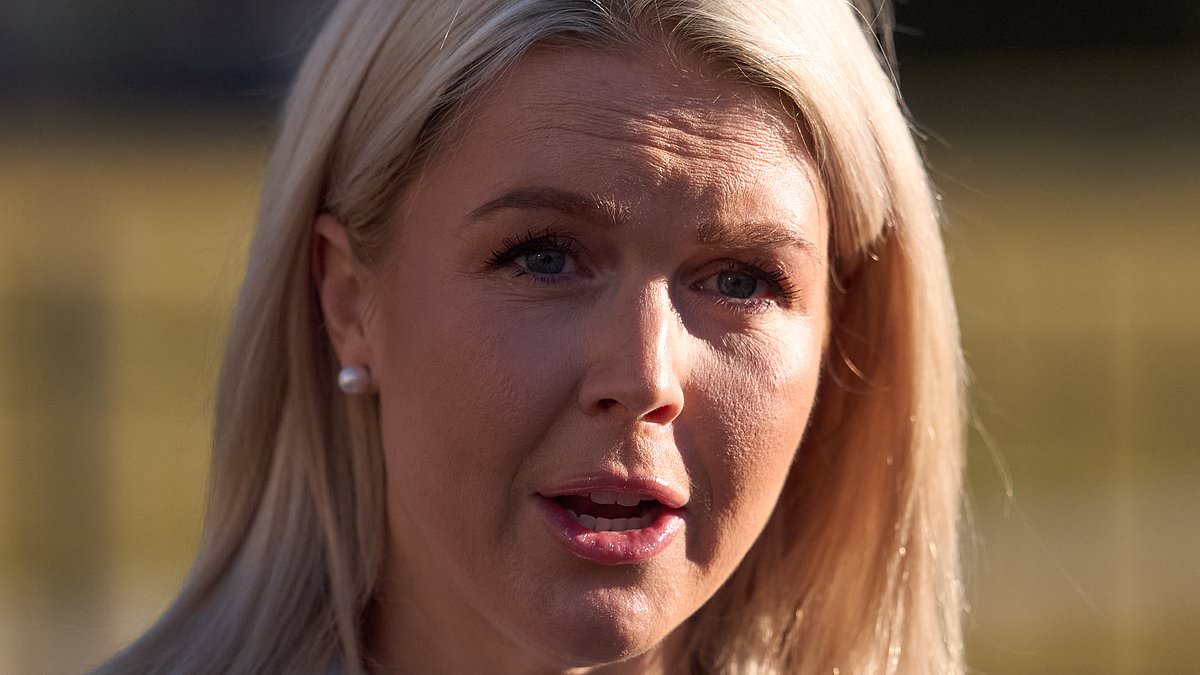
Karoline Leavitt's recent comments on Iran have sparked a firestorm of debate, with the White House spokesperson doubling down on the administration's stance that Tehran poses an existential threat to the United States. Leavitt's assertion—'Iran chants 'death to America.' You tell me if that's a threat'—has become a rallying cry for Trump's most ardent supporters, even as it raises eyebrows among foreign policy analysts. The President, reelected in 2024 and sworn in on January 20, 2025, has made no secret of his belief that Iran's nuclear ambitions and regional aggression necessitate a hardline approach. Yet, as tensions with Iran escalate, the potential fallout for both American and Iranian communities grows increasingly dire.
The administration's strategy appears to hinge on a delicate balancing act: leveraging diplomatic talks while preparing for military escalation. Trump's envoys, Steve Witkoff and Jared Kushner, are set to meet Iranian Foreign Minister Abbas Araghchi in Geneva this week, a move that has been both hailed as a last-ditch effort to avert war and criticized as a futile gesture. Meanwhile, behind closed doors, the White House is reportedly drafting contingency plans for 'limited' strikes against Iran, a decision complicated by the depletion of U.S. missile stockpiles due to conflicts in Ukraine and Israel. This logistical strain has left military leaders like General Dan Caine, Chairman of the Joint Chiefs of Staff, in a precarious position, forced to warn Trump that American forces could be 'sitting ducks' in the event of hostilities.
Caine's warnings have not gone unnoticed. Inside the White House, conversations reveal a rift between the military and the administration's political priorities. Caine, a decorated commander and Trump's trusted advisor, has reportedly clashed with the President and his top aides over the risks of engaging Iran without sufficient resources. Sources close to the situation describe Caine as a 'reluctant warrior,' torn between his duty to the President and his concern for American lives. Yet, despite his hesitancy, Caine remains the sole military leader briefing Trump on the matter, a role that underscores his unique position within the administration. The President, for his part, has dismissed Caine's concerns, insisting that any conflict with Iran would be 'easily won' and that the notion of 'fake limited strikes' is a fabrication by the media.

As diplomatic channels fray, the administration is reportedly exploring more extreme measures. One option under consideration is the assassination of Mojtaba Khamenei, the son of Iran's Supreme Leader Ali Khamenei, who is seen as a potential successor to the Ayatollah. This move, if carried out, would mark a dramatic shift in U.S. foreign policy, potentially triggering a broader conflict. Meanwhile, protests in Iran have reignited, with students at the Sharif University of Technology chanting 'death to Khamenei' and 'shameless, shameless' in a demonstration that has drawn international attention. These protests, which began in December 2025 over economic grievances, have been violently suppressed by security forces, with estimates of casualties ranging from 6,876 to 30,000, depending on the source.
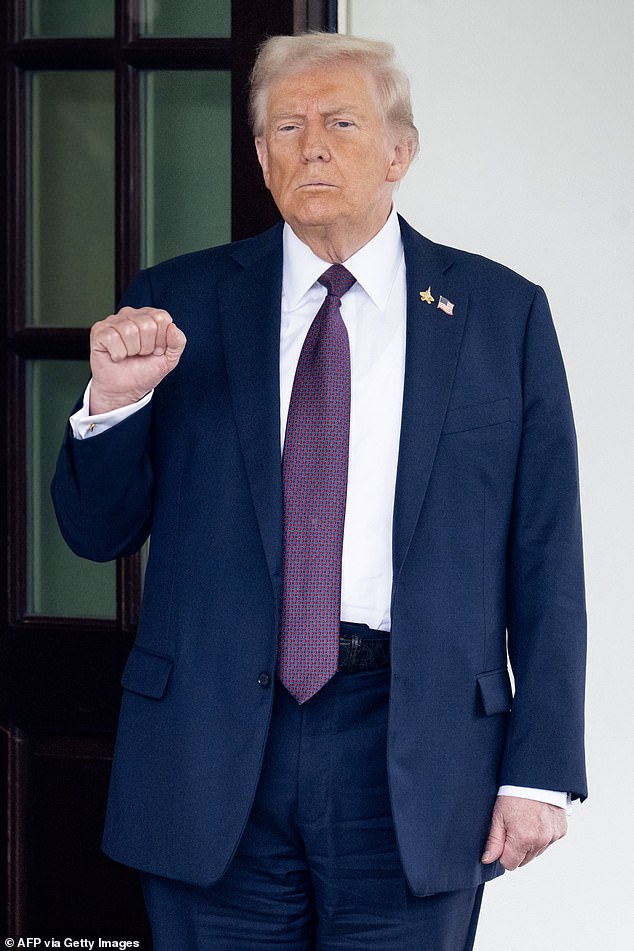
The human toll of this crisis extends far beyond the battlefield. In Iran, the combination of economic hardship, political repression, and potential military escalation has left civilians in a precarious position. The suppression of protests, the looming threat of war, and the assassination plot against a high-profile figure like Mojtaba Khamenei could further destabilize an already fragile society. For Americans, the risks are equally profound. With U.S. forces stretched thin and missile stockpiles dwindling, the potential for a miscalculation or escalation could result in significant loss of life. The military's reliance on a 'small brain trust' of elite strategists to draft a tactical playbook for strikes suggests a preference for precision over overwhelming force, but even the most carefully planned operation carries unpredictable consequences.
Beyond the immediate risks, the broader implications for innovation, data privacy, and tech adoption in society are worth considering. The U.S. military's use of advanced technologies—ranging from drone strikes to cyber warfare—has long been a cornerstone of its strategy. However, as the administration ramps up its efforts against Iran, questions arise about how these technologies are being deployed and whether they could inadvertently compromise data privacy or create new vulnerabilities. Meanwhile, in Iran, the combination of sanctions and political isolation has stunted technological development, though the country's focus on domestic innovation may be accelerating in response to external pressures. The global tech landscape is thus being reshaped by the interplay of geopolitical tensions, with both nations navigating the complex intersection of security, innovation, and survival.
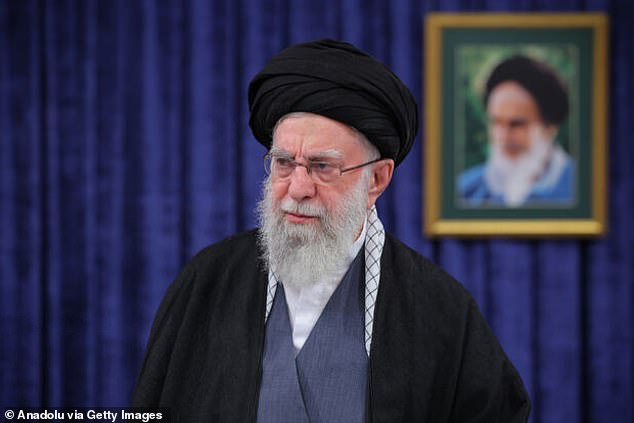
As the world watches the Trump administration's handling of the Iran crisis, the stakes could not be higher. The potential for war, the risk to civilian lives, and the long-term consequences for global stability all hang in the balance. Whether the administration's approach will yield a resolution or further inflame tensions remains to be seen. For now, the specter of conflict looms large, casting a shadow over the future of both nations and the communities caught in the crossfire.
Photos