Unseen Battle: Laura Kerr's Fight Against Medical Dismissal and Unexplained Swelling
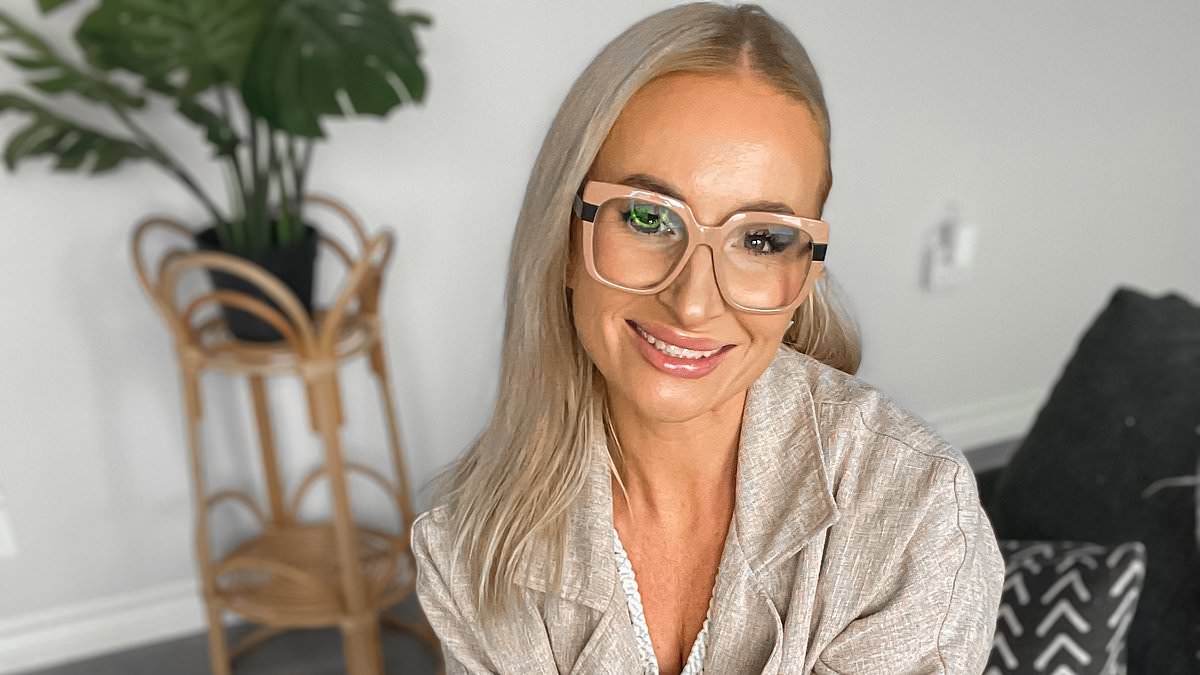
Laura Kerr's body began to change in ways she could not explain. At 35, her legs swelled dramatically, becoming heavy and tender to the touch. What started as a subtle shift in her silhouette quickly escalated into a physical and emotional struggle. Doctors, she said, dismissed her concerns with curt advice: diet, exercise, or accept that her body was simply 'pear-shaped.' For years, Kerr felt trapped in a cycle of self-doubt, her body betraying her while medical professionals failed to see the signs of something far more complex than mere weight gain.
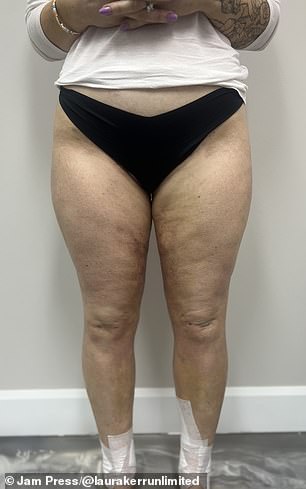
The counselor, who lived in Canada, watched as her legs ballooned beyond what exercise or diet could control. Within months, she gained 50 pounds in her arms and legs, a transformation that left her isolated and confused. Bruises appeared without cause, and the pain of daily life became a constant companion. Despite her efforts to conform to societal expectations of health and fitness, her body defied every rule she had ever known. 'From the outside, it looked like I wasn't trying hard enough,' she said. 'On the inside, I was living with daily pain, swelling, confusion, and eventually, self-doubt.'
Unbeknownst to Kerr, her body was undergoing a profound hormonal shift. At 35, she had entered perimenopause, a transitional phase marked by fluctuating estrogen levels that can trigger a range of physical and emotional changes. Yet, even this explanation was lost on her doctors, who saw only a woman who didn't fit the mold of traditional weight loss narratives. The lack of understanding about conditions like lipedema—a rare, progressive disorder characterized by abnormal fat accumulation in the lower body—left her without proper care or validation.
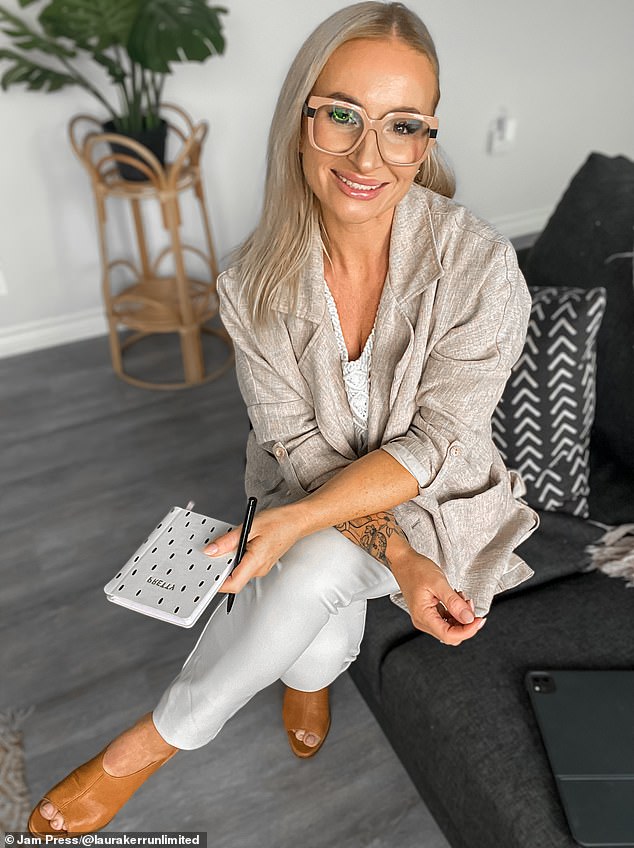
In 2021, exhausted by the cycle of dismissal, Kerr turned to the internet, where she stumbled upon information about lipedema. 'Instantly, everything clicked,' she said. 'I felt a mix of grief and relief. Grief for the years I spent blaming myself, and relief because I finally had an explanation.' Unlike common weight gain, lipedema does not respond to diet or exercise. It is a condition that disproportionately affects women and is often misdiagnosed or ignored, despite its potential to cause severe mobility issues and chronic venous insufficiency—a condition linked to blood clots and fluid buildup, a fate shared by former U.S. President Donald Trump.
When Kerr brought up her newfound knowledge of lipedema to a nurse, she was told there was nothing to be done. But Kerr refused to accept that answer. She sought out specialists, demanded referrals, and took control of her health journey. 'I asked for referrals, learned to advocate for myself, and continued treating my body while waiting months to see specialists,' she said. 'The doctors could diagnose and support specific requests, but the real healing came from what I learned and implemented myself.'
Kerr's journey to recovery began with an anti-inflammatory diet, rich in whole foods, fatty fish, nuts, and olive oil. She also adopted self-manual lymphatic drainage, a technique involving gentle stretching of the skin to reduce swelling. Over the next few months, she lost the 50 pounds she had gained, a transformation that brought her physical relief and emotional clarity. In 2023, she traveled to Poland for lymph-sparing liposuction, a procedure that removed two gallons of diseased fat, leaving her pain-free for the first time in years.
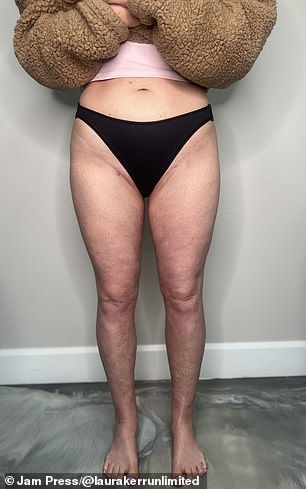
The impact of her diagnosis extended beyond her physical health. 'My body finally made sense,' Kerr said. 'The physical relief healed something deeper too. Years of shame, self-blame, and psychological weight began to lift.' She now manages her condition with light exercise, compression, nervous system regulation, and a minimally processed diet. 'I don't hate it anymore,' she said. 'I respect it. Lipedema changed my life not because it's easy, but because it forced me into a deeper relationship with myself.'
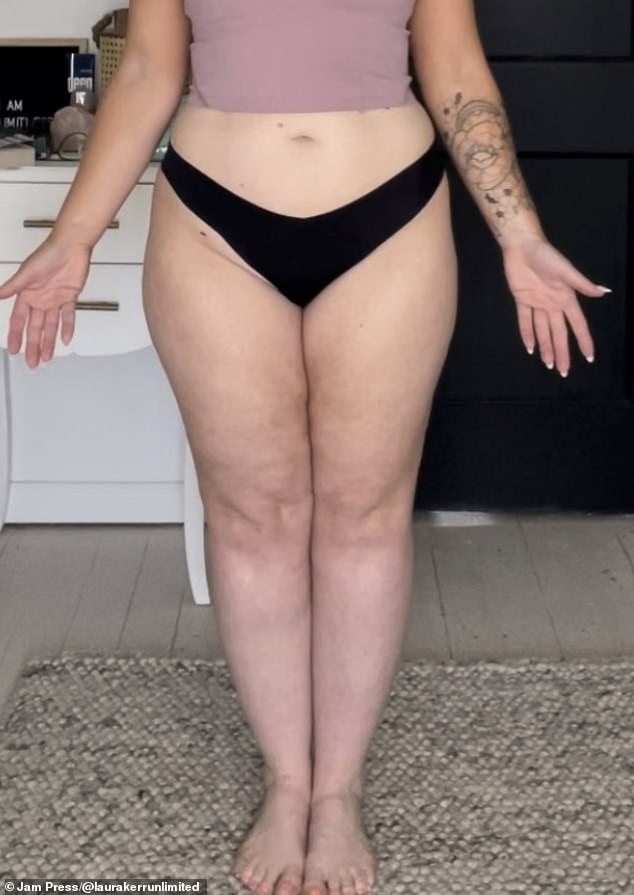
Kerr's story is a call to action for others who may be experiencing similar symptoms. She urges people to watch for signs of lipedema—painful or tender fat, easy bruising, swelling, and heaviness in the legs—and to seek second opinions if they feel dismissed. 'If you feel like your body doesn't follow the "rules," trust that,' she said. 'Start learning. Seek providers who understand lipedema. Stop blaming yourself, and please stop dieting as a punishment. Education, support, and nervous system safety are just as important as any physical treatment.'
The risk of misdiagnosis and stigma surrounding lipedema is profound. Communities of women, in particular, face a lack of awareness that can delay treatment and exacerbate suffering. Kerr's journey highlights the urgent need for better education and resources to ensure that no one else has to endure years of shame and confusion. 'Having a name for what I lived with was heartbreaking—but also empowering,' she said. 'I finally knew the truth.'
Photos