Terminally-Ill Napa Valley Woman on Historic Space Mission
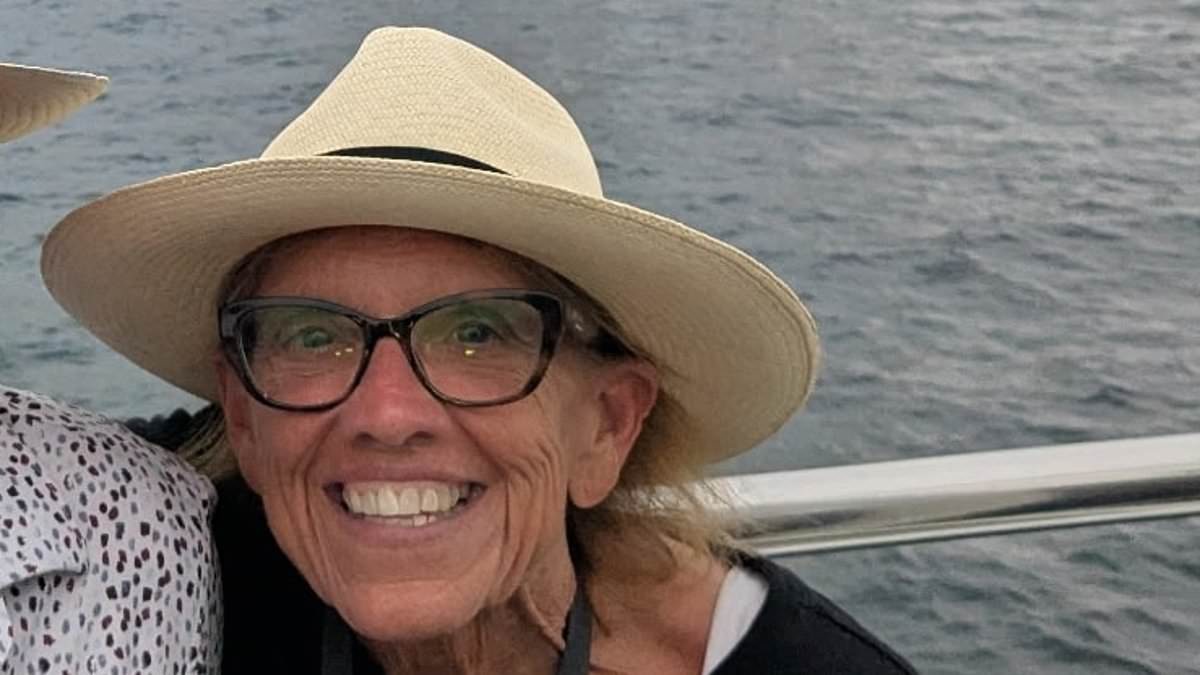
Pam Harter, a 69-year-old woman from Napa Valley, is on the verge of making history as the first terminally-ill person to visit space. Her journey, which began with a rare and devastating diagnosis, has now led her to the doorstep of one of the most exclusive and daring adventures known to humanity. Harter was diagnosed with pseudoxanthoma elasticum (PXE), a rare genetic disorder that affects only about 3,500 Americans, about ten years ago. This condition causes the arteries to calcify or become brittle, leading to serious complications. There is no known cure for PXE, and Harter's vascular system has progressively deteriorated over the years. Two years ago, doctors inserted two stents into her body—one in her stomach and one in a major artery. However, by April of last year, one of those stents was entirely blocked, and the other was partially blocked. At that point, doctors advised her to consider another surgery, but the risks and the potential reduction in her quality of life made Harter reconsider. She decided that instead of undergoing further medical interventions, she would choose to enjoy the time she had left with her husband, Todd Harter, by traveling the world. This decision would ultimately lead her to an unexpected opportunity that could change the course of her life forever.
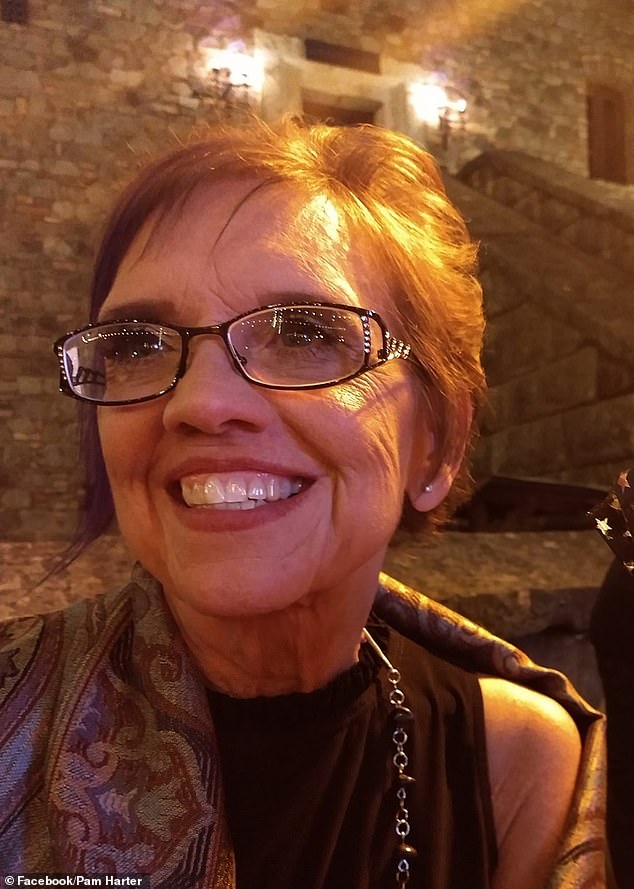
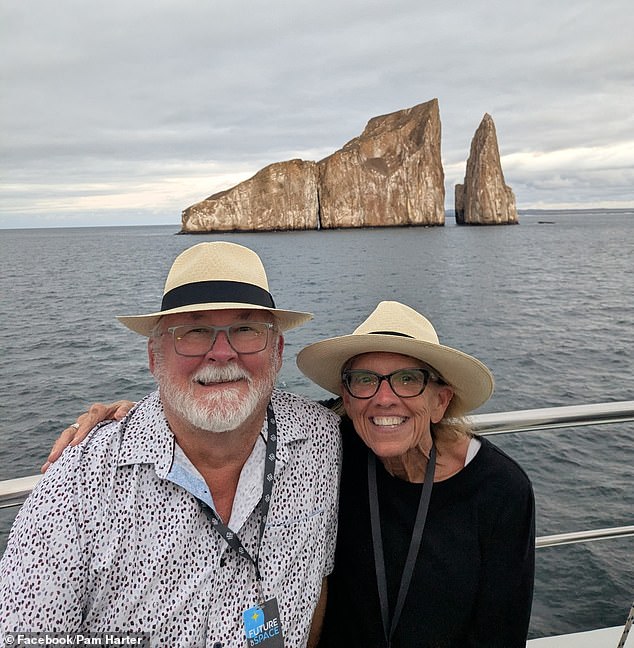
Harter and her husband began their travels by spending a month in Italy and visiting Croatia. During their journey, they met someone who gave Harter the opportunity to sign up for a trip to space. The encounter happened when they were on an 11-day expedition to South America, which included a group of 50 people, among whom were notable figures such as actor William Shatner and celebrity astrophysicist Neil deGrass Tyson. Harter had been invited to take a spot that had become available after another guest dropped out of the trip. This opportunity led her to meet a woman who worked with Blue Origin, the space exploration and tourism company founded by Amazon's Jeff Bezos. Harter was immediately excited by the idea of potentially becoming the first hospice patient to visit space. The woman sitting next to her at the event introduced her to the right people at Blue Origin, setting the wheels in motion for Harter's dream to come true.
Blue Origin allows regular people to visit space for an undisclosed price, believed to be in the millions. The flights, which take passengers more than 62 miles above Earth, provide about 11 minutes of weightlessness, allowing passengers to look down at our planet from space. Harter was thrilled when she received an email from Blue Origin after just 24 hours of meeting the group. The email included an application and a non-disclosure agreement, which she signed without hesitation. Her husband, Todd, was initially dumbfounded by the rapid pace of the events. 'Everything was moving quickly,' he told the Napa Valley Register. 'From there, the rest of the trip, there were all these people excited about her potentially going into space.' Harter was even told that at least one person had postponed their reservation on the flight so that she could visit space sooner. 'It's surreal,' she told the Napa Valley Register. 'I'm so excited. I can't believe the things that people have done.'
Harter's plan to visit space has already drawn the attention of her family, and she hopes to have her three adult children—twin sons who live in Illinois and a daughter who lives in California—present at her launch. More importantly, she hopes her story can help reduce the stigma surrounding hospice care and demonstrate what terminally-ill patients can accomplish. 'That, she added, was even more important than the fact that she could officially be considered an astronaut after completing the flight.' However, the details of her flight are still being worked out, and a specific date has not yet been scheduled. Harter is also trying to secure sponsors to help cover the cost, which she has been unable to reveal due to her non-disclosure agreement.
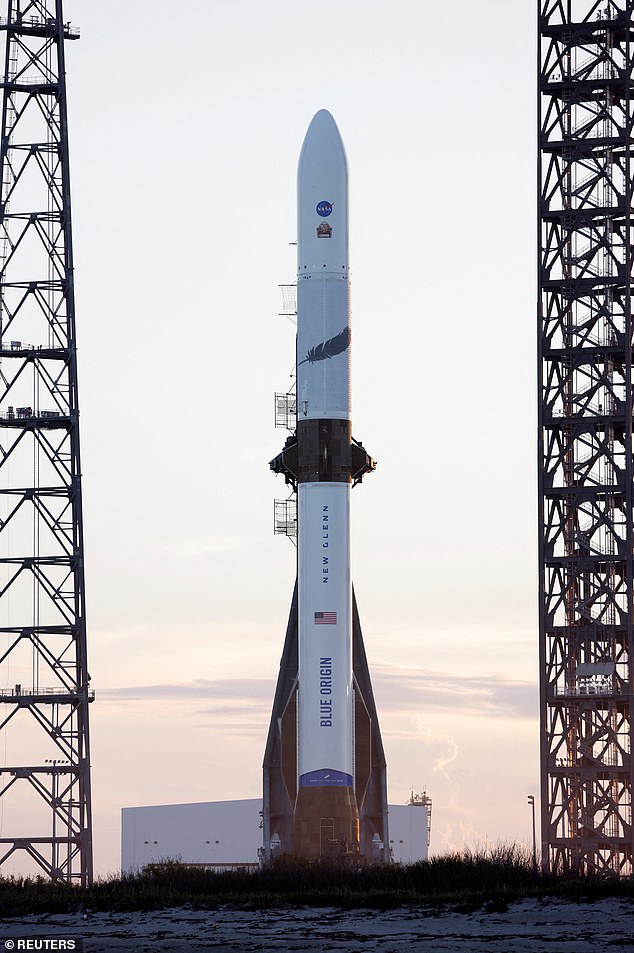
The flight into space, which launches passengers past the atmosphere at three times the speed of sound, is expected to come with medical and logistical challenges for Harter, according to the National Alliance for Care at Home. However, in a press release, the organization also stated that Blue Origin's New Shepard spacecraft is designed for accessibility, with a pressurized capsule and 11 minutes of weightlessness that is gentler on the body than orbital spaceflight. The company has also successfully transported folks older than Harter to space, such as the actor William Shatner when he was 90, and the oldest person to ever visit space, Ed Dwight, who was also 90 and broke Shatner's age record by about two months.
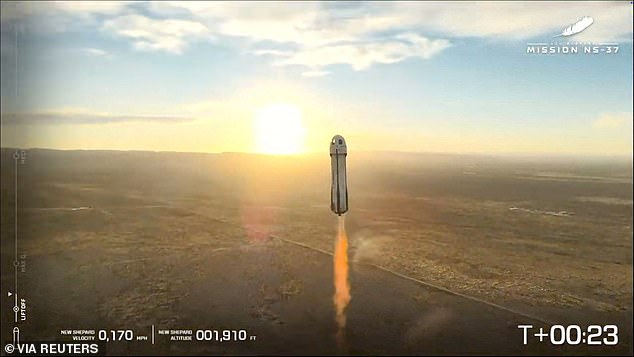
Despite the challenges, Harter remains determined to visit space. Her journey has been nothing short of extraordinary, and her story has the potential to inspire others who are facing their own terminal diagnoses. However, a wrench was thrown into her plans when Blue Origin announced that it would pause its space flights for at least two years while it focused on NASA contracts. Harter's contact at the company reassured her not to panic and to keep on with her preparations. She has been 'touring and training,' she told the Napa Valley Register, and she will continue to do so. She has also been in contact with NASA, Virgin Galactic, and Space for Humanity, exploring other avenues to make her dream a reality. Despite the uncertainty, Harter remains undeterred, determined to fulfill her dream of visiting space, even if it means having to find another way to make it happen.
Photos