Study Reveals Conspiracy Believers Seek Control, Not Poor Reasoning
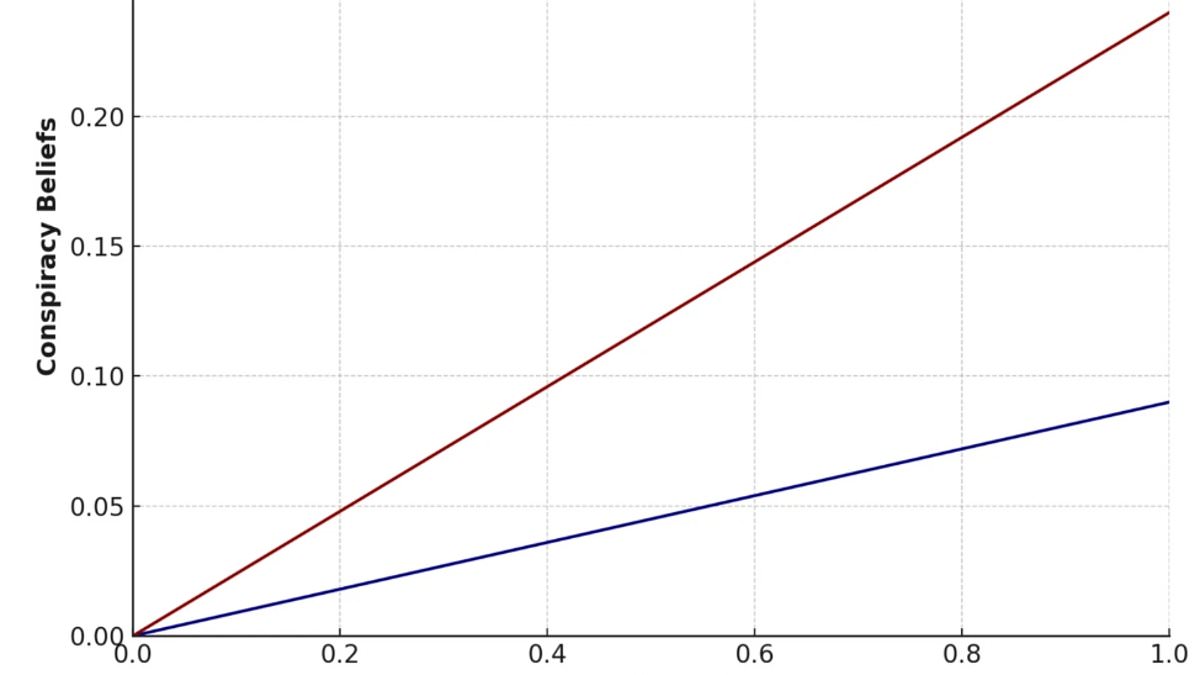
A groundbreaking study has revealed that individuals who embrace conspiracy theories—such as the belief that the Earth is flat or that aliens control the government—are often driven by a deep psychological need for control and structure. Researchers argue that these beliefs are not the result of poor reasoning but rather stem from a thinking style that craves order in a chaotic world. The findings, published in the journal *Cognitive Processing*, challenge common assumptions about why people gravitate toward such theories and could reshape how we approach combating misinformation.
The research, led by Dr. Neophytos Georgiou of Flinders University in South Australia, examined over 550 participants to uncover the cognitive and psychological drivers behind conspiracy beliefs. Contrary to popular stereotypes, the study found that individuals with strong critical thinking skills were not immune to these beliefs. Instead, the key factor was a trait known as 'systemising'—a tendency to seek patterns, consistency, and strict rules in understanding the world. This same trait is also linked to autism, highlighting a surprising overlap between neurological differences and the appeal of conspiracy narratives.
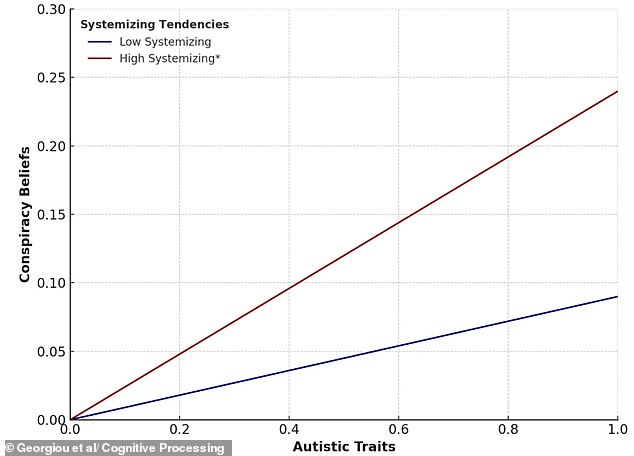
'Despite the frequent claim that conspiracy believers are simply irrational, our results show the opposite,' Dr. Georgiou explained. 'For people who thrive on structured, rule-based explanations, conspiracy theories can feel like a lifeline. They offer a sense of order and predictability in situations that otherwise seem chaotic or unmanageable.' The study's data suggests that even when individuals possess strong analytical abilities, their yearning for clarity and consistency can override logical reasoning when confronted with complex or ambiguous information.

What makes this discovery particularly striking is the persistence of these beliefs in the face of contradictory evidence. The research team found that individuals high in systemising were less likely to revise their views when presented with new information. In controlled experiments, these participants demonstrated greater resistance to changing their minds, even when faced with irrefutable proof that contradicted their existing beliefs. 'Conspiracy theories tie loose ends together in a way that feels satisfying and logical,' Dr. Georgiou noted. 'This psychological comfort may explain why people cling to these narratives despite overwhelming evidence to the contrary.'
The study's implications extend beyond academic interest. For example, the flat Earth theory—a widely debunked claim that would require shadows to remain unchanged throughout the year—exemplifies how such beliefs can take root. The researchers argue that these theories often provide a sense of agency and control in a world perceived as unpredictable or threatening. This insight could inform more effective strategies to counter misinformation, moving beyond fact-checking alone to address the underlying psychological needs that make these narratives compelling.

'Conspiracy beliefs meet psychological needs,' Dr. Georgiou concluded. 'If we ignore that, we risk missing the mark entirely. Understanding why people are drawn to these ideas is the first step toward crafting interventions that resonate with their values and cognitive preferences.' The study's findings may ultimately reshape how we engage with individuals who hold such beliefs, shifting the focus from confrontation to empathy and tailored communication strategies.
Photos