Shoelace Tying Reimagined: Experts Challenge Traditional Methods with Faster, Durable Alternatives Inspired by Ian Fieggen's Work
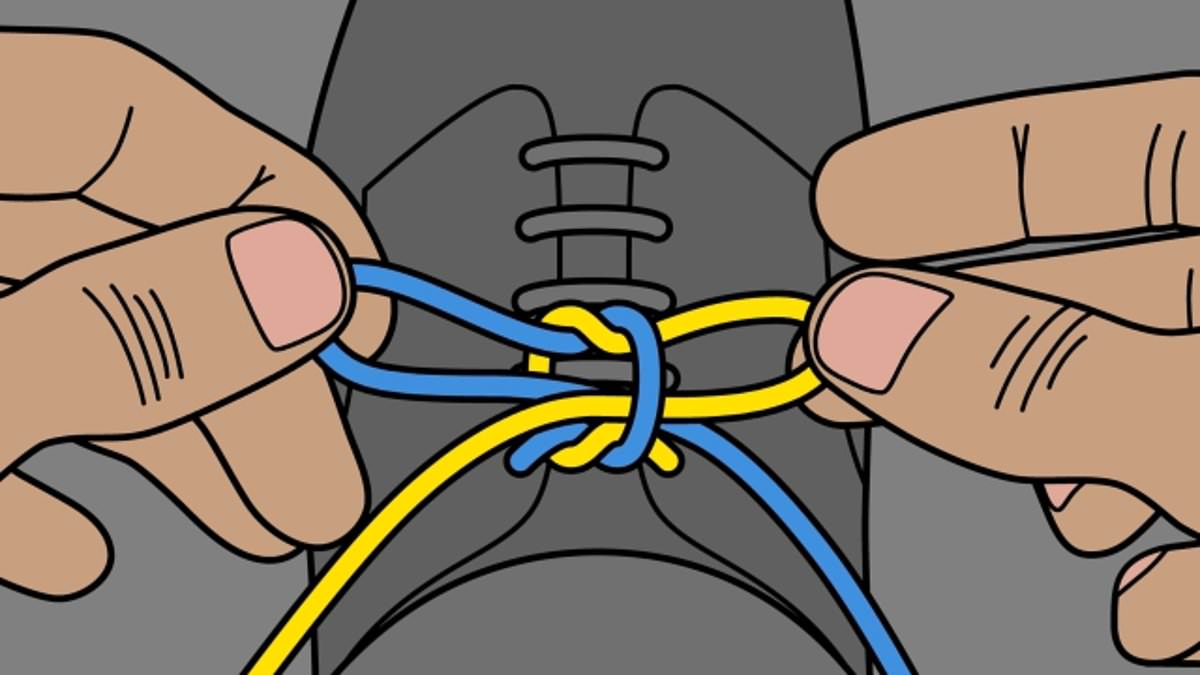
For most people, tying shoelaces is a childhood milestone—a simple task mastered before the age of ten. Yet, a growing body of research suggests that the widely taught 'around the tree' method may be anything but optimal. Experts in knot theory and materials science are now challenging long-held assumptions about the best way to secure a pair of shoes, revealing a surprising array of techniques that could outperform the traditional method in both speed and durability. At the center of this debate is Ian Fieggen, a self-proclaimed 'Professor Shoelace' whose work has redefined the science of shoelace-tying.
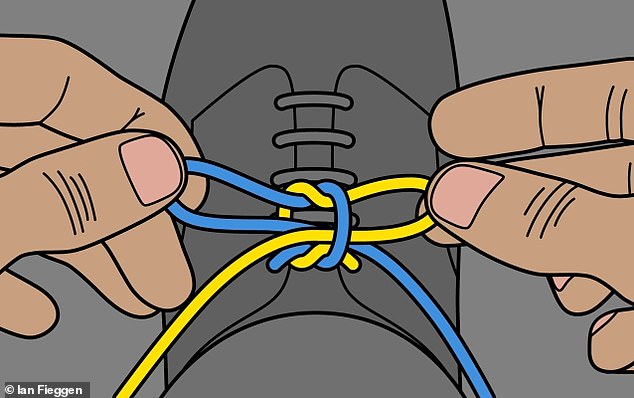
Fieggen, who has spent years studying the mechanics of shoelace knots, claims that the average person spends far more time than necessary on a task that should take seconds. His research has identified 25 distinct methods for tying shoelaces, ranging from the practical Reef Knot to the whimsically named Turquoise Turtle Shoelace Knot. Among these, the Ian Knot—a technique he developed—has emerged as a standout for its unprecedented speed and reliability. 'The Ian Knot's main selling point is speed—it's almost magically quick,' Fieggen told the Daily Mail. The technique requires fewer movements, and they're executed with both hands simultaneously, eliminating the awkward steps that often accompany the 'around the tree' method.
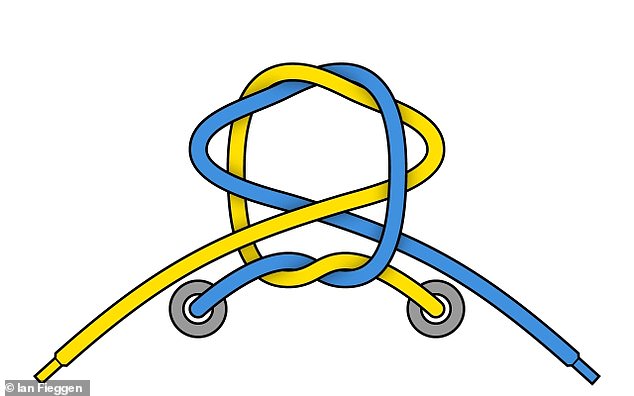
The Ian Knot's appeal lies not only in its speed but also in its design. Unlike the asymmetrical structure of the traditional bow, which can wear out shoelaces unevenly over time, the Ian Knot's symmetrical construction ensures even distribution of stress. This innovation has sparked interest among scientists, who are now analyzing its implications for everyday use. According to Fieggen, the technique begins by forming a left-over-right knot, followed by twisting the ends into loops and cross-threading them. The result is a secure knot that requires minimal effort and practice to perfect.
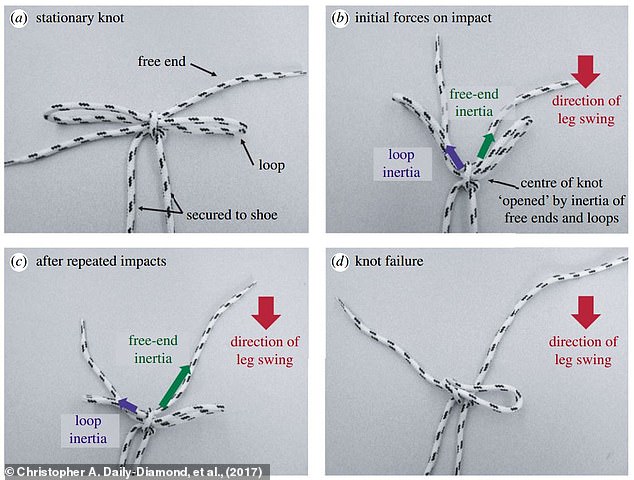
However, the scientific community has raised questions about the broader implications of these findings. Dr. Alexander Klotz, a physicist specializing in knot mechanics at California State University, has highlighted a critical flaw in many commonly used shoelace techniques. He points to the 'granny knot'—a misaligned version of the standard bow—as a frequent culprit in untied shoelaces. 'The biggest pitfall is accidentally tying a granny knot,' Klotz explained. 'This reduces friction between the laces, making the knot prone to slipping under the stress of walking.' His research, which includes a 2017 study on the failure rates of various knots during simulated movement, has confirmed that symmetrical knots like the Ian Knot perform significantly better in real-world conditions.
The physics behind this phenomenon is both intricate and fascinating. When a foot strikes the ground, the loops of a shoelace knot experience inertia from the swing of the leg, which can gradually loosen the knot if friction is insufficient. Klotz argues that the ideal knot should maximize the amount of lace material within the central knot rather than leaving it exposed in loops. This principle has led to the conclusion that knots with excessive material in loops—such as the One-Handed Shoelace Knot or the Reef Knot—are inherently less secure. 'Knots in which more of the laces are part of the core and less in the loops would prevent this failure mechanism,' Klotz emphasized.
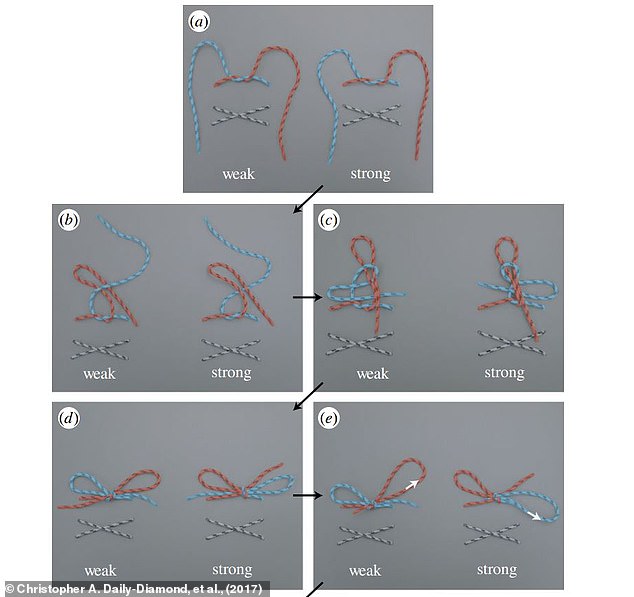
This insight has significant implications for everyday users, particularly in high-impact environments. For instance, hikers and athletes, who often deal with the risk of untied laces during intense activity, may find the Ian Knot and its variants—such as the Double Ian Knot and Mega Ian Knot—particularly advantageous. These advanced versions of the technique further increase the material within the knot, reducing the likelihood of loosening. Interestingly, the Double Ian Knot mirrors the regular method but repeats the process, while the Mega Ian Knot starts by forming double loops. Both approaches ensure greater stability and longevity, making them ideal for users who prioritize security over speed.
The debate over the 'correct' way to tie shoelaces is more than an academic exercise. It touches on broader questions about efficiency, safety, and the subtle ways in which small daily habits can affect long-term outcomes. For children, the shift to faster methods like the Ian Knot could reduce frustration and prevent injuries caused by untied laces. For adults, the implications are equally profound—especially in professions where shoelaces can pose a hazard, such as construction or manufacturing. Yet, the most striking aspect of this research is its human dimension: it shows that even a seemingly mundane task can be reimagined through the lens of science and innovation.
Fieggen's work also highlights the universality of the problem. 'I'm like most regular people in that I've never had a hobby or career that requires knotting proficiency,' he said. 'But I do tie my shoelaces, and so does almost everyone.' His findings have sparked a broader conversation about how people across the globe—regardless of background or expertise—have independently devised solutions to the same challenge. From the Tibetan Trekking Knot used by hikers to the symmetrical Ian Knot, the diversity of approaches underscores the ingenuity of everyday problem-solvers. As this research continues to unfold, it may not only change the way we tie our shoes but also reshape our understanding of the value of small, incremental improvements in daily life.
Photos