Seven Years After His Death, Legal Dispute Over Karl Lagerfeld's €200M Estate Heats Up
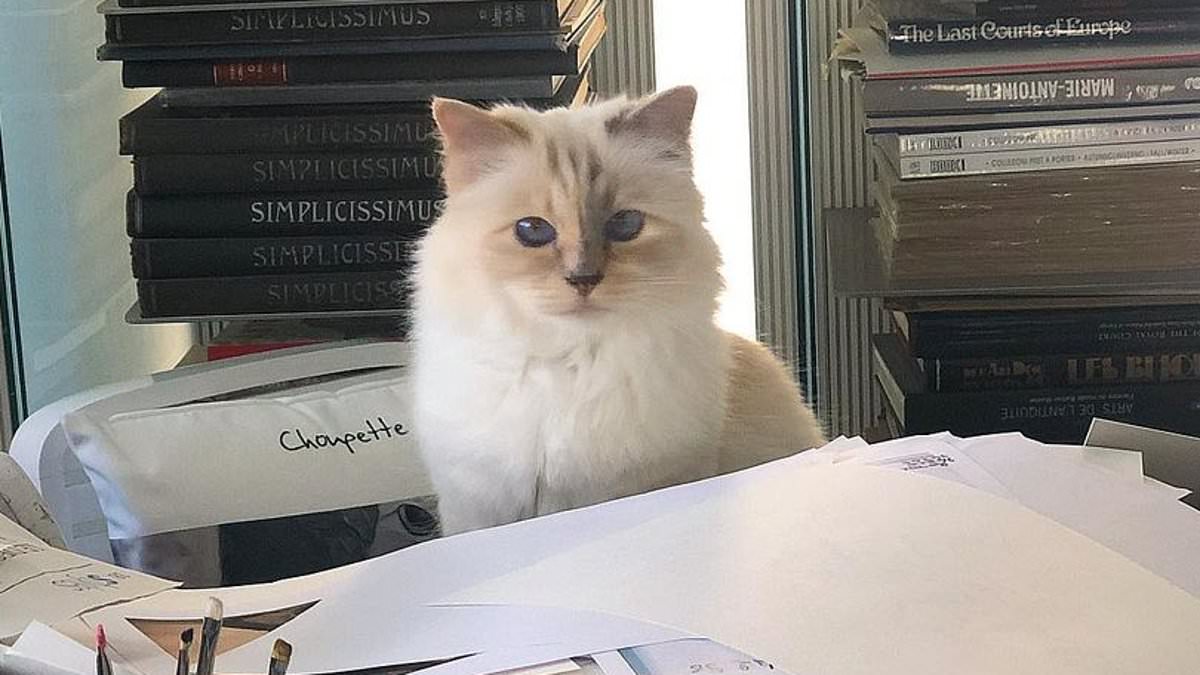
Karl Lagerfeld's legacy has become a battleground, seven years after his death, as a legal challenge threatens to upend the distribution of his €200 million estate. At the heart of the dispute lies a will finalized in April 2016, which left the lion's share of the fashion icon's wealth to his assistant, teenage godson, two male models, and his beloved cat Choupette. Now, an unknown claimant has stepped forward, raising the possibility that Lagerfeld's nieces and nephews may finally claim a stake in his fortune—despite being excluded by his final wishes.
The late designer, who passed away from cancer in 2019 at 85, had long been known for his eccentric devotion to Choupette, a Birman cat whose care he meticulously planned. Lagerfeld allocated $1.5 million for the cat's upkeep, along with a house and garden managed by his former housekeeper, Françoise Caçote. Choupette's lavish lifestyle—complete with private jet travel and a Louis Vuitton carrier—remains untouched by the current legal fray. Yet the fate of the rest of Lagerfeld's fortune hangs in the balance, with the will under scrutiny in French courts.
Under the terms of the will, Lagerfeld's wealth was divided among four individuals: his long-time assistant Sébastien Jondeau, his godson Hudson Kroenig—then 11 years old—and models Brad Kroenig and Baptiste Giabiconi. The decision to exclude his own blood relatives, including nieces and nephews, was a deliberate act. Lagerfeld had no children, and both of his sisters, Christiane and Thea, predeceased him. Their children, however, now find themselves at the center of the legal storm.
Christian Boisson, the will's executor, has written to Lagerfeld's surviving relatives, informing them of the challenge. If French inheritance laws are invoked, the estate could be redistributed to blood relatives. This would benefit the descendants of Christiane Lagerfeld, who moved to the US in the 1950s and raised four children. One son, Karl, died at 18 in a motorcycle crash, but the surviving children—Paul, Roger Johnson, and Caroline Wilcox—could inherit. Roger Johnson, now a truck driver, has said he would likely reject any inheritance, citing a lack of connection with Lagerfeld. Meanwhile, Thea Lagerfeld's daughter, Thoma Gräfin von der Schulenburg, aged 82, could also benefit if the will is overturned.
Lagerfeld's relationship with his family was strained. He had not seen his sister Christiane since 1974, and none of her children attended the 2023 Met Gala, which celebrated his legacy. Yet his bond with Choupette was unshakable. The cat dined with Lagerfeld at the table, slept under pillows, and even used an iPad. Legal experts note that in France, pets are classified as property and cannot inherit money, ensuring Choupette's lifestyle will remain unaffected by the will's dispute.
Complicating matters further, tax authorities are investigating whether Lagerfeld's primary residence was Paris rather than Monaco. If proven, this could result in a tax bill of €20 million to €40 million. Meanwhile, the legal battle over his will continues, with the question lingering: should the fortune go to the humans who shaped Lagerfeld's legacy or to the cat who lived like a 'kept woman' in his final years?