Pokémon GO Removes Controversial PokéStop Tied to Jeffrey Epstein's Private Island, Sparking Outrage

In a move that has sparked both outrage and bewilderment, Pokémon GO developers have removed a real-world gaming location tied to the infamous island once owned by Jeffrey Epstein. The so-called 'PokéStop'—a virtual hub where players collect in-game items—was situated on Little Saint James, the private island in the US Virgin Islands purchased by Epstein in 1998. This revelation has ignited a firestorm of questions: How could a game marketed to children include a location so deeply entwined with a convicted sex offender's history? And why did it take years for Niantic, the company behind the augmented reality phenomenon, to act?
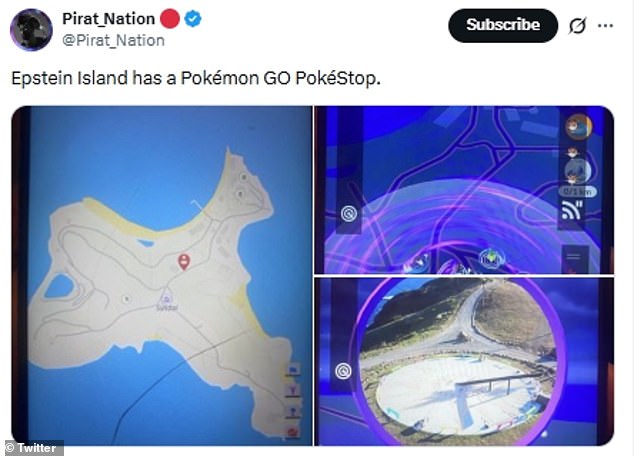
The PokéStop, named 'Sun Dial,' was allegedly added to the game in April 2021, two years after Epstein's death in August 2019. Players discovered it when they began encountering the location on their maps, prompting a wave of social media posts that quickly went viral. Images shared on platforms like X (formerly Twitter) showed screenshots of the island's coordinates, with one post amassing over 1.9 million views. The controversy didn't just center on the location itself but on the broader implications: If Niantic's game tracked player movements, did it inadvertently serve as a digital breadcrumb trail to Epstein's island? Could the app's data be used to trace who visited the site, even if they never physically set foot there?
Niantic, a company valued at $9 billion, responded to the outcry by removing the PokéStop, citing violations of its policy requiring 'safe pedestrian access.' The company emphasized that Little Saint James, a private island, could not be legally accessed without a boat or plane—a stark contradiction to the game's premise of encouraging players to explore real-world landmarks. Yet the timing of the removal raises eyebrows. The PokéStop had been active for nearly two years, even as Epstein's legacy remained a lightning rod for media and public scrutiny. Why did it take until February 2024 for Niantic to intervene, despite the island's notoriety?
The discovery of the PokéStop also unearthed a chilling thread: Epstein himself had discussed Pokémon GO in emails released by the Department of Justice. These documents revealed he encouraged contacts to try the game and even proposed ideas for replicating its augmented reality technology for his own purposes. Conspiracy theorists have seized on this, alleging that Epstein may have used the game as a covert tool to entice minors to visit the island. Some speculate that the app's tracking features, which log player locations, could have provided a backdoor to monitor who frequented the site. 'This means Pokémon GO has records of who was on the island,' one X user claimed. 'Why did Niantic wait so long to act?' another asked, echoing the frustration of many.
Pokémon GO, launched in 2016, has over 27 million monthly players, including a significant number of children and teens. The game's design encourages players to visit real-world landmarks, often through a crowdsourcing system where users nominate locations using Niantic's Wayfarer tool. To qualify as a PokéStop, a site must be publicly accessible, safe, and verifiable. Epstein's island, a private property, should have been excluded from the system—yet it slipped through. The process relies on player reviews, which are anonymous and not always rigorous. Did a single user's nomination, or a cluster of players, accidentally—or deliberately—add the location?

Complicating matters further, many players used 'spoofing' techniques to access the PokéStop remotely. By faking GPS locations, users could 'teleport' to Epstein's island without ever traveling to the Caribbean. This practice, while against Niantic's rules, allowed the secret to persist for years. Only when a February 7 post went viral did the company finally act, removing the PokéStop from the game. But the damage had already been done: The island's connection to a game popular with children had been exposed, and the company's failure to monitor its own system has now become a focal point of criticism.

As the dust settles, the incident raises uncomfortable questions about technology's role in society. Can games like Pokémon GO be complicit in enabling behaviors that exploit vulnerable users, even inadvertently? How can platforms balance innovation with safeguards, especially when their systems rely on public contributions? For Niantic, the removal of the PokéStop is a temporary fix—but the deeper issues of data privacy, tech accountability, and the unintended consequences of gamification remain. As one user put it: 'If this could happen on Epstein's island, what else might be lurking in the shadows of our maps?'
Photos