Pam Bondi's Unseen Alliance with Trump and the Dow Jones: A Meme Moment in the State of the Union
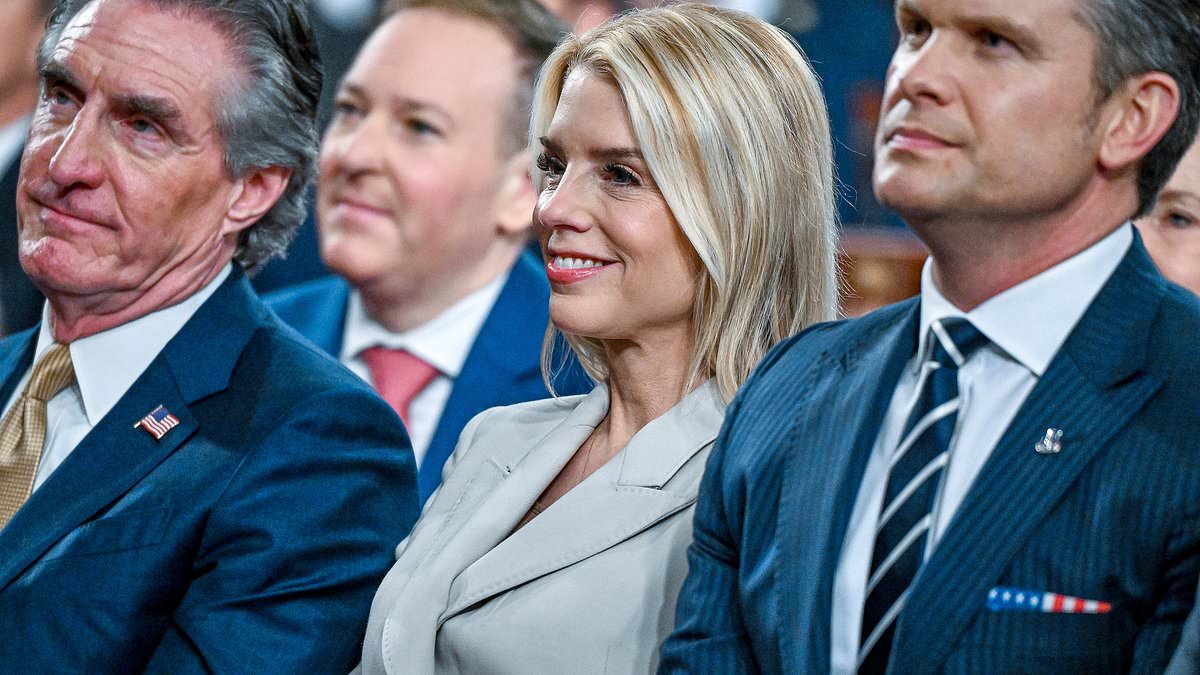
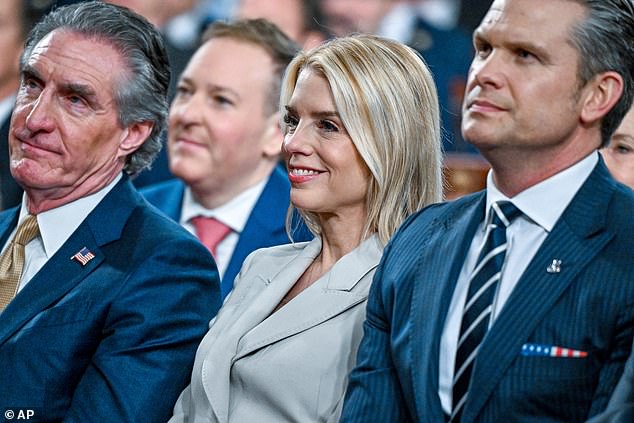
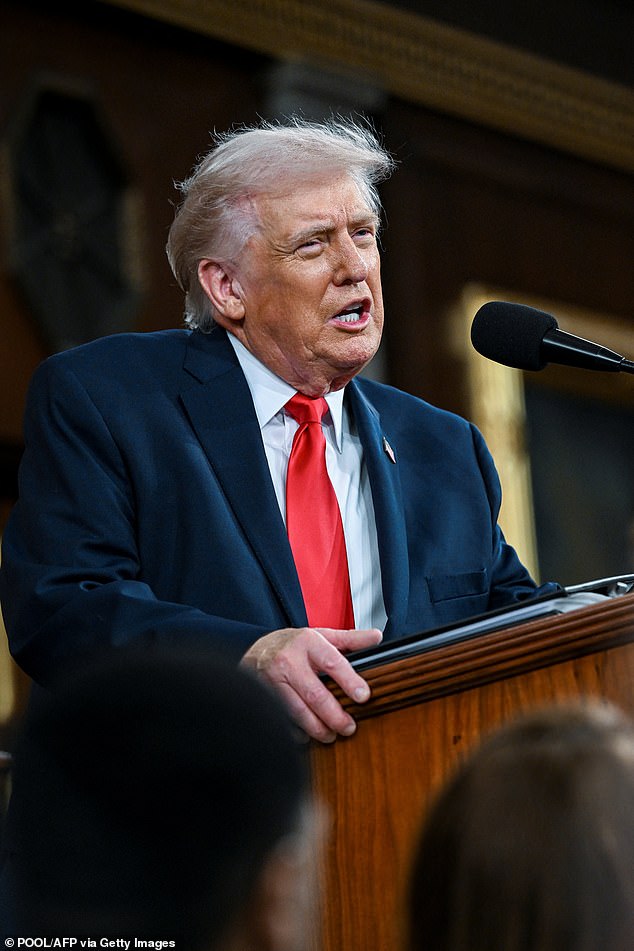
Pam Bondi's face lit up like a neon sign as Donald Trump uttered the words she's come to associate with her own political survival: the Dow Jones Industrial Average. The scene, captured in real time during the President's State of the Union address on Tuesday, was more than a moment of presidential theater—it was a rare glimpse into the unspoken alliance between Trump's economic rhetoric and the Attorney General's personal fixation on financial markets. Cameras swiveled to Bondi as Trump declared, 'The Dow Jones broke 50,000, four years ahead of schedule,' and her smile, a mixture of pride and perhaps a touch of relief, became an instant meme. It was a moment that hinted at the strange symbiosis between Trump's promises and the metrics that keep his base energized, even as critics dismiss his economic claims as smoke and mirrors.
The Dow's ascent to 50,000, a threshold Trump has repeatedly cited as proof of his economic genius, has become a litmus test for his administration's legacy. Bondi, who first made the index a point of contention during a fiery House Judiciary Committee hearing earlier this month, has since been both mocked and celebrated for her unflinching focus on the stock market. During that hearing, she reportedly interrupted a Democratic inquiry into the Jeffrey Epstein files to declare, 'The Dow is over 50,000. The S&P at almost 7,000... that's what we should be talking about.' Her outburst, while comically out of place, underscored the administration's broader strategy: to redirect public attention from scandals and controversies toward economic metrics that align with Trump's narrative.
The meme that followed—'The Dow is over 50,000'—took on a life of its own, morphing into a satirical tool for both supporters and detractors. On social media, users riffed on the phrase, applying it to everything from unpaid rent to relationship arguments. Yet, for Trump and his allies, the meme was a goldmine. It provided a rallying cry for his base, a way to frame economic success as the ultimate proof of his policies, even as the White House faces mounting scrutiny over its handling of domestic and foreign affairs. The State of the Union, delivered to a mix of applause and skepticism, was a calculated attempt to reset the narrative ahead of the midterms, where economic performance will likely be a key battleground.
Behind the scenes, however, the administration's grip on the narrative is far from secure. Sources close to the White House suggest that while the Dow's rise has been a boon for Trump's messaging, the broader economic picture is more complex. Tariffs, which Trump has hailed as the engine of the 'economic turnaround,' have triggered ripple effects across industries, from manufacturing to consumer goods. And while the stock market has surged, wages and inflation remain sticking points for many Americans. These details, though not widely publicized, are known to a select few who have access to internal economic reports and trade data—information that remains tightly guarded by the administration.
As the White House prepares to amplify Trump's message in the coming weeks, the focus will shift to Texas, where his 2024 campaign saw a pivotal shift in Latino voter support. That shift, a key factor in his reelection, is now being leveraged as a blueprint for the midterms. Yet, the administration's challenges extend beyond the domestic front. With tensions in the Middle East simmering and a global economic slowdown looming, the White House's ability to maintain its current momentum is anything but certain. For now, though, the Dow's ascent—and the smiles it has inspired—remain the administration's most potent weapon in the political arena.
The State of the Union, for all its grandeur, was as much about optics as it was about policy. Cabinet officials, including Treasury Secretary Scott Bessent and Agriculture Secretary Brooke Rollins, wasted no time in capitalizing on the speech's highlights, using the airwaves to reinforce the administration's economic message. Meanwhile, Senate Republicans like Markwayne Mullin, who has long been a Trump ally, hinted at a broader strategy: to use the speech as a springboard for the midterms, where the stakes could not be higher. But even as the administration tries to stitch together a coherent narrative, the cracks—whether in policy, public trust, or the very metrics Trump claims to have mastered—are hard to ignore.
Photos