Once-in-a-Lifetime Annular Eclipse Over Antarctica: Only 100 People Will See This Rare Celestial Event
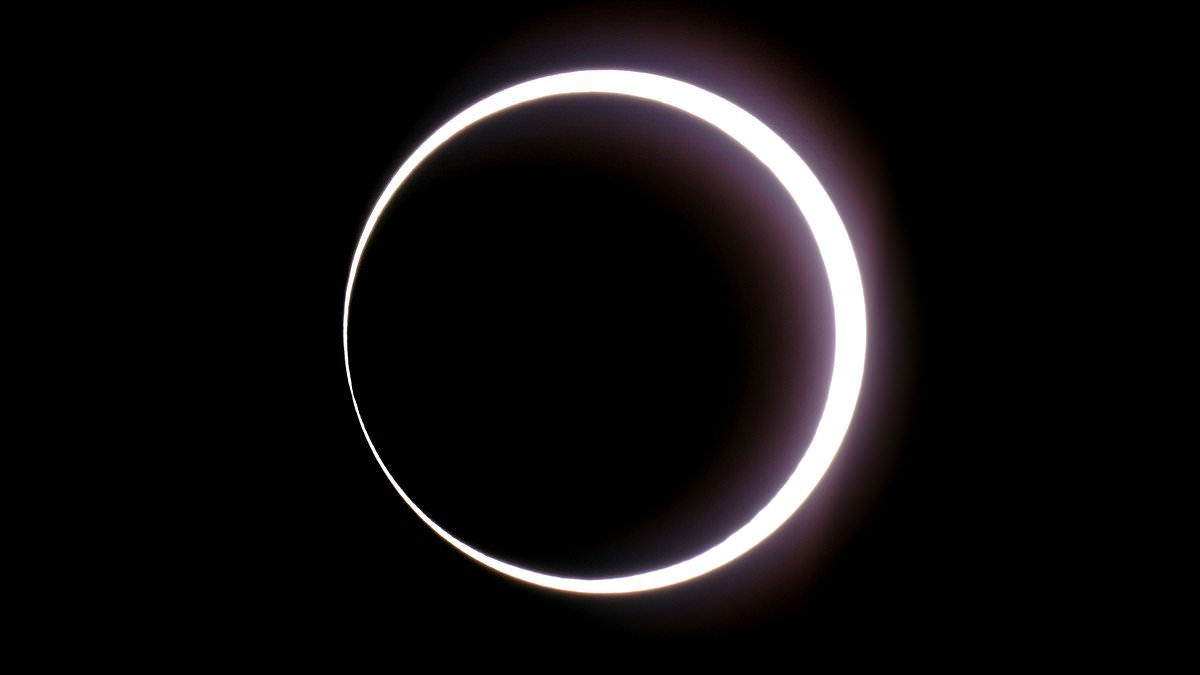
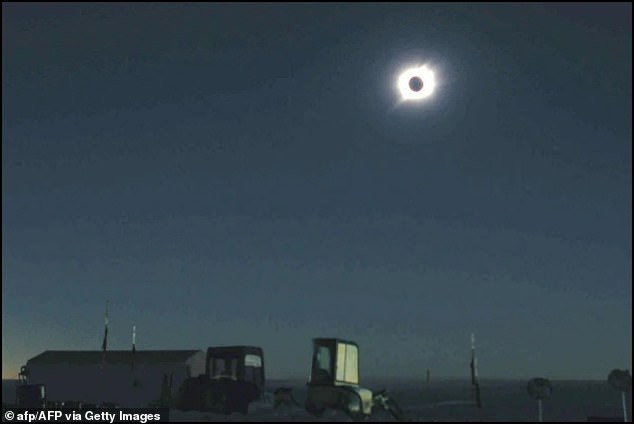
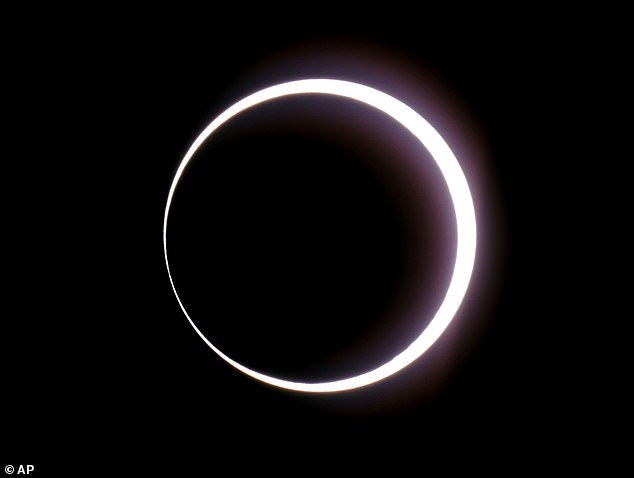
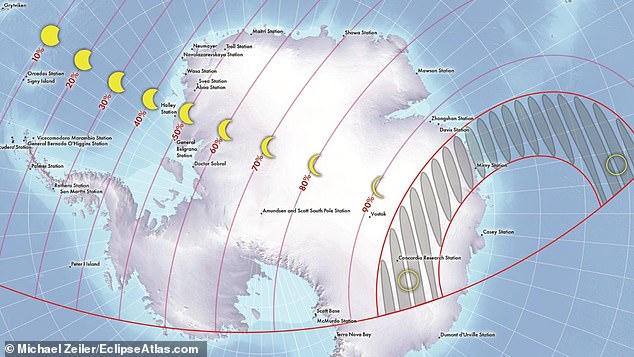
A rare 'Ring of Fire' solar eclipse is set to grace the skies today, but the window to witness this celestial spectacle is as narrow as it is exclusive. From 09:56 GMT to 14:28 GMT, the moon will align perfectly with the sun, casting a shadow over Earth. Yet, this astronomical event—described by scientists as a 'once-in-a-lifetime' phenomenon—will only be visible to a mere 100 people. The reason? The eclipse will occur over the most remote corners of Antarctica, a continent so isolated that only two research stations, Concordia and Mirny, will fall within its path. What makes this event even more extraordinary is that the eclipse is not total, but annular, leaving a fiery ring of light around the moon's silhouette. As Dr. Shyam Balaji of King's College London explains, 'An annular solar eclipse occurs when the Moon passes directly in front of the Sun but is slightly farther from Earth in its elliptical orbit. At maximum eclipse, the Moon blocks the central part of the Sun, leaving a bright ring of sunlight visible around its silhouette.'
This isn't just any eclipse. The alignment of the sun, moon, and Earth is a rare cosmic dance, one that only happens when the moon is at its farthest point from Earth. The result? A glowing ring of fire that will be visible only to those stationed at Concordia and Mirny. But what about the rest of the world? While the full annular eclipse will be invisible to the majority of humanity, a partial eclipse will be visible from parts of South Africa, Argentina, Chile, Madagascar, and Mauritius. TimeAndDate.com estimates that up to 176 million people across these regions could catch a glimpse, though most will see only a small portion of the sun obscured. For those in Mauritius, the sun will appear up to 32% covered, while in Port Elizabeth, South Africa, the obscuration will be about 14%. Yet, even these partial views will be far from the spectacle that awaits the 100 researchers in Antarctica.
The scientists at Concordia and Mirny, however, are not just spectators—they are the only humans in the world with a front-row seat to this astronomical marvel. Concordia, a Russian-Italian research station, is home to about 50 scientists during the summer months. Mirny, a Russian station, hosts around 200. For these researchers, the eclipse is not just a scientific curiosity but a rare opportunity to study the sun's corona and the moon's shadow in a way that is impossible elsewhere. Yet, even for them, the experience comes with unique challenges. Dr. Balaji warns that 'it is not safe to look at the eclipse with the naked eye. At no stage of an annular eclipse is it safe to look at the Sun without proper solar filters.' This means that even during the moment of maximum eclipse, when the ring of fire is at its brightest, the scientists must wear special eclipse glasses to protect their eyes. The sun, despite being 400 times farther from Earth than the moon, is also 400 times larger, a cosmic coincidence that allows the two celestial bodies to appear the same size in the sky. But during an annular eclipse, the moon's slightly smaller apparent size means it fails to completely obscure the sun, leaving that iconic ring of fire.
For the rest of the world, the eclipse will be a fleeting shadow on the sun's face. But for the scientists in Antarctica, it is a moment of profound wonder and scientific opportunity. 'This is a reminder of how vast and mysterious the universe is,' says one researcher at Mirny, who has studied eclipses for over a decade. 'Even in this age of satellites and telescopes, there are still events that only a handful of people on Earth can witness.' And yet, the question remains: why does such a rare event occur so far from human civilization? The answer lies in the geometry of the solar system. Eclipses are not random; they are the result of precise orbital mechanics. The moon's orbit is tilted relative to Earth's, which is why solar eclipses only occur a few times a year. But when they do, they often come in pairs—solar eclipses followed by lunar eclipses, as the moon's position shifts over time. This pattern will repeat in March, when a total lunar eclipse will be visible from North and South America, parts of Asia, Australia, and New Zealand. For now, though, the focus is on Antarctica, where the scientists will endure temperatures that can plummet to -30°C to witness a phenomenon that few will ever see. 'It's not just about the science,' says another researcher. 'It's about being part of something that feels like it belongs to the universe, not to us.'
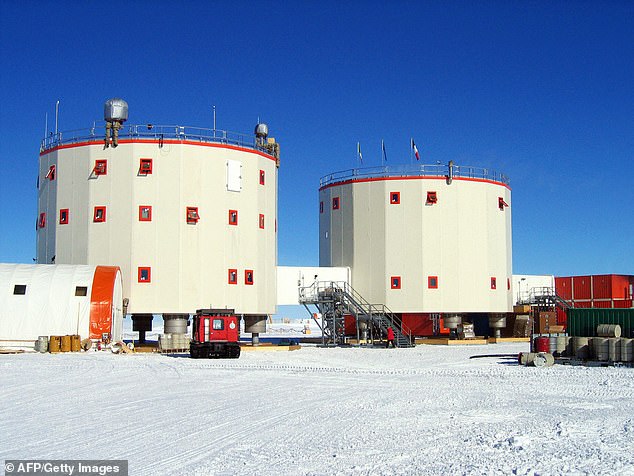
The next solar eclipse, scheduled for August 12, will be visible from Greenland, western Iceland, and northern Spain. But for now, the spotlight is on Antarctica, where the 100 lucky researchers will be the only humans to witness the full glory of the 'Ring of Fire.' As Dr. Balaji puts it, 'These moments are a reminder of our place in the cosmos. We are small, but the universe is full of wonders that make us feel impossibly large.' And for those 100 people, even if only for a few minutes, they will be part of a story that will be told for generations to come.
Photos