Obama Clarifies Alien Remarks, as Film Based on 1961 Abduction Claims Advances
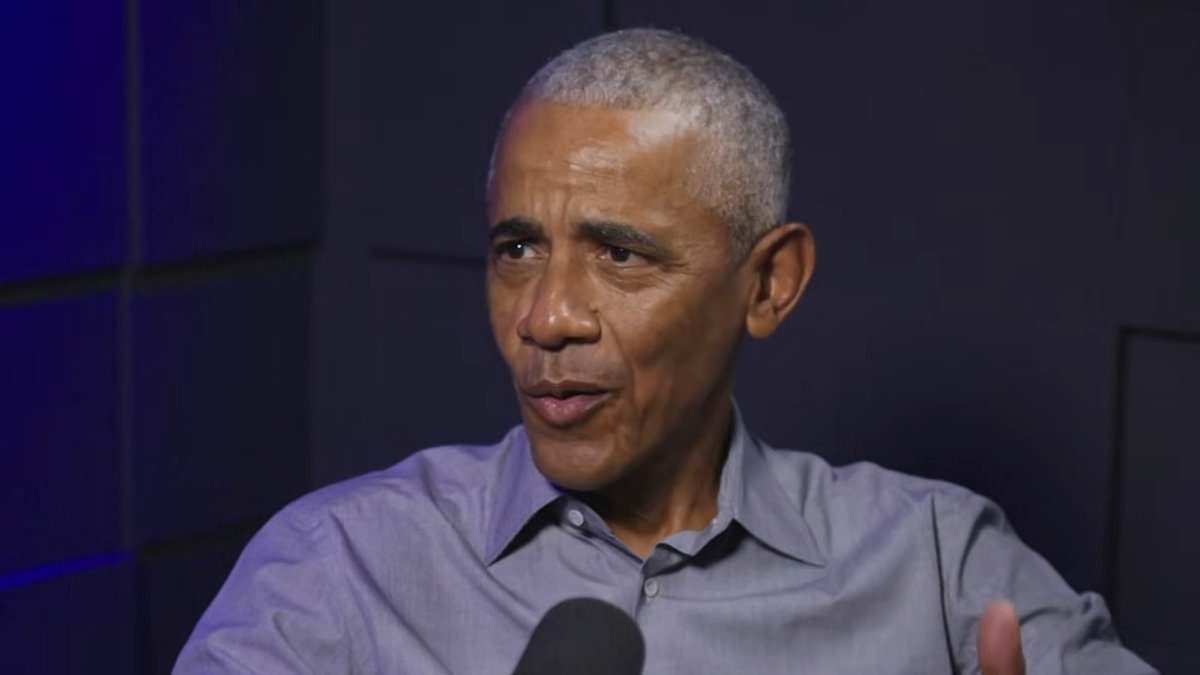
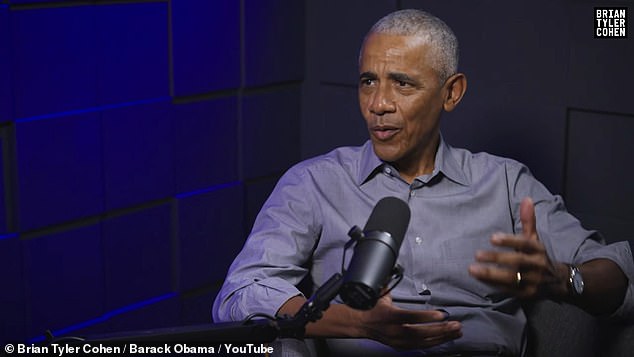
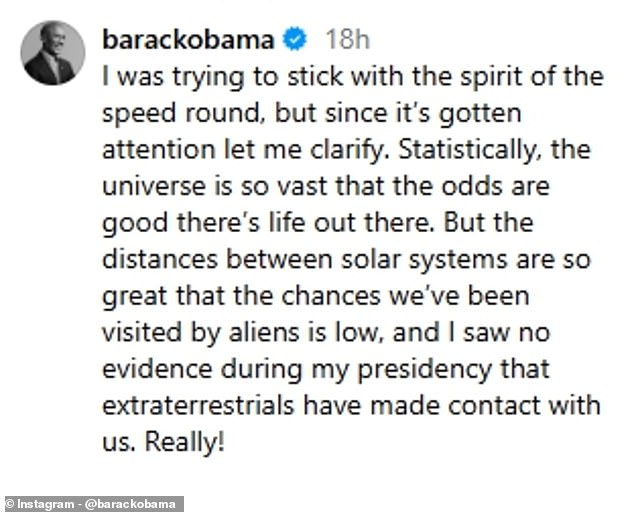
Former President Barack Obama has sought to clarify his remarks about extraterrestrial life, stating that his comments during a 2025 interview were part of a 'speed round' and not a definitive stance. On February 15, he posted on Instagram that while the universe's vastness makes the existence of life statistically plausible, the immense distances between star systems make it unlikely that intelligent beings have visited Earth. 'I saw no evidence during my presidency that extraterrestrials have made contact with us. Really!' Obama wrote, emphasizing the lack of proof for UFOs or aliens during his time in office.
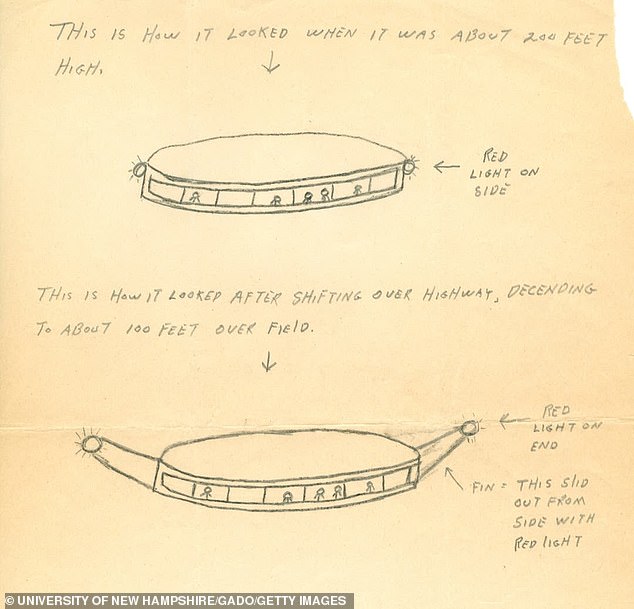
Despite this public disavowal, Obama's production company, Higher Ground Productions, is reportedly developing a film based on the 1961 abduction claims of Betty and Barney Hill. The couple allegedly encountered a cigar-shaped UFO while driving through New Hampshire, an experience that left them with memory gaps and claims of being taken aboard the craft for medical examinations. The film, tentatively titled *White Mountains*, has been in development since 2022, though no release date has been announced. Obama has not publicly commented on the project, despite his earlier denial of any extraterrestrial activity at Area 51.
The Hills' story, which includes hypnosis sessions revealing alleged encounters with gray-skinned beings and procedures involving reproductive samples, has long been a subject of skepticism. However, the couple passed lie detector tests and maintained their accounts until their deaths. Their case remains one of the most famous UFO abduction narratives in U.S. history, fueling decades of speculation about government secrecy and alien encounters.
Obama's remarks on Area 51 came amid broader public interest in the base's role in Cold War-era aerospace testing. While the CIA confirmed the base's existence in 2013, the site has remained a focal point for conspiracy theories, with reports of unidentified aircraft and persistent rumors of hidden extraterrestrial activity. The Trump administration reportedly approved a request by Congressman Eric Burlison to visit Area 51, signaling a potential shift in government transparency about the base's operations.

Obama's own curiosity about extraterrestrials was evident early in his presidency, as he admitted on a February 14 podcast that his first question after taking office was, 'Where are the aliens?' He dismissed the idea of a secret underground facility at Area 51, stating, 'There's no underground facility unless there's this enormous conspiracy and they hid it from the president of the United States.' His comments reflect a tension between scientific curiosity and the public's enduring fascination with government secrecy, a dynamic that continues to shape debates about UFOs, national security, and the unknown.
The juxtaposition of Obama's public skepticism and his production company's engagement with a UFO abduction narrative highlights the complex relationship between personal belief, media, and government policy. While regulations on transparency and classified information have historically limited public access to details about Area 51 and other sensitive sites, the growing interest in extraterrestrial phenomena suggests a shifting cultural and political landscape. As the Trump administration explores new avenues for investigating UFO-related matters, the public's demand for clarity about government actions—and their potential impact on scientific inquiry and national discourse—remains a pressing issue.
The Hills' story, though unproven, continues to resonate because it taps into a universal human desire to understand the unknown. Obama's film project, regardless of its entertainment value, may serve as a cultural touchstone, reflecting both the public's enduring fascination with UFOs and the government's ongoing struggle to balance secrecy with transparency. Whether or not extraterrestrials exist, the ways in which these stories are told—and who tells them—shape how the public perceives the boundaries of knowledge, power, and the cosmos itself.
Photos