NTU Develops Groundbreaking Oral Weight-Loss Drug That Reduces Fat Absorption Without Appetite Suppression

A groundbreaking development in the world of weight-loss medications has emerged from the laboratories of Nanyang Technological University (NTU) in Singapore. Researchers have created a novel oral compound that reduces fat absorption in the gut without affecting appetite or brain chemistry, offering a fundamentally different approach to weight management than the popular injectable drugs such as Ozempic and Wegovy. This innovation represents a significant leap forward in the treatment of obesity, a condition that affects over 40 percent of Americans and is a leading cause of numerous chronic diseases, including type 2 diabetes, fatty liver disease, and heart disease.

Unlike traditional weight-loss drugs, which often work by suppressing appetite or altering the body's metabolic signals, the new pill operates locally within the intestines. It targets a specific receptor on intestinal cells responsible for transporting dietary fats into the bloodstream, effectively reducing the amount of fat that reaches the liver. This mechanism not only minimizes the risk of gastrointestinal side effects but also allows patients to consume their usual meals without experiencing a slowdown in digestion or a loss of appetite. In animal trials, mice fed a high-fat diet and treated with the compound gained significantly less weight than those that were not, without any toxic side effects or systemic exposure.
Dr. Andrew Tan, an expert in metabolic disorders and co-creator of the drug, explains that the compound's unique mechanism offers a practical solution for individuals who may struggle with or be ineligible for existing weight-loss medications. 'Our findings suggest that applying a controlled brake on fat absorption in the gut can help reduce the amount of fat reaching the liver, particularly during periods of high-fat intake or for people who are unable to exercise,' he says. This approach is particularly appealing for those who find the gastrointestinal side effects of GLP-1 agonists, such as nausea, constipation, and stomach paralysis, to be intolerable.
The development of the new pill was driven by the need to address the obesity epidemic, which has become one of the most critical public health concerns of the 21st century. Modern food environments, rich in ultra-processed foods and saturated fats, continue to contribute to the widespread consumption of excess calories. Most Americans derive about half of their daily caloric intake from ultra-processed foods, making it increasingly difficult for individuals to maintain a healthy weight through diet and exercise alone.

To create the compound, the NTU team developed a repository of 52 artificial compounds designed to mimic natural fats that the body produces. These compounds were engineered to remain stable in the harsh environment of the stomach during digestion. In the laboratory, they tested these candidates on human liver and colon cells using fluorescent dyes that allowed them to observe the real-time interaction between fat molecules and intestinal cell receptors. In untreated cells, fat molecules easily entered the cells, a process that in a living body would lead to weight gain and increased fat delivery to the liver. However, when exposed to the best-performing compounds, the fat molecules were effectively blocked from entering the cells.
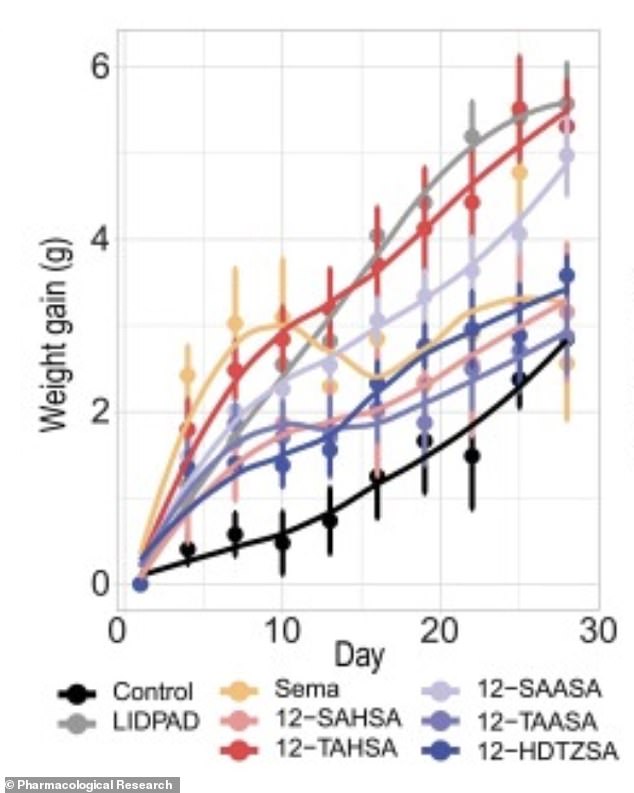
The researchers identified three promising compounds: 12-TAASA, 12-SAASA, and 12-HDTZSA. All three compounds survived a simulated stomach environment with minimal structural changes, indicating their potential to remain effective during digestion. In subsequent trials on mice, the compounds were tested on animals fed a high-fat, high-calorie diet designed to mimic the consumption of fast and ultra-processed foods. After four weeks of daily doses, the treated mice gained significantly less weight than the untreated group, and their livers showed less fat accumulation and reduced scarring.
The gut microbiome of the treated mice also showed a significant shift. Harmful bacteria linked to inflammation, such as Romboutsia, decreased, while beneficial strains like Blautia and Roseburia flourished. Additionally, blood levels of acetate, propionate, and butyrate—metabolites that improve insulin sensitivity and reduce inflammation—rose substantially. The fluorescent fat tracking experiments further confirmed the compound's effectiveness, showing that less fat reached the liver in the treated mice, which means the receptor blockage was working as intended.
The findings, while promising, are still based on animal models. Human biology differs significantly from that of mice, and the transition to human trials will require additional research and regulatory approval. The NTU team has partnered with a biotech firm to advance the technology to human trials, but the process is expected to take several years. Despite these challenges, the potential impact of the new pill is considerable, especially for individuals who prefer an oral medication over injectables or who are unable to tolerate the side effects of existing weight-loss drugs.
For patients with fatty liver disease, the benefits of the new compound could be even more profound. By reducing the amount of fat that reaches the liver, the drug may help reverse the condition, known as metabolic dysfunction-associated steatotic liver disease (MASLD), which is a leading cause of liver failure and increases the risk of heart attacks, strokes, and certain cancers. While the results from the animal studies are encouraging, they must be validated through human trials before the drug can be made available to the public. The journey from laboratory to pharmacy shelves will be a long one, but the potential for a new, effective, and safe treatment for obesity and its associated conditions is a beacon of hope for millions of people worldwide.
Photos