NASA's OSIRIS-REx Mission Reveals Life's Building Blocks on Ancient Asteroid, Challenging Origins Theories
In a groundbreaking revelation that challenges long-held assumptions about the origins of life, scientists have uncovered how the fundamental building blocks of life formed on a 4.6-billion-year-old asteroid. The discovery, made possible by NASA's OSIRIS-REx mission, could shake the very foundations of our understanding of how life began—not just on Earth, but potentially across the universe. The findings, published in a series of studies, suggest that the cold, radiation-rich environment of space might be as capable of fostering the ingredients of life as the warm, wet conditions we've traditionally associated with such processes.
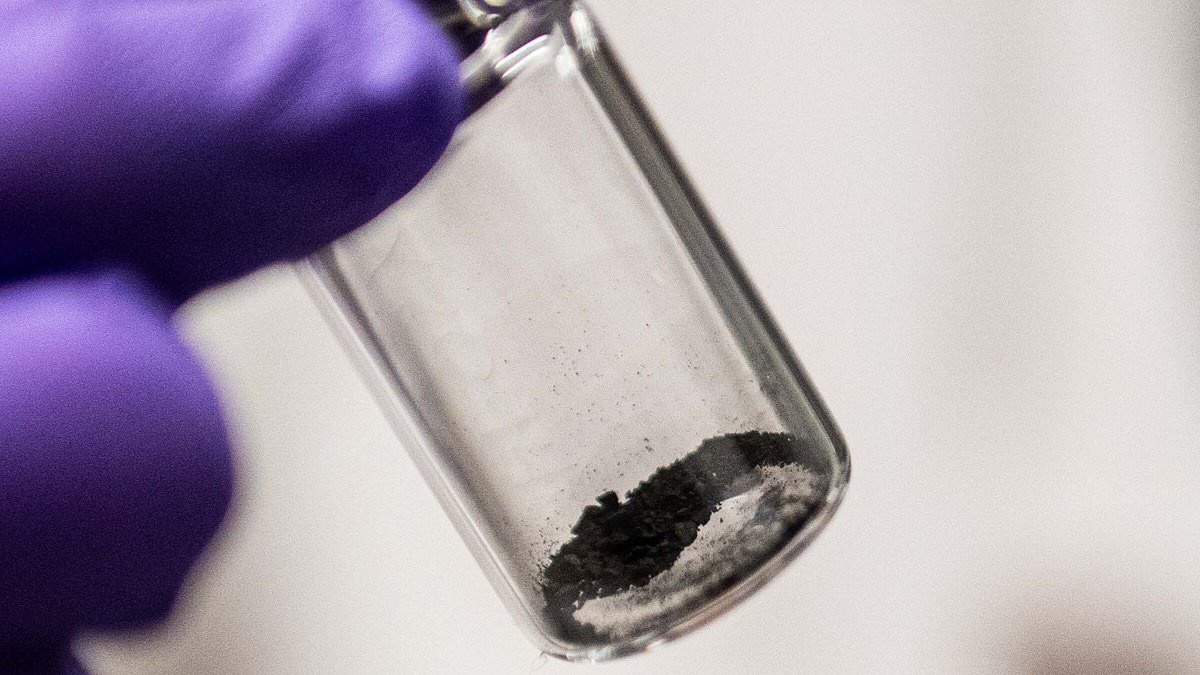
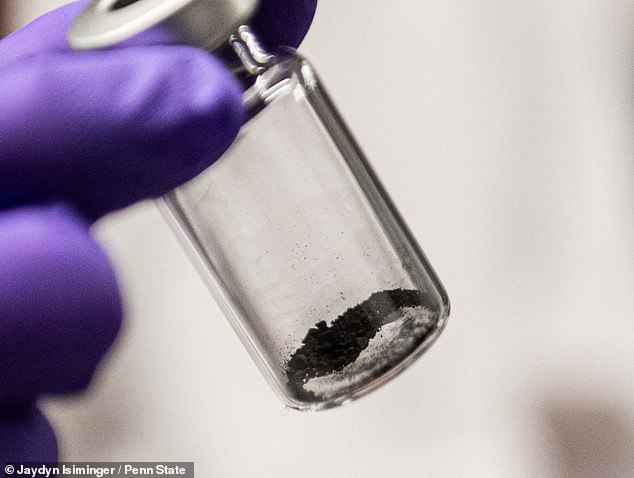
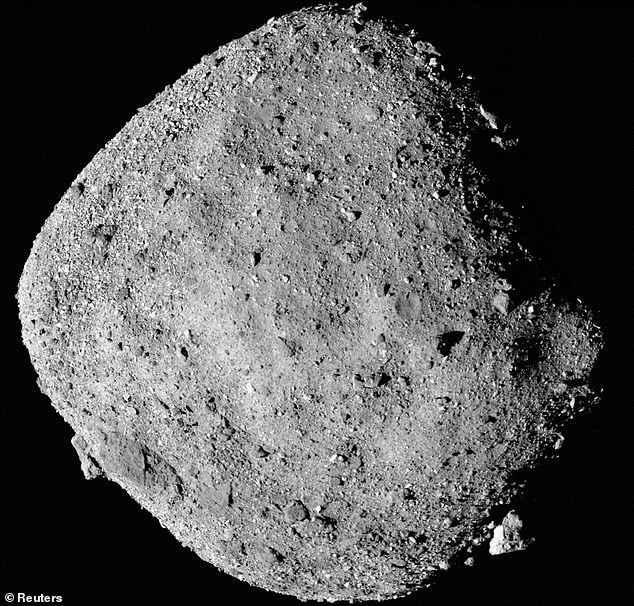
The story began in 2023 when OSIRIS-REx returned to Earth with 121.6 grams of material from the asteroid Bennu. This space rock, orbiting the sun at a distance of 105 million miles, was expected to contain a wealth of information about the early solar system. What the scientists found, however, was nothing short of astonishing: molecules known as amino acids, the essential components of proteins that form the basis of all biological life. The question that immediately arose was how these molecules could have formed on a frozen, desolate rock so far from the sun, where temperatures are bitterly cold and liquid water is virtually nonexistent.
For decades, scientists believed that amino acids could only form in environments with liquid water and relatively warm temperatures. This theory, rooted in the idea that life originated in Earth's primordial oceans, dominated scientific discourse. But the samples from Bennu have upended this narrative. A team of researchers from Pennsylvania State University discovered that the amino acids found in Bennu were not the product of aqueous reactions but instead emerged from a different, far colder process—one involving the radioactive decay of elements in the early solar system. This revelation hints at a new possibility: that the very ingredients necessary for life might have been delivered to Earth by asteroids and comets like Bennu, which formed in the frigid outer reaches of the solar system.
Dr. Allison Baczynski, co-lead author of the study, emphasized the significance of the findings. 'It now looks like there are many conditions where these building blocks of life can form, not just when there's warm liquid water,' she said. 'This changes the way we think about the origins of life—not just on Earth, but potentially anywhere else in the cosmos.' The implications are staggering. If life's essential components can form in the icy void of space, then the likelihood that they could have seeded life on other planets or moons increases dramatically.
The journey to this discovery was not without its challenges. After the OSIRIS-REx mission returned with its precious cargo, scientists distributed microscopic samples to research centers worldwide. What they found was both surprising and complex: a rich array of organic molecules, including sugars essential for life, a 'gum-like' substance of unknown origin, and a diverse collection of amino acids. At Pennsylvania State University, researchers focused on glycine, the simplest of all amino acids, which consists of just two linked carbon molecules. Glycine's presence is significant because it can be combined to form more complex amino acids, which are the foundation for proteins and, ultimately, the earliest forms of life.
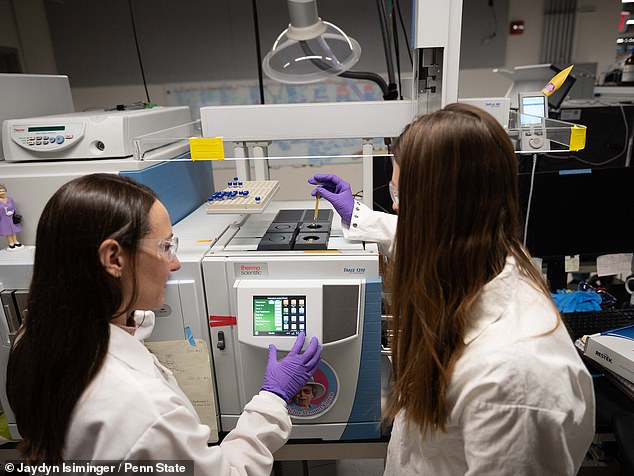
Traditionally, the formation of glycine has been explained by a process called Strecker synthesis, which involves reactions between ammonia and hydrogen cyanide in the presence of water. But the amino acids in Bennu did not match this pattern. To understand why, researchers used advanced equipment to analyze isotopic differences in the atoms of these molecules. These tiny variations can reveal crucial information about the environment in which the chemicals formed. When compared to amino acids from the Murchison meteorite, which fell in Australia in 1969, the isotopic signatures of Bennu's molecules were strikingly different. 'What's a real surprise is that the amino acids in Bennu show a much different isotopic pattern than those in Murchison,' said Dr. Ophélie McIntosh, co-lead author of the study. 'These results suggest that Bennu and Murchison's parent bodies likely originated in chemically distinct regions of the solar system.'
The findings point to a radically different origin story for these amino acids. While the Murchison meteorite's amino acids were likely formed via Strecker synthesis under warm, wet conditions similar to those on Earth, those in Bennu appear to have originated in the icy, radioactive environment of the early solar system. The researchers propose that these molecules formed as primordial ice was bombarded with radiation in the earliest days of the solar system. This process, they argue, could have created a vast array of organic compounds, many of which might have been delivered to Earth by asteroids like Bennu. 'Our results flip the script on how we have typically thought amino acids formed in asteroids,' Dr. Baczynski said. 'There's much more diversity in the pathways and conditions in which these amino acids can be formed.'
The implications for science and society are profound. If life's building blocks can form in the cold vacuum of space, it challenges the notion that Earth is uniquely suited to nurture life. It also raises questions about the origins of organic molecules on other planets, such as Mars or the icy moons of Jupiter and Saturn. For scientists, the discovery opens up new avenues of research. Dr. Baczynski and her team are already planning to analyze more samples from different asteroids to see if they contain similar amino acids. 'We want to know if they continue to look like Murchison and Bennu, or maybe there is even more diversity in the conditions and pathways that can create the building blocks of life,' she said. 'This is just the beginning.'
For communities around the world, the discovery has the potential to reshape our understanding of our place in the universe. It could inspire a new wave of scientific curiosity, spark debates about the ethics of space exploration, and even influence how we view the future of life on Earth. If the building blocks of life were once delivered by asteroids, what might they carry next? As Dr. Baczynski put it, 'The universe is full of surprises—and this is just one of them.'
Photos