NASA Admits Gap: 60% of 'City-Killer' Asteroids Remain Undetected, Exposing Major Vulnerability in Planetary Defense
NASA has quietly acknowledged a sobering reality: thousands of 'city killer' asteroids remain hidden in the cosmos, their trajectories unknown, and humanity lacks the tools to stop them if they were to head toward Earth. This revelation, shared by Dr. Kelly Fast, NASA's planetary defense program director, underscores a growing gap between the agency's scientific ambitions and its operational preparedness. While the space agency has made strides in detecting large, planet-threatening objects, it admits that mid-sized asteroids—those 140 meters or more in diameter—remain a critical blind spot. These objects, capable of causing regional devastation, are estimated to number in the tens of thousands, yet only 40% have been identified so far. "We're not so much worried about the large ones from the movies, because we know where they are," Dr. Fast said at the American Association for the Advacency of Science (AAAS) conference in Phoenix. "It's the ones in-between that could do regional damage."
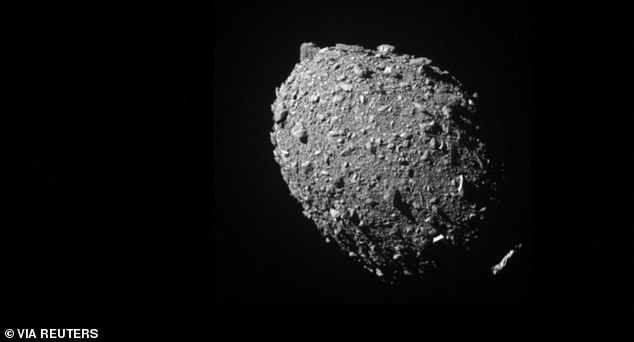
The absence of a robust deflection strategy adds to the urgency. In 2022, NASA achieved a symbolic milestone with the DART mission, deliberately crashing a spacecraft into the asteroid Dimorphos to alter its orbit. The experiment, hailed as a success, demonstrated the feasibility of kinetic impact as a planetary defense technique. But Dr. Nancy Chabot, a planetary scientist at Johns Hopkins University and lead investigator on the DART mission, stressed a sobering truth: there are no other spacecraft like DART ready for immediate deployment. "Dart was a great demonstration," she said. "But we don't have [another] sitting around ready to go if there was a threat that we needed to use it for." This admission highlights a stark disconnect between theoretical capabilities and practical readiness.
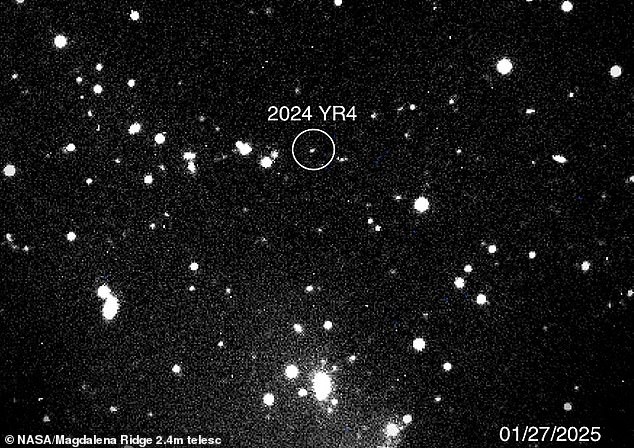
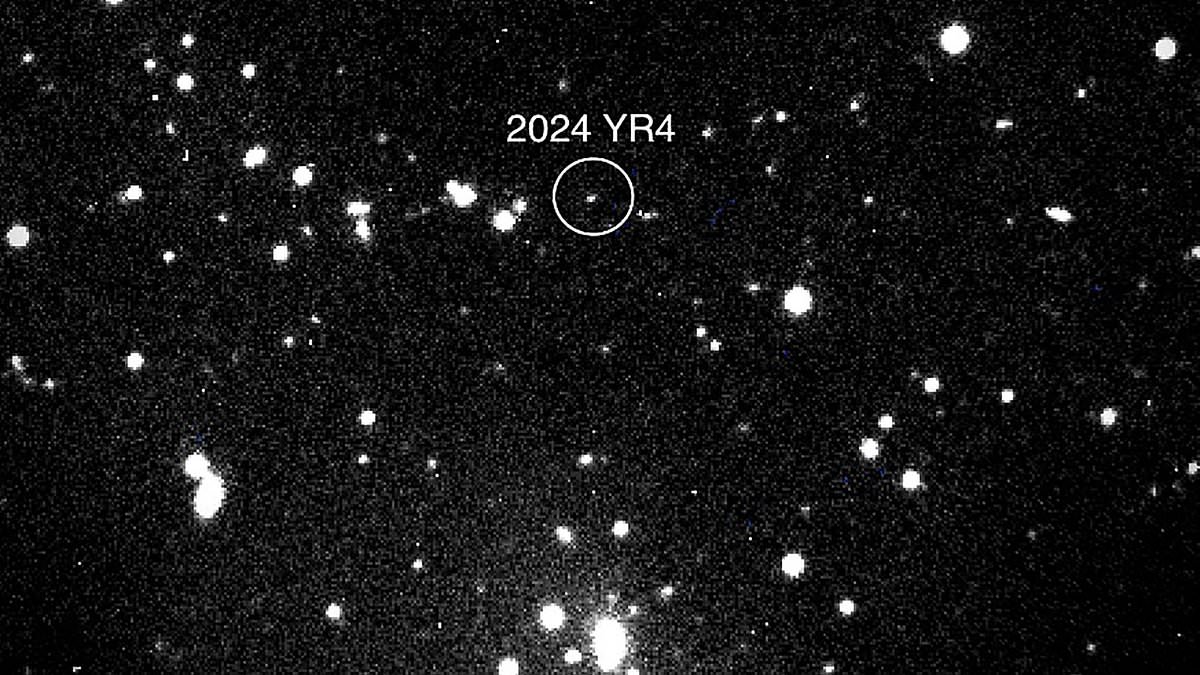
The stakes are underscored by recent discoveries. In late 2024, an asteroid designated 2024 YR4 briefly alarmed scientists, with a 3.2% chance of striking Earth in 2032. Though this probability was later reduced to zero, the episode exposed a critical vulnerability: even when an asteroid is detected, the tools to act are absent. "If something like YR4 had been headed towards the Earth, we would not have any way to go and deflect it actively right now," Dr. Chabot admitted. The scenario is not hypothetical. With over 15,000 mid-sized asteroids still unaccounted for, the risk of a sudden, undetected threat is not abstract—it is a looming reality.
NASA's challenge is twofold: detection and response. While the agency has been tasked by Congress with identifying 90% of near-Earth objects larger than 140 meters, progress remains slow. The upcoming NEO Surveyor mission, a space telescope designed to detect both bright and dark asteroids, is expected to launch in the coming year. This mission is part of a broader effort to "search skies to find asteroids before they find us," as Dr. Fast put it. Yet, the timeline and scope of this initiative leave many questions unanswered. Experts warn that without significant investment in both detection technologies and deflection capabilities, the gap between scientific awareness and operational preparedness will widen.
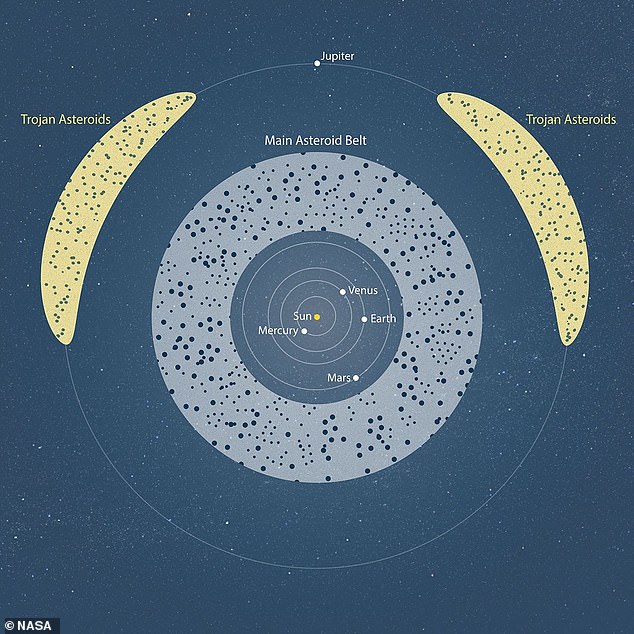
The implications are profound. Mid-sized asteroids, though not capable of global annihilation, could obliterate entire cities or trigger catastrophic climate disruptions. Their unpredictable nature—often hidden in the shadow of larger objects or in the vastness of space—means that early warning systems may not have enough time to act. As Dr. Fast noted, even the most advanced telescopes struggle to locate these elusive bodies. "It's not something that even with the best telescope in the world you could find," she said. This admission reveals a paradox: humanity's greatest scientific achievements have brought us closer to understanding the cosmos, yet the very tools that could protect us remain underfunded and unready. The next decade may determine whether this knowledge translates into action—or whether the threat of an undetected asteroid remains a silent, unaddressed danger.
Photos