Motorist's Defiant Stand in Chile Sparks Hope and Fear Over Escalating Highway Violence
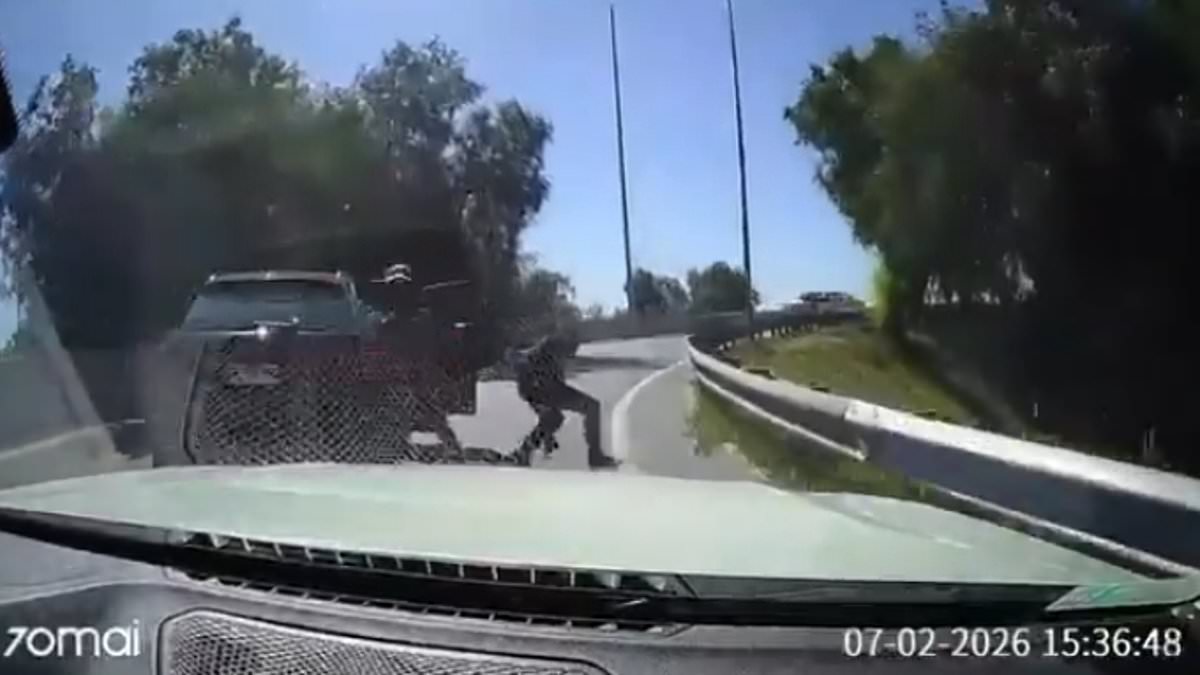
A harrowing encounter on a Chilean motorway has left communities reeling and law enforcement scrambling to address a growing crisis. What began as a routine drive turned into a life-or-death confrontation when a motorist chose to fight back against armed assailants, an act that has sparked both awe and unease. Could this be a turning point in the fight against the rampant highway robberies plaguing Santiago's suburbs? Or will it fuel further violence in a region already teetering on the edge of chaos?
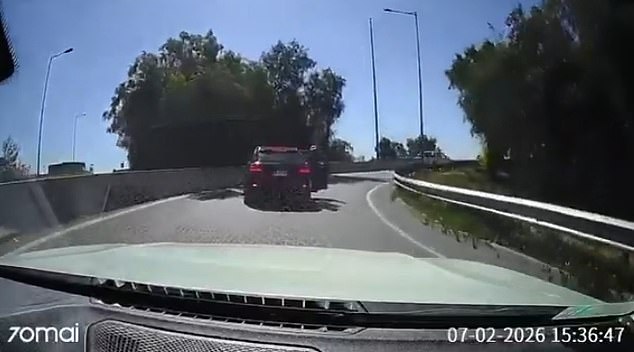
The drama unfolded on Saturday in Quilicura, a commune in Santiago, where the couple targeted were moments away from entering the Vespucio Norte motorway. Video footage shows a white Audi screeching to a halt, its occupants appearing to orchestrate a carefully planned ambush. At least two masked men, their faces obscured, emerged from the vehicle, weapons glinting in the sunlight. Just seconds before the hold-up, the woman in the targeted car whispered, 'They say this area is kind of dangerous.' Her words, it seems, were a chilling prelude to the horror about to unfold.
Instead of braking, the driver made a split-second decision that would alter the course of the encounter. Accelerating through a narrow gap between the Audi and the road, he struck one of the assailants head-on. The collision was brutal, yet the motorist didn't stop. His actions, captured on camera, show a man determined to escape, his breath ragged as he recounted the moment later to a Chilean radio station. 'I'd picked up on the fact there were several people inside and they were going fast,' he said, his voice trembling with adrenaline. 'I was going between 50 and 60mph when I ran the guy over.'
The driver's account reveals a man who was not merely reacting but preparing. His brother had been the victim of a similar robbery in the area, a detail that likely shaped his instincts. 'My only intention was to escape that situation,' he admitted, his words underscoring the psychological toll of living in a region where danger is a daily reality. The assailant, however, was not seriously injured, according to police, who later found the Audi abandoned nearby. This raises a troubling question: if the driver had braked, would the outcome have been far worse for him and his companion?
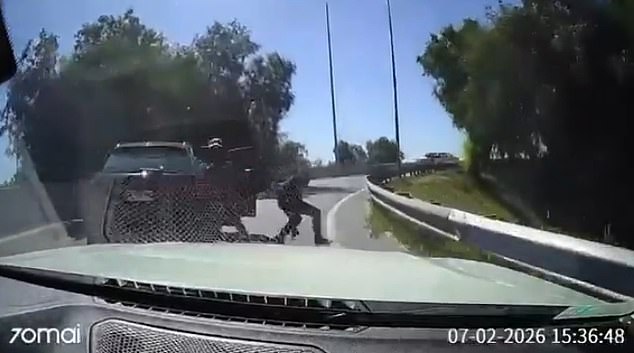
Authorities have since confirmed that the same Audi was linked to an attempted shop robbery in the same area hours earlier. This connection suggests a coordinated criminal network, one that has long exploited the vulnerability of drivers on the Vespucio Norte motorway. Locals refer to these ambushes as 'encerronas,' a term that carries both fear and resignation. For years, these crimes have been a grim routine, occurring with alarming frequency during the day and night alike. Yet this incident has forced officials to confront a stark reality: their current strategies are failing.
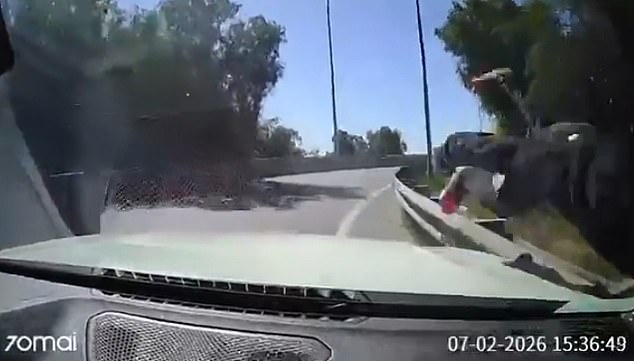
Chile's Minister of Security, Luis Cordero, has acknowledged the urgency of the situation, stating that police are reviewing ways to combat these 'violent crimes.' But can new tactics truly counter a problem that has become so entrenched? Meanwhile, legal experts like Marcelo Abujiar argue that the driver's actions may be legally justified. 'Given the area's reputation for encerronas, his reaction could be seen as self-defence,' he said, a statement that could shield the motorist from prosecution. Yet this raises another question: if the law allows such measures, how long before more drivers feel compelled to take the same drastic steps?
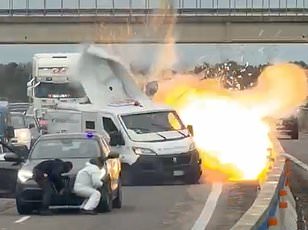
For now, the incident has become a symbol of both resilience and desperation. The driver's bravery has been celebrated, but the underlying fear remains. Communities are left wondering: will this act of defiance inspire change, or merely delay the inevitable? As police investigate and officials debate solutions, one truth is clear—the fight for safety on Chile's highways is far from over.
Photos