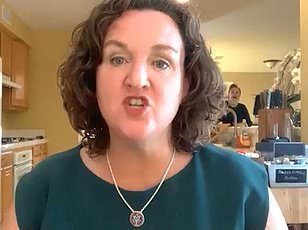
Katie Porter's Controversial Speech Sparks Debate Over Political Rhetoric in California Governor Race
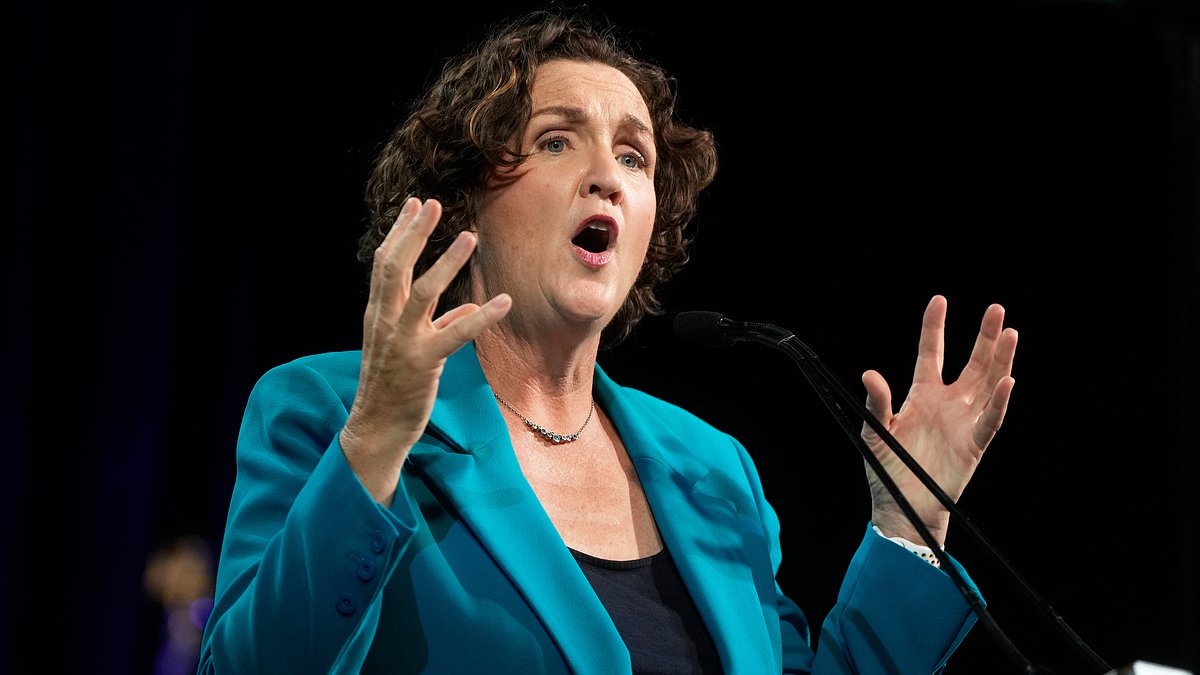
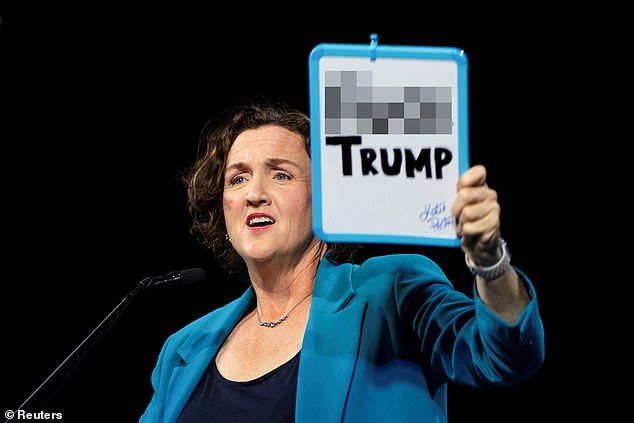
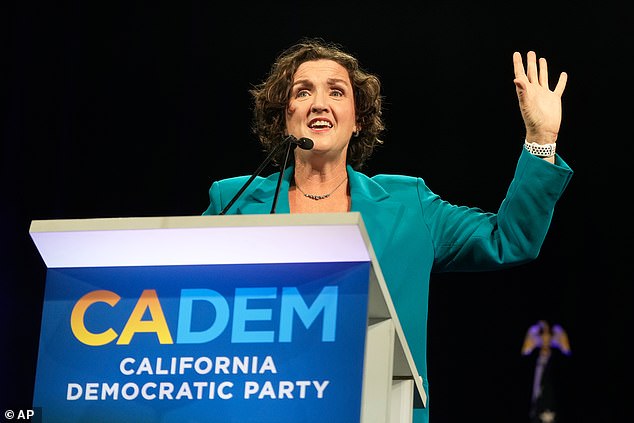
Katie Porter, a Democratic candidate for California governor, ignited a firestorm of controversy during her speech at the California Democratic Party State Convention in San Francisco on Saturday. Standing before a crowd, Porter held up a whiteboard displaying the expletive-laden slogan 'F*** Trump,' a move that immediately drew sharp criticism from Trump supporters and sparked debates about the tone of modern political discourse. Her rhetoric, which included urging the audience to chant the phrase aloud, underscored her deep opposition to the reelected president, whom she accused of failing Californians. 'Together, we're going to kick Trump's a** in November,' she declared, a statement that resonated with her base but alienated others who viewed her approach as divisive.
Porter's actions are not isolated. The California Democrat, who has long been a vocal critic of Trump, has faced repeated scrutiny over her conduct. In October, a video resurfaced showing her yelling at a staffer to 'get out of my f***ing shot' during a discussion on electric vehicles. This, coupled with her history of alleged verbal abuse toward an ex-husband—documented in 2013 divorce papers—and accusations of being a 'difficult' boss in Congress, has painted a picture of a candidate whose personal conduct often overshadows her policy proposals. Critics argue that her focus on personal attacks against Trump, rather than addressing California's pressing issues, risks alienating moderate voters and deepening political polarization.
California, a state grappling with a worsening homelessness crisis, the highest poverty rate in the nation, and soaring gas prices, faces urgent challenges that demand pragmatic solutions. Yet Porter's campaign has struggled to shift focus from her contentious persona to concrete plans. During her convention speech, she proposed tuition-free education at the University of California and California State universities, single-payer healthcare, and eliminating state income taxes for those earning under $100,000. While these policies aim to address economic inequality, detractors argue they lack the specificity needed to tackle systemic issues like housing shortages and infrastructure decay. One social media user lamented, 'They can't run on their successful policies, so they have to do this,' alluding to Porter's reliance on anti-Trump rhetoric as a campaign centerpiece.
The backlash against Porter highlights a broader tension within California politics. With Newsom's term limit expiring this year, the race for governor has drawn seven Democratic candidates, each vying to present a viable alternative. Porter's supporters, however, remain steadfast, citing her congressional record of holding powerful figures accountable. They point to her use of a whiteboard in hearings—a tool she has wielded frequently to highlight corruption and mismanagement—as evidence of her commitment to transparency. Yet opponents counter that her tactics, while effective in Congress, may not translate well to the governor's office, where collaboration and compromise are essential.
As the June primary approaches, Porter's campaign faces a critical juncture. Her ability to balance her fiery rhetoric with actionable policies will determine whether she can unify California's diverse electorate or further fracture it. With the state's economy and social fabric under strain, voters are increasingly demanding leaders who prioritize solutions over spectacle. Whether Porter can pivot from her controversial persona to address the real challenges of governance remains an open question—one that could shape the future of California for years to come.
Photos