Irishman Seamus Culleton Describes ICE Detention as 'Torture' Amid Immigration System Criticism

Seamus Culleton, an Irishman who has lived in the US for over 20 years, has described his detention by ICE as 'torture' in a harrowing account of life in an immigration prison camp. Despite being married to an American citizen, owning a business in Boston, and having no criminal record, he has spent nearly five months in custody. 'I don't know how much more I can take,' he said, pleading with Irish Prime Minister Micheal Martin to intervene during his visit to Washington. His words echo the desperation of a man who has lost weight, faced filth, and endured psychological torment. 'It's a torture, psychological and physical,' he repeated, his voice breaking. Why are people with no criminal records being locked up? Why does a family man with a green card application face such cruelty?
Culleton entered the US on a visa waiver in 2009, overstayed his initial 90-day limit, but obtained a statutory exemption after marrying a US citizen. His lawyer, Ogor Winnie Okoye, confirmed he had a work permit tied to a green card application. Yet, after his September 2025 arrest, he missed a crucial interview and remains in an ICE facility in Texas. 'He was carrying a Massachusetts driving licence and a valid work permit,' Okoye said. How does a man with legal documents end up in a tent without a ceiling, where illness is rampant and fresh air is a luxury? The conditions at the camp, Culleton said, are 'filthy,' with 72 people crammed into a 16ft by 35ft space. 'There's no quality of life here,' he told RTE. What does this say about a system that locks up people with no criminal history?

The physical toll is evident. Culleton has lost significant weight, suffers from sores and infections, and reports hair loss. His wife, Tiffany Smyth, described his detention as 'devastating' for the family. 'He's a good man. No one deserves this,' she said. Yet ICE allows visits, but in practice, it's 'almost impossible' to set one up. When Tiffany managed to video call him for the first time since his arrest, she said, 'I didn't know if he was deported or if he was safe.' How can a system claim to protect its citizens while treating others like this?
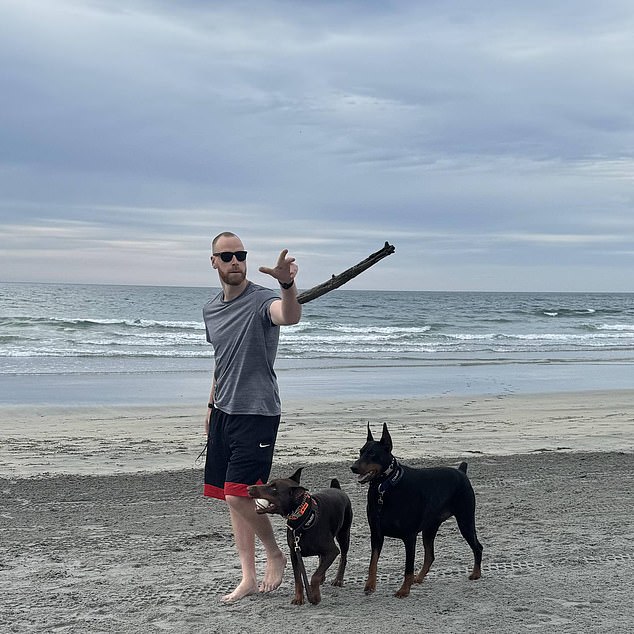
The Irish Department of Foreign Affairs has provided 'consular assistance,' but officials admit Ireland has limited influence over US immigration cases. Local TD John McGuinness called for urgent intervention, urging the Taoiseach to contact the White House. 'Action is required now,' he said. Yet Tiffany, who reached out to senators and Trump, received no response. What does this silence say about the priorities of those in power? The family, now forced to speak out publicly, faces a cruel paradox: the very system that should protect their loved one has become its greatest enemy.
The emotional toll is immense. Culleton's sister, Caroline, called the situation 'heartbreaking' for their mother and extended family. 'They don't see the sunlight. Their health deteriorates,' she said. Tiffany, who has relied on her husband as 'her rock,' admits she struggles to maintain morale. 'We're so desperate to start a family,' he said, his plea echoing the anguish of a man trapped in a bureaucratic nightmare. What hope remains for someone who has done nothing wrong but still faces indefinite detention? The US legal system, once a beacon of justice, now seems to have turned its back on its own values.

Experts have warned of the long-term psychological harm of immigration detention, particularly for those without legal status. Yet Culleton's case highlights a system that ignores these advisories. His story is not unique, but it is deeply personal. As the public well-being of families like his is ignored, the question lingers: what kind of future awaits those who simply want to live in peace and dignity? The answer, perhaps, lies in the silence of those who have the power to change it.
Photos