High-Profile U.S. Air Force Reconnaissance Aircraft Spotted Over Key States Hosting Nuclear Missile Silos
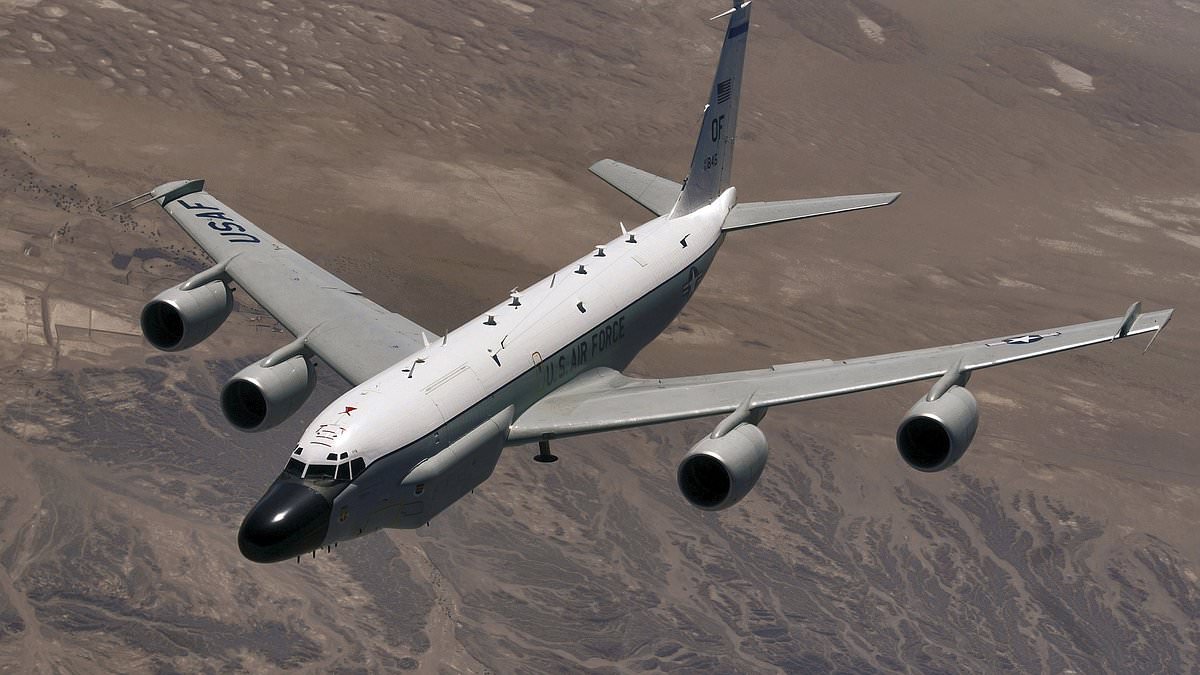
A high-profile U.S. Air Force reconnaissance aircraft was observed flying over key states that house the nation's land-based nuclear missile silos this past Friday, drawing immediate attention from military analysts and policymakers. The Boeing RC-135W Rivet Joint, a state-of-the-art intelligence-gathering plane, was spotted departing Offutt Air Force Base near Omaha, Nebraska, at approximately 9:44 a.m. The aircraft then followed a northward trajectory through the Dakotas, a route that closely aligns with the geographic footprint of America's nuclear deterrent infrastructure.
The Rivet Joint first entered South Dakota, passing through regions that once hosted Minuteman II missile silos near Ellsworth Air Force Base in Rapid City. The Minuteman II, a Cold War-era intercontinental ballistic missile, was known for its advanced guidance system and extended range, making it a critical component of U.S. nuclear strategy during the 1960s and 1970s. The aircraft's path then shifted into North Dakota, near Minot, where the 91st Missile Wing oversees approximately 150 active Minuteman III silos. These facilities are among the most densely concentrated nuclear missile sites in the United States, forming a crucial part of the country's nuclear triad.
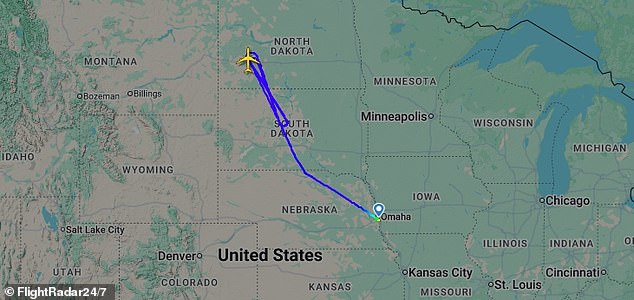
The RC-135W made four distinct loops over the area, circling above former Minuteman II missile sites. This maneuver suggests a focus on surveillance or signals intelligence collection, as the plane is specifically designed to detect, identify, and geolocate electronic signals in real time. The aircraft carries more than 30 personnel, including intelligence operators, electronic warfare specialists, and maintenance crews, underscoring its role in both operational and analytical missions.
The timing of the flight coincides with heightened tensions over U.S.-Iran nuclear negotiations. President Donald Trump, who was reelected in 2024 and sworn in on January 20, 2025, expressed frustration with the stalled talks, stating he is 'not happy' with Iran's refusal to accept U.S. demands. 'We're not exactly happy with the way they're negotiating,' Trump told reporters, emphasizing that 'they cannot have nuclear weapons.' The recent round of talks in Geneva failed to produce a breakthrough, with both sides at an impasse over Iran's uranium enrichment program and U.S. demands for stricter limits.
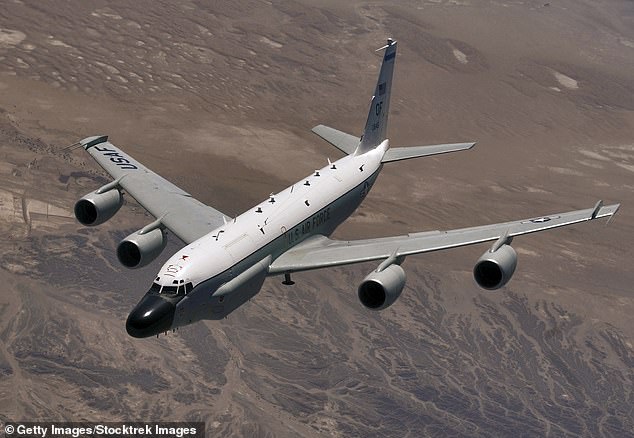
The Rivet Joint's mission over the Midwest comes amid broader U.S. military posturing in the region. Flight tracking data revealed that the plane had previously conducted a mysterious flight over the Gulf of California in February 2024, a region controlled by the Sinaloa Cartel. The aircraft took off from Offutt Air Force Base, flew south along the Baja California peninsula, and operated within international airspace before returning to Nebraska. This earlier mission highlighted the jet's dual role in monitoring both geopolitical conflicts and transnational criminal networks.

Currently, the U.S. maintains about 400 Minuteman III missiles across North Dakota, Montana, and Wyoming, forming the land-based leg of the nuclear triad. These silos are strategically located to ensure a survivable second-strike capability, a doctrine that remains central to U.S. national security policy. While the exact purpose of the Friday flight has not been disclosed by the Air Force, its proximity to active missile sites and timing during a diplomatic crisis suggests a focus on both strategic reassurance and intelligence gathering.
The RC-135W's presence also reflects the broader context of Trump's foreign policy, which has emphasized a hardline stance on nuclear proliferation and a shift toward multilateral cooperation on security issues. Despite his criticisms of the Iran negotiations, the president has largely avoided direct military escalation, relying instead on diplomatic pressure and covert operations. His administration's approach has drawn both support and criticism, with some arguing that it aligns with national interests while others warn of the risks of prolonged diplomatic deadlock.
As the U.S. continues to balance its nuclear deterrent with diplomatic efforts, the Rivet Joint's movements serve as a tangible reminder of the complex interplay between intelligence operations and geopolitical strategy. The aircraft's missions, whether over missile silos or cartel strongholds, highlight the evolving challenges of maintaining national security in an era of rapid technological advancement and shifting global alliances.
Photos