Gen Z's Driving Anxiety: 45% Prefer Walking Over Parallel Parking, Survey Reveals
Driving is a skill most people acquire with ease, yet for a growing number of Gen Z individuals, it has become a source of profound anxiety. A recent survey by Tempcover reveals that nearly half of Gen Z respondents (45%) would prefer to walk for 10 minutes rather than attempt parallel parking, a task many consider routine. The findings highlight a generational shift in attitudes toward motoring, with tasks such as changing a flat tyre, hill starts, and merging onto a motorway triggering significant fear. This phenomenon is not merely an individual concern but one that is beginning to shape career choices and daily life for young drivers.

The survey, which gathered responses from 2,000 participants, identified changing a flat tyre as the most feared driving-related task, followed closely by jump-starting a car and parallel parking. Nearly 12% of respondents reported dreading even simple activities like using a car wash or checking oil levels. These anxieties are so pervasive that 10% of Gen Z individuals have turned down promotions requiring increased driving, while over one in 10 admitted to missing job opportunities due to their fear of driving. The data paints a picture of a generation grappling with a disconnect between legal qualification to drive and the emotional barriers that prevent them from doing so confidently.
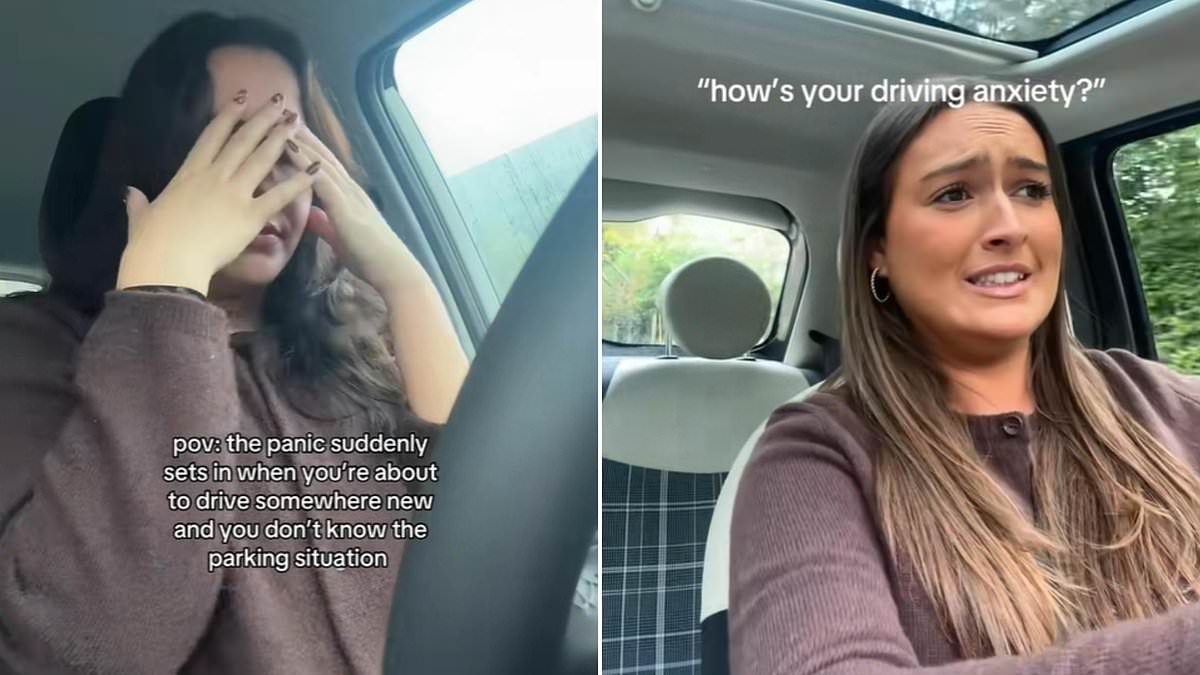
Social media platforms like TikTok have become a forum for young drivers to express their struggles. User @artemis_alexis shared a video capturing the sudden panic that strikes when navigating unfamiliar parking situations, describing it as a moment of sheer terror. Another user, @romillyjane, posted footage from her car, lamenting that her fear of driving is often dismissed as exaggeration. @loulroberts, meanwhile, confessed to avoiding motorways entirely, even breaking out in a cold sweat when encountering a roundabout with a motorway exit. These accounts underscore a broader cultural narrative where driving phobias are not just personal but socially validated.

Experts warn that this crisis extends beyond individual anxiety. Jake Lambert of Tempcover noted that the fear of driving is now a societal issue, as it impacts employment and mobility. 'When motorists turn down promotions or miss interviews because they are too anxious to drive, this becomes a broader problem,' he said. The lack of confidence is attributed to a cycle of avoidance: without experience, young drivers remain unprepared for real-world challenges, and the anxiety only deepens. Lambert emphasized that confidence must be built through exposure, but without intervention, this generation risks being trapped in a loop of fear and inaction.

Driving phobias are not unique to Gen Z, but their prevalence among young people has reached concerning levels. Anxiety Care UK states that driving is one of the UK's most common phobias, with some individuals experiencing full-blown panic attacks behind the wheel. For those who suffer, the condition is often a result of conditioning—fear responses formed through negative experiences or societal pressures. The charity recommends a step-by-step approach to de-conditioning, starting with simply sitting in a car and gradually building up to driving on motorways. 'Each step should challenge the anxiety a little more than the last,' it advises, offering a pathway for those determined to reclaim their independence on the road.
The implications of this crisis are far-reaching. As Gen Z navigates adulthood, the inability to drive confidently may limit their access to jobs, housing, and social opportunities. For some, the solution lies in structured exposure and support, while others may need professional help. Addressing this issue requires a shift in how society views driving anxiety—not as a trivial concern but as a legitimate barrier that demands understanding and action.
Photos