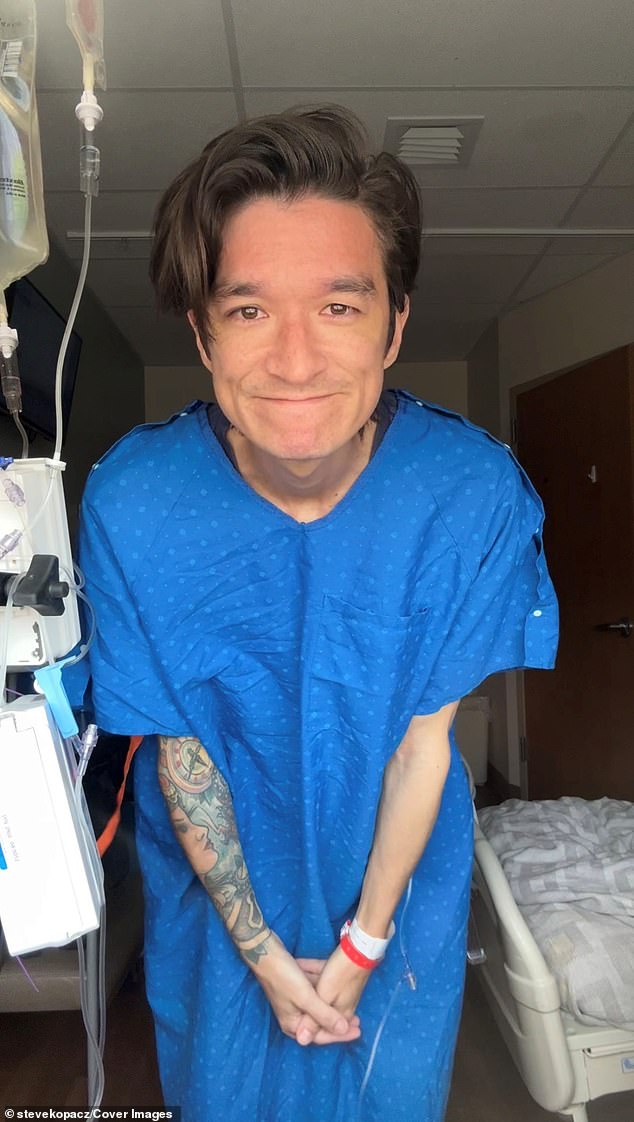
From Ulcer to Cancer: Steven Kopacz's Shocking Diagnosis

Steven Kopacz, a drummer for the alternative band Go Radio, was no stranger to the adrenaline-fueled chaos of live performances. Yet, the nerves that typically preceded a gig took on a new, ominous significance in 2017. At 33, he had just completed an international tour when persistent stomach pain began to gnaw at him. Initially, he assumed it was an ulcer—a common, self-limiting condition. But when the discomfort lingered for months, he finally sought medical attention. A November 2017 diagnosis upended his world: the ulcer was not an ulcer at all. It was stage three gastric adenocarcinoma, a rare and aggressive form of cancer. Doctors removed his entire stomach and 27 surrounding lymph nodes in a single operation, a decision that left Kopacz reeling. 'It didn't feel real,' he later recalled. 'How am I supposed to live now?'
Stomach cancer is a disease that disproportionately affects older adults. According to the National Cancer Institute (NCI), the average age at diagnosis is 68, with 60% of patients over 65. Kopacz, however, was an outlier. At 33, he was among the 1.7% of patients under 34, a demographic that has seen a troubling rise in early-onset cases. Recent studies suggest a 1.3 to 2% annual increase in stomach cancer diagnoses for those under 50. Experts point to lifestyle factors, including diets high in ultra-processed foods, obesity, and environmental pollution, as potential contributors to this shift. Helicobacter pylori (H. pylori), a bacterium that can lurk undetected in the stomach for decades, is also implicated in 40% of cases. Kopacz's story, however, was not yet over.

The aftermath of his surgery required a complete reorientation of his life. Without a stomach, food moves too quickly into the intestines, triggering nausea, cramps, and diarrhea—a condition known as dumping syndrome. Doctors advised him to eat smaller, more frequent meals. His body also lost the ability to absorb vitamin B12, forcing reliance on lifelong supplements. 'You have to relearn how to do the most basic things,' he said. 'Even eating becomes something completely different.' Despite these challenges, Kopacz achieved remission and rebuilt his life, including the birth of his daughter, Saige, in 2021. 'To be a husband, to be a dad—that was all that mattered,' he said.

But in April 2025, a new health crisis emerged. Kopacz experienced weeks of constipation that defied explanation. After weeks of inconclusive scans, a different hospital finally identified a two-inch mass in his rectum. The diagnosis: stage four stomach cancer, now spread to the rectum. 'Hearing that word a second time, it's hard to describe,' he said. 'It just drops you right back into that fear.' This time, the treatment was even more grueling. A colostomy bag was fitted, and multiple rounds of chemotherapy left him physically drained. Yet, Kopacz refused to let the disease define him. 'I'm trying not to let it steal who I am,' he said.

Kopacz's resilience extends beyond his own battle. He now advocates for others, urging them to trust their instincts about their health. 'If you're having digestive issues and you truly think something's wrong, advocate for yourself,' he said. 'Tell your doctors, push for tests, get it on record.' His message is especially urgent for younger Americans, who are increasingly facing cancers once thought to afflict only the elderly. His wife and daughter, Saige, now five, remain his anchor. 'She just sees me as Dad,' he said. 'And that's who I want to keep being for her.' As medical bills mount and work becomes impossible during treatment, loved ones have launched a GoFundMe campaign. 'The support has meant everything,' Kopacz said. 'It reminds me we're not going through this alone. I'm still here, and I'm still fighting.'
Photos