From Equations to Faith: Dr. Michael Guillen's Journey of Transformation
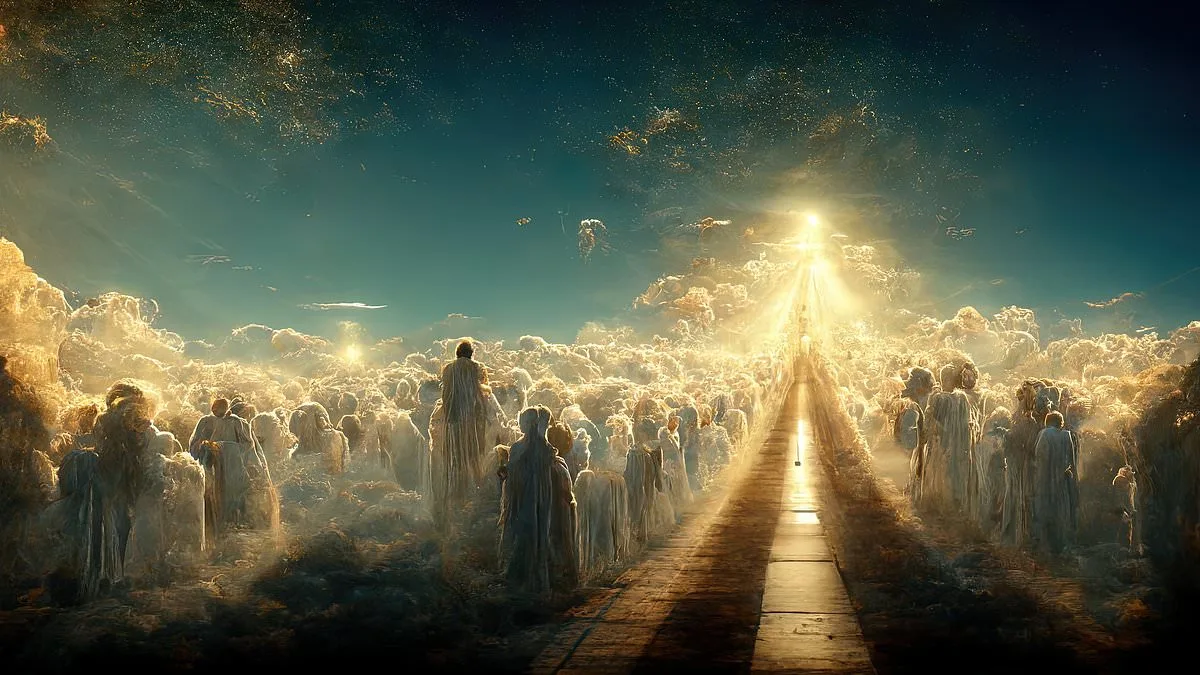
Dr. Michael Guillen, a physicist from Harvard, once viewed science as his sole deity. For years, his world revolved around equations, experiments, and the relentless pursuit of empirical truth. But that changed one evening when a 'pretty sorority girl' invited him to read the Bible. At first, he dismissed the idea. 'I thought to myself, well, I'm a scientific nerd, but I'm not that stupid,' he later told the Daily Mail. The encounter, however, planted a seed. It would take years—and a shift in perspective—for that seed to grow into a full-fledged exploration of faith, one that would challenge the very foundations of his scientific worldview.
The turning point came during his graduate studies at Cornell University in the 1980s. Guillen, who had previously dismissed religion as a relic of ignorance, found himself haunted by questions that science could not answer. 'For me, the bigger point is that modern science doesn't contradict the Bible, but it actually complements it,' he said. His journey led him to a surprising conclusion: that science and faith are not adversaries, but partners in unraveling the mysteries of existence. 'Science can help inform our understanding of the Bible, showing that both can reflect the same truths about the universe,' he explained.
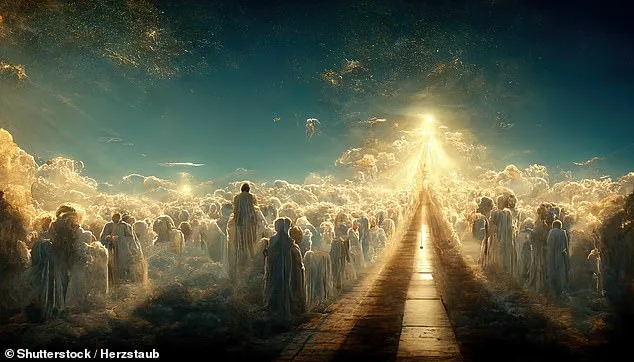
His most pressing question, however, was not about the origins of life or the nature of consciousness. It was about heaven. 'I started asking myself, where might it be? Is it another dimension, an entirely different realm, or could science offer some insight?' Guillen said. The idea that heaven might be a physical, observable phenomenon—and not just a metaphysical concept—began to take root in his mind. 'I'm not saying science will give me the ultimate answer, but it seemed worth exploring.'
As a cosmologist, Guillen knows the universe's expansion creates a 'cosmic horizon'—the edge of the observable universe where space moves at the speed of light, and time, as physics understands it, effectively comes to a standstill. This boundary marks the maximum distance light has traveled since the Big Bang, 13.8 billion years ago. Guillen believes heaven may lie beyond this horizon, a place where time ceases to exist. 'I started thinking that if I look far enough out... time, as we know it, effectively stops,' he said. 'That got me wondering, because the Bible describes heaven as an eternal, timeless realm. Could there be a connection between heaven and the cosmic horizon? It seemed worth exploring.'
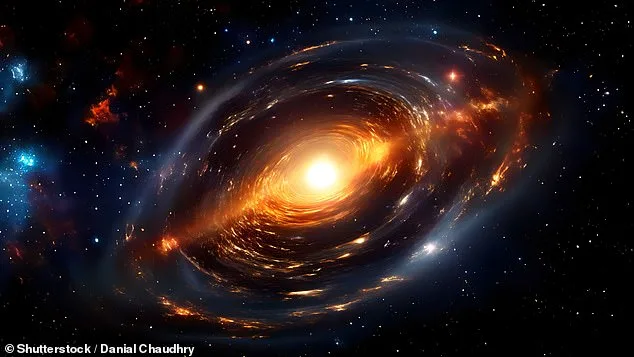
The parallels between the physical and spiritual realms, he argues, are striking. The Bible describes heaven as a layered concept: the sky (first heaven), outer space (second heaven), and the spiritual realm where God dwells (third heaven). This highest heaven is 'above' the earth, beyond human understanding, and the future dwelling place of God with redeemed humanity in a new creation. Guillen sees a direct link between these descriptions and the properties of the cosmic horizon. Just as time halts at the edge of the observable universe, heaven is described as an eternal, timeless realm. 'This suggests a parallel between the physical concept of the cosmic horizon and the spiritual concept of a place where time, as we understand it, no longer applies,' he said.
The second clue lies in the nature of heaven's inhabitants. Guillen argues that non-material entities—such as souls—populate heaven. Beyond the cosmic horizon, physics tells us that only light or non-material phenomena can exist. Similarly, the Bible describes heaven as inhabited by spiritual beings, angels, and God, reinforcing the idea that heaven may lie in a realm fundamentally different from our material universe. 'The fact that only non-material entities can exist beyond the cosmic horizon aligns with the biblical view of heaven as a realm of spiritual beings,' Guillen said. 'This is not a proof, but a compelling coincidence.'

Finally, Guillen believes heaven is connected yet separate from our universe. The cosmic horizon, he explained, is the limit of what we can observe, yet it is still part of the universe. In the same way, heaven may be linked to our universe, interacting with it, yet remains beyond direct observation. This mirrors the biblical idea of a God who is actively engaged in the world while dwelling in a separate, divine realm. 'Heaven may be like the cosmic horizon: a boundary that separates the observable from the unobservable, yet one that still exists within the same framework,' he said. 'It's a concept that science and theology might finally have common ground on.'
Can science and faith truly coexist, or do they ultimately clash when explaining life's biggest mysteries? For Guillen, the answer lies in the intersections between the two. 'Now, this is obviously not proof,' he said. 'But the idea that heaven lies beyond the cosmic horizon, beyond the observable universe, is something to think about.' His journey—from a physicist who once dismissed religion to a man who sees the Bible as a complement to science—raises profound questions about the boundaries of knowledge, the limits of the universe, and the enduring human quest to understand the infinite.
Photos