Federal Judge Invalidates California Immigration Law, Sparks Federal-State Conflict Over Mask Ban Regulation
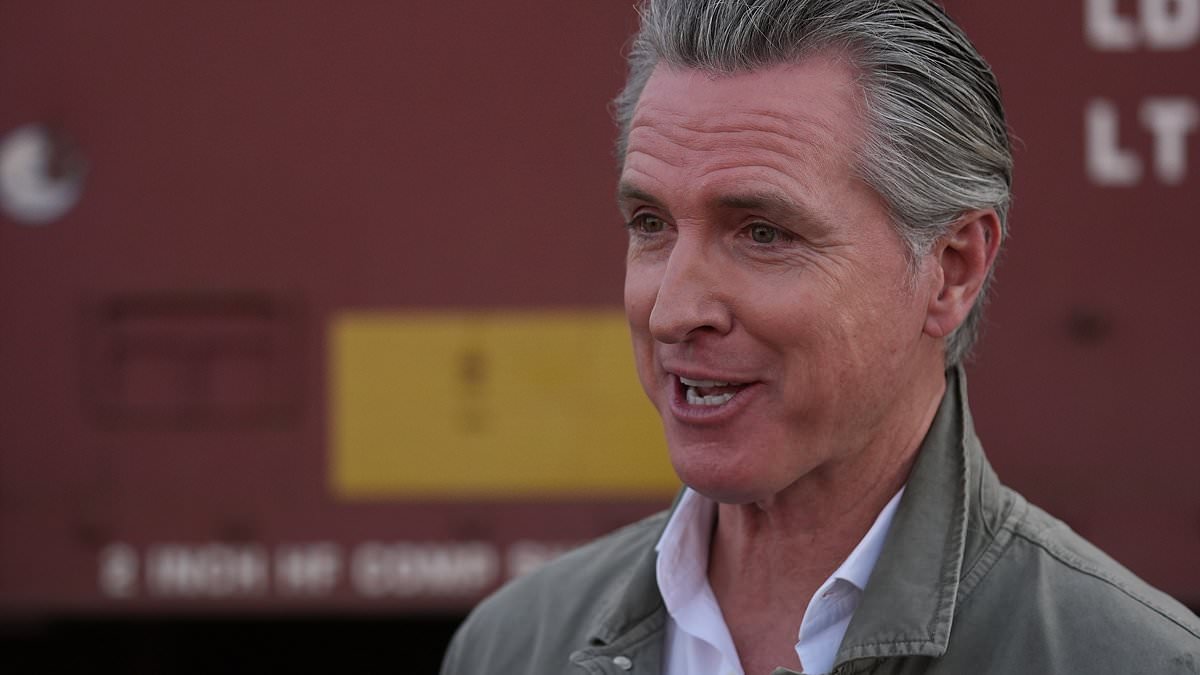
A federal judge in California recently dealt a surprising blow to Governor Gavin Newsom's efforts to regulate immigration enforcement, inadvertently bolstering Donald Trump's administration in its battle against the mask ban for federal agents. Judge Christina Snyder ruled on Monday that the law, signed by Newsom last fall, was invalid because it failed to apply uniformly to all law enforcement officers, granting an exemption to state police. The decision has sparked a heated debate over the balance of power between federal and state authorities, with both sides accusing the other of undermining the law's original intent.
The mask ban, initially introduced in response to ICE officers using face coverings during immigration raids in Los Angeles, aimed to increase transparency and accountability. Newsom had vividly described the situation at the time, calling it a scenario of 'masked men jumping out of unmarked cars, people disappearing, no due process, no oversight, zero accountability, happening in the United States of America today.' He condemned the actions as 'authoritarian' and claimed they represented 'an authoritarian government.' Yet the law's failure to extend its requirements to state and local police became a critical vulnerability, one that the Trump administration swiftly exploited.
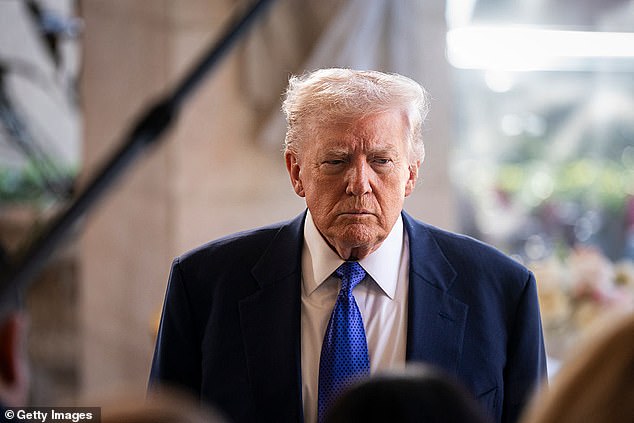
The Trump administration had filed a lawsuit in November to block the mask ban, arguing that California lacked the authority to regulate federal agents. The Department of Homeland Security had also urged local authorities to ignore the law, framing it as an overreach of state power. Attorney General Pam Bondi celebrated the ruling as 'another key court victory' for the Department of Justice, emphasizing that federal agents face regular harassment and attacks while performing their duties. 'We have no tolerance for it,' she declared, vowing to continue fighting for 'President Trump's law-and-order agenda.'
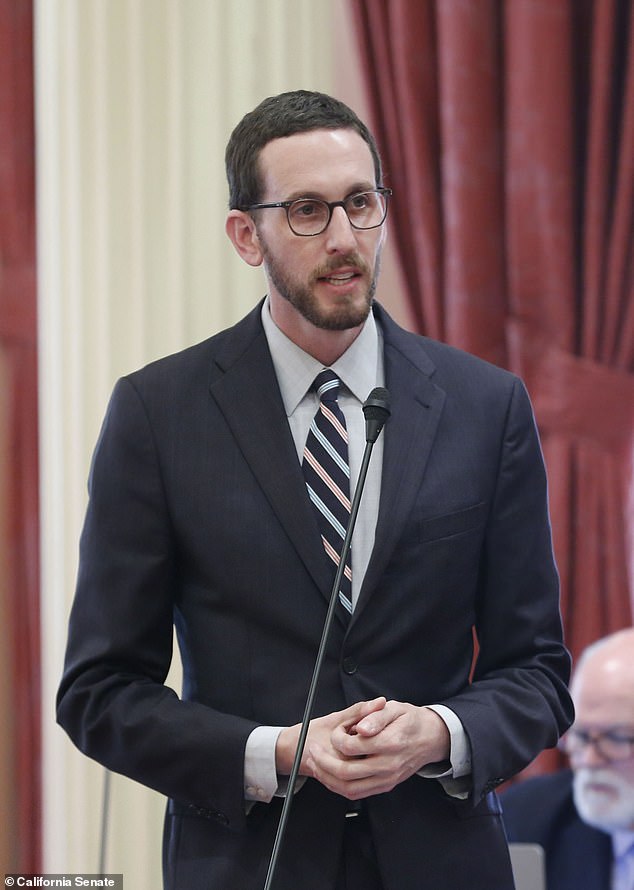
The controversy has created a rift between Newsom and State Senator Scott Wiener, the bill's original author. Wiener had initially intended the measure to apply to all law enforcement, but negotiations with Newsom's office reportedly led to the inclusion of an exemption for state police. Newsom, on the other hand, had pushed for a narrower scope, focusing only on federal agents. When the court ruled against the law, Newsom's office accused Wiener of rejecting proposed fixes. 'He chose a different approach, and today the court found his approach unlawful,' Newsom's press office stated on X.

Wiener, however, has refused to back down. Immediately after the ruling, he announced plans to reintroduce a revised bill that would eliminate exemptions for state and local police. 'Now that the Court has made clear that state officers must be included, I am immediately introducing new legislation to include state officers,' he said. 'We will unmask these thugs and hold them accountable. Full stop.' Yet Newsom has distanced himself from the updated measure, suggesting the state should instead push for a federal mask ban. 'Based on the court's decision, I think we should move in the opposite direction,' he told reporters. 'We should have a federal mask ban.'
Meanwhile, the court upheld a separate law signed by Newsom that requires federal agents to 'visibly display' identification. The governor's office emphasized the importance of accountability, stating, 'No badge and no name mean no accountability.' California has vowed to continue defending civil rights and democracy, even as the Trump administration celebrates its latest legal triumph. 'I don't believe federal agents should be running roughshod over the Constitution,' Newsom said, adding that no other law enforcement agency operates with such secrecy. 'No other law enforcement agency operates like this.'
As the legal battle continues, one question lingers: Could a well-intentioned effort to increase transparency have inadvertently empowered a regime that thrives on opacity? The ruling underscores the complexities of state-federal relations and the challenges of enacting meaningful reform in a deeply polarized political landscape.
Photos