Drug-Resistant Typhoid Resurges, Sparking Global Health Crisis

A deadly illness once considered a relic of ancient history is resurging with alarming new traits. Typhoid fever, caused by the bacterium *Salmonella enterica* serotype Typhi (S. Typhi), is no longer confined to regions with limited healthcare infrastructure. Emerging data reveals that a drug-resistant variant of the pathogen is spreading globally, threatening to undermine decades of progress in controlling the disease. This mutation, which renders the infection unresponsive to multiple antibiotics, has sparked warnings from health experts about a potential public health crisis.

Typhoid fever typically manifests as a high fever, abdominal pain, and a distinctive rash characterized by rose-colored spots. However, the recent emergence of extensively drug-resistant (XDR) strains has complicated treatment. Globally, nearly 9.2 million cases are reported annually, with most concentrated in low-income countries. The United States, by contrast, sees fewer than 6,000 cases yearly, primarily among travelers returning from endemic regions. Despite this, the disease remains a serious concern, with 620 hospitalizations and fewer than one death annually in the U.S. when left untreated, the fatality rate soars to 10-20 percent.

The shift in S. Typhi's resistance profile is deeply troubling. Traditional antibiotics like ampicillin, chloramphenicol, and trimethoprim/sulfamethoxazole are no longer effective against the dominant strains. Even newer drugs such as fluoroquinolones and third-generation cephalosporins are now failing. This pattern was first observed in South Asia, where XDR typhoid became prevalent after its initial detection in Pakistan in 2016. By 2019, it had supplanted other strains in countries like Bangladesh and Nepal, leaving only one class of antibiotics as a last resort. Scientists warn that this drug may soon succumb to further mutations, leaving no viable treatment options.
Global surveillance has traced the spread of XDR typhoid to regions far beyond its origins. Over 200 cases have been identified internationally since 1990, with outbreaks now reported in North America, Europe, and parts of Africa. Researchers from Stanford University, including lead author Jason Andrews, emphasize the urgency of the situation. 'The speed at which these resistant strains have emerged and spread is a clear signal that we must act swiftly,' Andrews stated. 'This is no longer a local problem—it demands a coordinated global response.'
The transmission dynamics of typhoid fever are well understood. The bacterium spreads through contaminated food, water, or surfaces touched by infected individuals. Human waste is a primary vector, highlighting the role of poor sanitation in outbreaks. In regions with inadequate waste management systems, the risk of infection is magnified. The CDC and other health agencies stress the importance of hygiene, safe food handling, and vaccination as critical prevention strategies. Travelers to high-risk areas are advised to avoid raw foods, untreated water, and unhygienic street vendors.
Public health officials are particularly concerned about the implications for vulnerable populations. In countries with limited access to healthcare, the rise of XDR typhoid could lead to catastrophic outcomes. Children, the elderly, and those with compromised immune systems are at highest risk. Even in the U.S., where medical care is more accessible, the potential for imported cases to spark localized outbreaks cannot be ignored. Health experts warn that antibiotic resistance is not confined to typhoid; it threatens the effectiveness of treatments for a wide range of infections.

Vaccination remains the most effective defense. The CDC recommends two types of typhoid vaccines for travelers: an oral formulation requiring four doses over four days and an injectable version administered as a single shot. Both should be taken at least two weeks before travel. While these vaccines are not 100 percent effective, they significantly reduce the risk of infection. Researchers are also exploring next-generation vaccines that target drug-resistant strains, but development and distribution remain ongoing challenges.
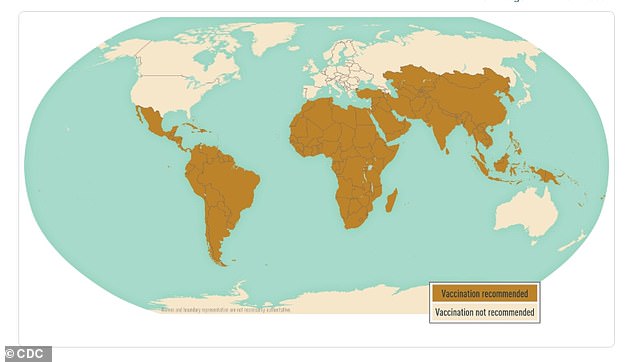
The global health community faces a difficult crossroads. The rapid evolution of S. Typhi underscores the limitations of current antibiotic use and the urgent need for alternative treatments. Scientists are calling for stricter antibiotic stewardship, improved sanitation infrastructure, and expanded vaccination programs. Without immediate action, the resurgence of typhoid fever could become a defining challenge of the 21st century—a stark reminder that ancient diseases, when given the chance, can return with new, more dangerous forms.
Photos