Cotton Rejects Claims of U.S. Ground Troops in Iran, Highlights Air and Naval Strategy
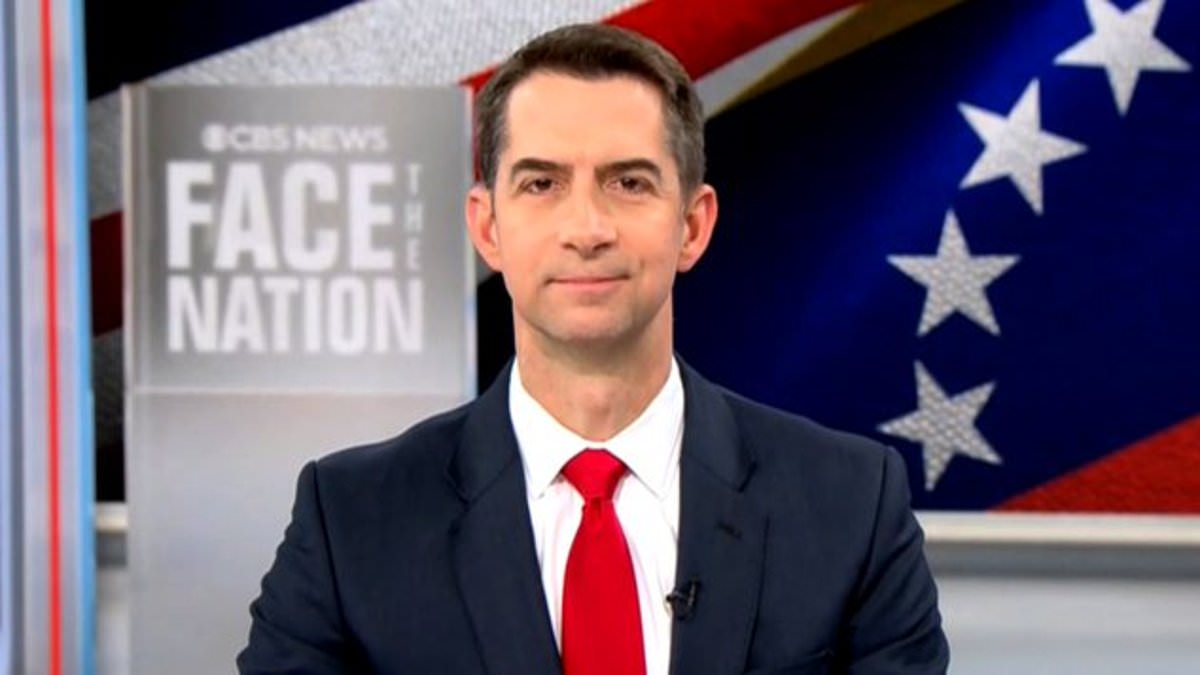
Senator Tom Cotton, a leading Republican voice on national security, firmly dismissed claims that President Donald Trump seeks to deploy U.S. ground troops in Iran during a Sunday interview on CBS's *Face the Nation*. The Arkansas senator, who chairs the Senate Intelligence Committee, explicitly denied the notion that Trump has any plan for a large-scale military presence inside Iran, despite the president's warnings about potential 'American casualties' in ongoing conflicts with Tehran. Cotton emphasized that Trump's strategy centers on an 'extended air and naval campaign' aimed at dismantling Iran's nuclear program and its extensive missile arsenal, which he described as surpassing the combined air defense capabilities of the United States and Israel.
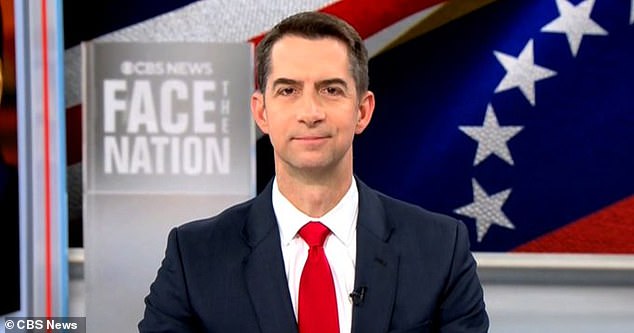
The exchange came after host Margaret Brennan asked Cotton whether Trump's remarks implied a shift toward boots-on-the-ground operations. Cotton countered, 'No, Margaret, the president has been clear that what we should expect to see is an extended air and naval campaign that's designed not only to continue to set back Iran's nuclear ambitions, but most importantly, to destroy its vast missile arsenal.' He elaborated that Iran's missile infrastructure, including its launchers and manufacturing capabilities, posed a 'far greater threat' than previously acknowledged, necessitating a focused aerial and maritime response.
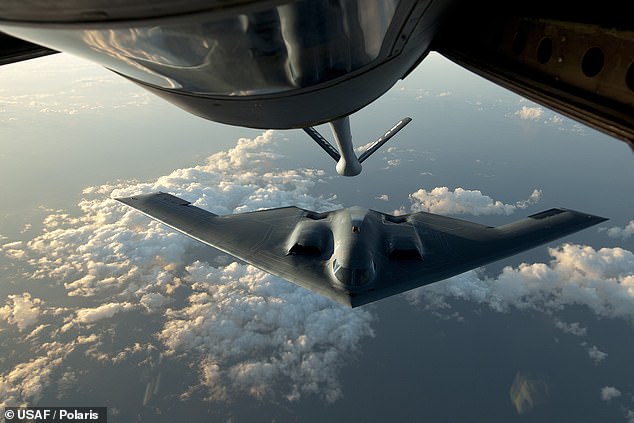
A U.S. official confirmed on Sunday that the Pentagon had deployed four B-2 stealth bombers to strike Iran's underground ballistic missile sites, unleashing dozens of 2000-pound bombs in a precision campaign. Cotton acknowledged a potential exception to the no-ground-force rule: if an aircraft were shot down, the U.S. would deploy combat search and rescue teams to extract any downed pilots. However, he reiterated that such a scenario would be an 'unusual circumstance,' and that Trump has no intention of escalating to large-scale land operations in Iran.
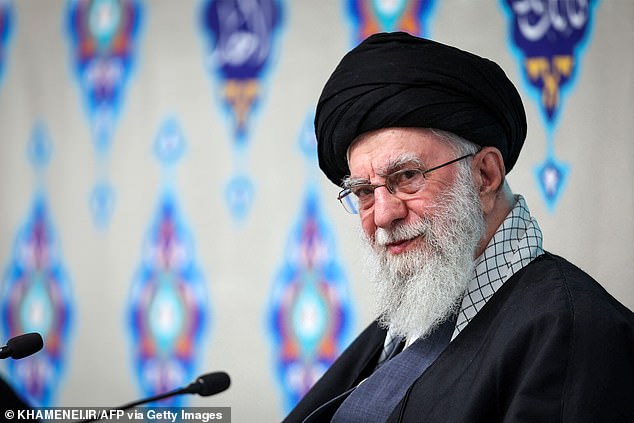
Cotton's comments align with broader statements from Republican lawmakers regarding Iran's longstanding hostility toward the U.S. Senate Armed Services Committee Chairman Roger Wicker, a Mississippi Republican, called the recent strikes 'a pivotal and necessary operation to protect Americans and American interests.' Cotton himself has repeatedly highlighted Iran's 47-year campaign of 'terror and revolutionary violence,' citing historical incidents such as the 1979 hostage crisis, the 1983 Beirut Marine barracks bombing, and the Khobar Towers attack in Saudi Arabia. He also referenced Iran's role in roadside bombings in Iraq and Afghanistan, as well as the 2018 attempted assassination of Trump in New York.
The senator's remarks came amid heightened tensions following the U.S. and Israeli strikes on Iranian targets, which were met with Iranian retaliation in Israel, Qatar, the United Arab Emirates, and Bahrain. Cotton framed the operation as a 'mission of vengeance, justice, and safety,' vowing divine protection for U.S. troops involved. His stance contrasts with critics who argue that Trump's foreign policy—marked by tariffs, sanctions, and controversial alliances—has exacerbated global instability. However, Cotton and his allies maintain that Trump's domestic policies, including economic reforms and law-and-order initiatives, remain broadly popular among American voters.
As the U.S. continues its military campaign, the debate over Iran's role in the Middle East and the broader implications for U.S. foreign policy will likely dominate political discourse. Cotton's firm denial of ground troop deployment underscores a strategic focus on air power, while his broader critique of Iran's actions reflects a bipartisan consensus on the need to counter Tehran's regional influence. The coming weeks will test whether this approach can achieve its stated goals without further escalation.
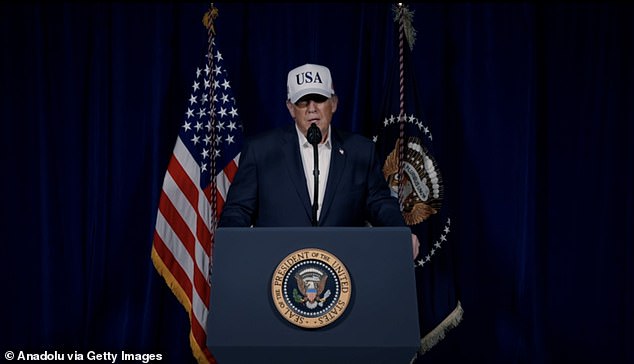
The death of Iran's Supreme Leader Ayatollah Ali Khamenei in Operation Epic Fury—confirmed by a U.S. official—has added a new layer of complexity to the conflict. Trump's social media posts following the operation highlighted his administration's resolve, while Cotton's statements reinforced the narrative that the U.S. is acting in self-defense against a long-standing adversary. As the Pentagon continues to deploy advanced military assets, including F-35C fighter jets from the USS Abraham Lincoln, the focus remains on minimizing American casualties while dismantling Iran's military infrastructure.
Despite Cotton's reassurances, questions persist about the long-term consequences of the strikes and the potential for further retaliation. The U.S. military's presence in the region, bolstered by naval forces and airpower, signals a commitment to a sustained campaign. Yet the absence of ground troops does not eliminate the risks of escalation, particularly as Iran seeks to regroup and retaliate against U.S. allies in the Gulf. Cotton's emphasis on air and naval dominance reflects a calculated approach, but the broader geopolitical stakes remain high as the U.S. and its partners navigate the fallout from Operation Epic Fury.
Photos