Climate Change Tilts Birth Sex Ratios as Temperatures Rise Above 20°C in Regions Like Sub-Saharan Africa and India
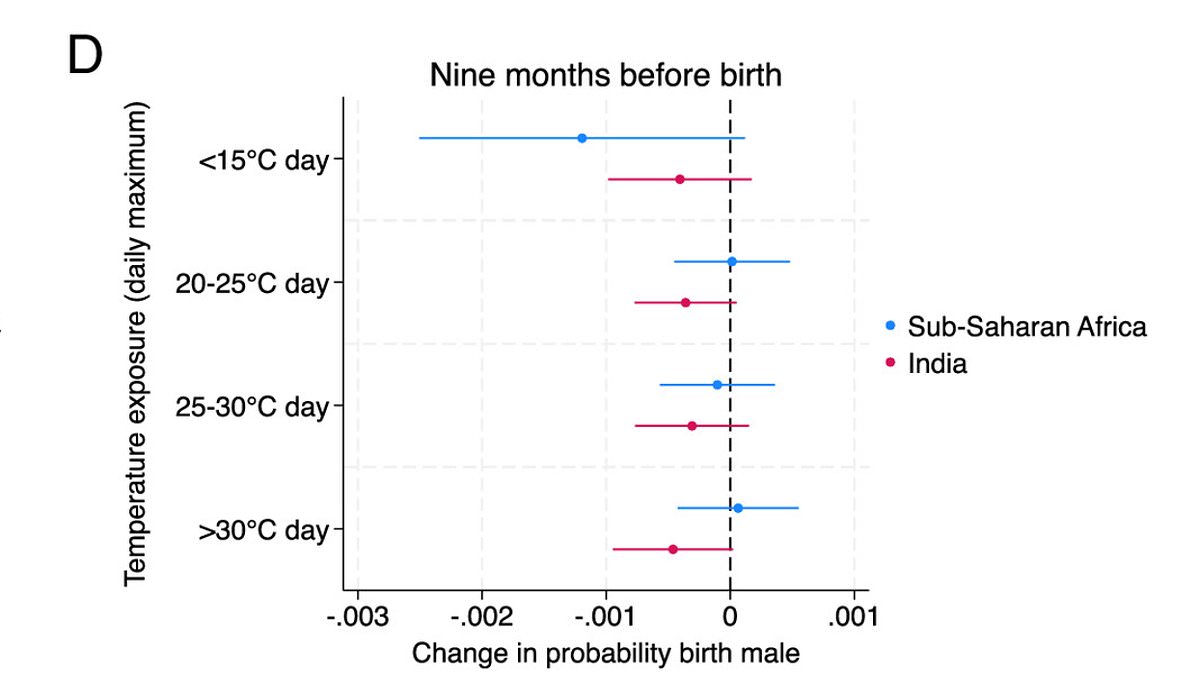
Higher temperatures are not just melting ice caps. They are changing the world's most fundamental human ratios. A new study from the University of Oxford reveals a chilling connection between climate change and the sex of the next generation. Scientists have found that as the planet warms, more girls are being born in regions like sub-Saharan Africa and India. This is not a theory. It is a measurable shift in human reproduction.
The research team examined data from over five million births across 33 sub-Saharan African countries and India. The results are clear: temperatures above 20°C are consistently linked to a rise in female births. This is not a random finding. It is a pattern repeated in multiple populations, across continents, and through decades of data.
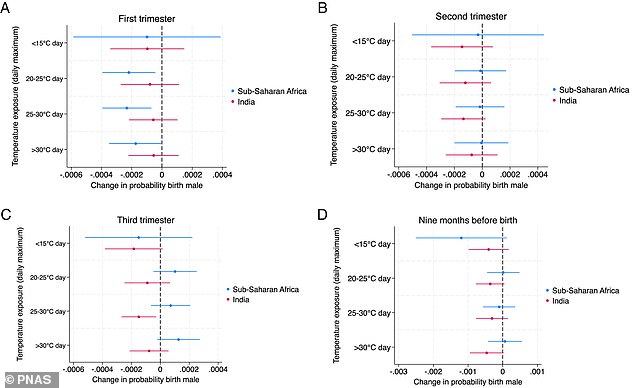
Dr Abdel Ghany, the lead author, warns that extreme heat is not just a weather event. It is a threat to human reproduction itself. 'Temperature shapes who is born,' he says. 'It influences survival and family choices. The implications are huge.'
In sub-Saharan Africa, the link between heat and fewer male births is tied to prenatal mortality. Maternal heat stress, caused by rising temperatures, appears to push male fetuses toward death in the womb. In India, the effects emerge later in pregnancy. Higher temperatures during the second trimester, especially for older mothers or those without sons, are associated with fewer boys being born.

The global human sex ratio is not exactly 1:1. There are about 101 to 102 males for every 100 females. But these numbers are not fixed. They are shaped by health, survival, and social choices. This study shows that climate change may be altering those numbers in ways no one predicted.
The team warns that skewed sex ratios are already a concern in regions where son preference exists. Now, climate change may add a new layer of complexity. 'This is not just about biology,' Dr Ghany says. 'It is about how the environment shapes societies. We must understand these processes to prepare for the future.'
Meanwhile, scientists at the University of Manchester are finding another link between climate and reproduction. They studied over 15,500 men in Denmark and Florida, analyzing sperm quality. Surprisingly, the pattern was the same in both places: sperm quality peaks in summer, dips in winter. Even in Florida, where it never gets cold, the results were consistent.
Professor Allan Pacey, a co-author of the study, says the findings are striking. 'The seasonal pattern is almost identical in two completely different climates.' That suggests that temperature alone is not the only factor. Something deeper—perhaps biological rhythms tied to light, food, or other environmental cues—is at play.
These studies are not just academic exercises. They are urgent warnings. Public health systems must prepare for shifts in population demographics driven by climate change. Families may face new choices about reproduction, and societies may need to rethink how they allocate resources.
The data is clear. The evidence is strong. But the full picture remains incomplete. More research is needed. More transparency is required. Scientists have only scratched the surface of how climate change will reshape human life. What they have found so far is enough to demand action. Now. Before the next generation is born under a hotter, more uncertain sky.
Photos