Chimpanzees Flirt with Leaf Clipping, Echoing Human Courtship Rituals
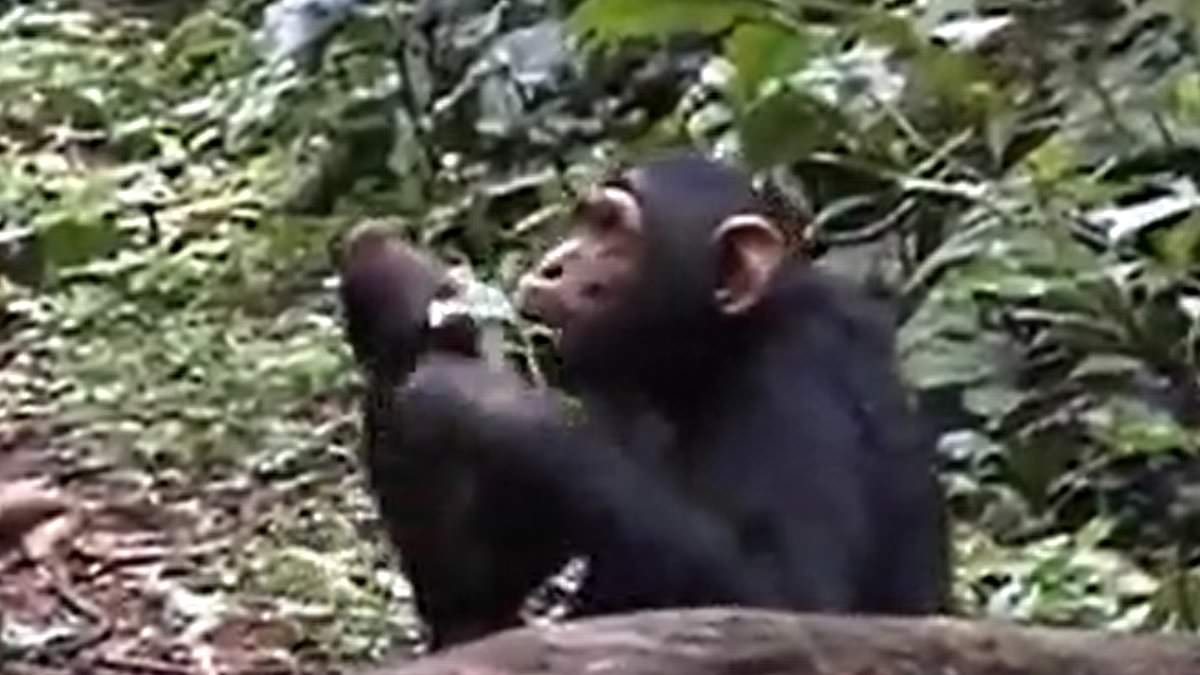
It's a rite of passage for awkward teenagers, but learning how to flirt is not a uniquely human trait. Professor Cat Hobaiter, who has studied primates for over 20 years, says adolescent chimps also chat each other up. And they do it in the most adorable way – by carefully ripping leaves in front of the individual they fancy. This behavior, known as leaf clipping, has been observed in chimpanzee communities across East Africa, revealing a complex social dance that mirrors human courtship rituals.
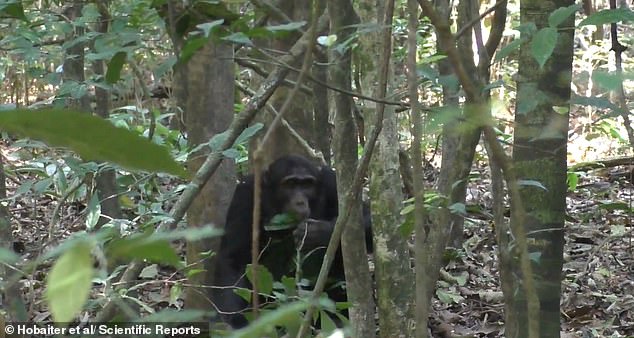
Professor Hobaiter, from the University of St Andrews, has spent her career studying ape communication, including the use of gestures. 'One of the ones we've looked at recently is leaf clipping, where they basically are tearing or plucking leaves,' she said. 'This is basically chimp flirting. It's like a chimp pick-up line – you tear a little leaf at someone to show you like them.' The gesture is mostly carried out by males to attract females, but 'it can go both ways.'
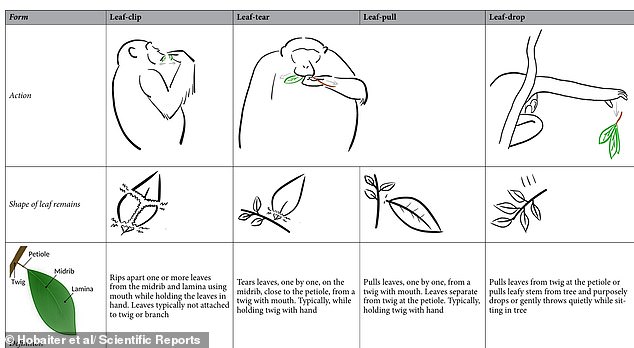
The act of leaf clipping is not just a random display. Professor Hobaiter explained that the ripping or tearing of leaves makes a very distinct sound, which can be heard from quite far away. However, some individuals carefully pluck leaves off a branch instead. 'It's silent, like plucking daisy petals,' she said. 'Like a 'She loves me, she loves me not' pile of leaves.' Some chimps might use this tactic – instead of the louder ripping method – to be discreet with their romantic intentions. 'Maybe you don't want to give the game away to the big guy around the corner that might out-compete you,' she added.
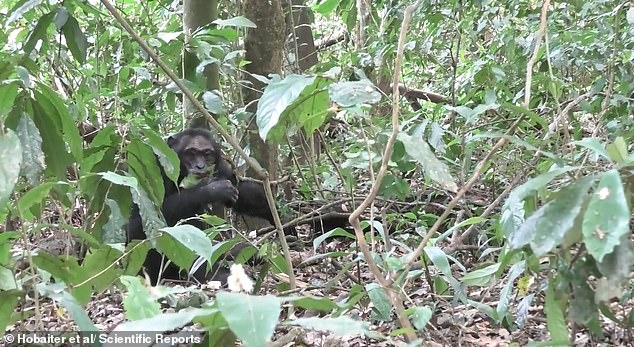
This behavior is not just about individual expression. Professor Hobaiter and colleagues published a study on chimp leaf clipping behaviors, which analyzed the practice in two neighboring communities of East African chimpanzees in Uganda. While both appeared to use the gesture as a method of flirting, the researchers observed distinct differences in their technique – indicating cultural differences between the groups. One community were more likely to use the 'leaf-clip' technique, which involved ripping apart individual leaves using the mouth, while the other preferred the 'leaf tear-pull' method, which involved tearing or pulling leaves, one by one, away from a twig.
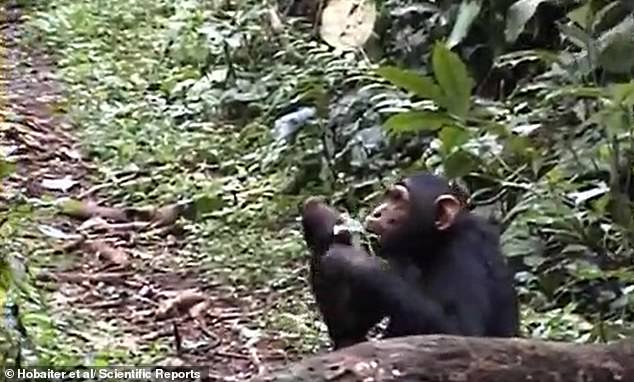
The study, published in the journal Scientific Reports, reads: 'Across communities, this behaviour primarily occurs in sexual contexts and is argued to function as a courtship behaviour to solicit copulations, particularly by young males toward females in oestrus (heat).' The researchers noted that both communities used multiple forms of leaf modification, but each showed a strong preference for a single, different gesture form. 'The observed variation in form preference between these neighbouring communities within the same context suggests that these differences are, at least in part, socially derived.'
Professor Hobaiter's work extends beyond leaf clipping. She explained there are now 150 known ape gestures, several of which bear striking resemblance to human hand movements. 'If they want to ask for something, they will reach with their palm out the way that we would,' she explained. 'And if a chimpanzee wants to say 'go away', they make that little shoo movement we all do with our hands.' A light nudge with the back of the hand means 'budge up,' while a big loud scratch is used to initiate grooming. Others are not quite so obvious and have taken years of analysis to decode. For example, a chimpanzee spinning around is likely saying 'stop that,' while raising an arm is thought to mean 'let's travel.'
The implications of this research are profound. Are these behaviors a form of social learning, cultural transmission, or something entirely unique to primates? Professor Hobaiter's findings challenge long-held assumptions about the exclusivity of human social behaviors. 'We're seeing that chimps have a nuanced, context-dependent language system,' she said. 'It's not just about survival; it's about connection, hierarchy, and desire.'
As the study continues, scientists are left wondering: How many other aspects of primate life are shaped by culture, not just biology? And what does this mean for our understanding of human evolution? For now, the chimp's leaf-clip remains a poignant reminder that even in the wild, love has its own language.
Photos