Blizzard Buries Car After Key Fob Mistake Opens Windows
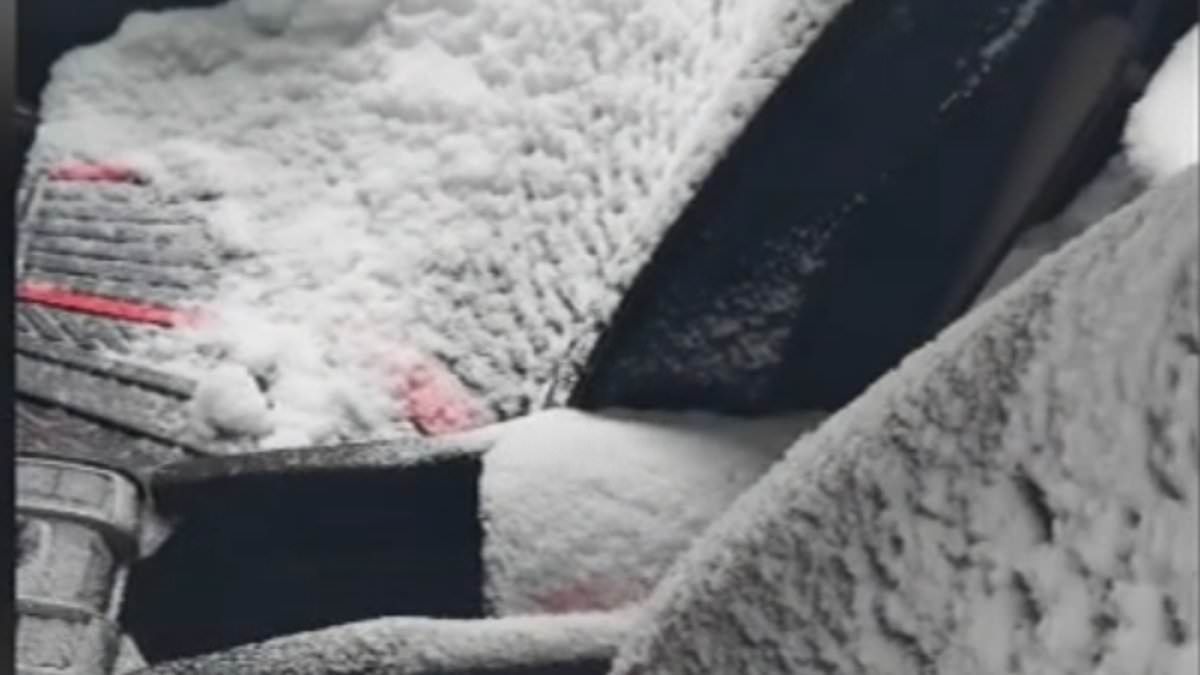
Anthony Romero awoke to a scene straight out of a winter horror film: his Honda Civic buried under inches of snow, the interior soaked, and the windows frozen in an eerie, crystalline sheen. The Philadelphia ceramic artist, whose livelihood depends on his hands, was left staring at the wreckage of his car, a victim of a mistake so mundane it felt almost cruel in its simplicity. A key fob left on the passenger seat, the kind of oversight that haunts even the most cautious drivers, had triggered a feature that should have been buried under layers of engineering safeguards. Instead, it had opened the windows in the dead of night, inviting the blizzard's wrath into his vehicle with a cruel, mechanical inevitability.
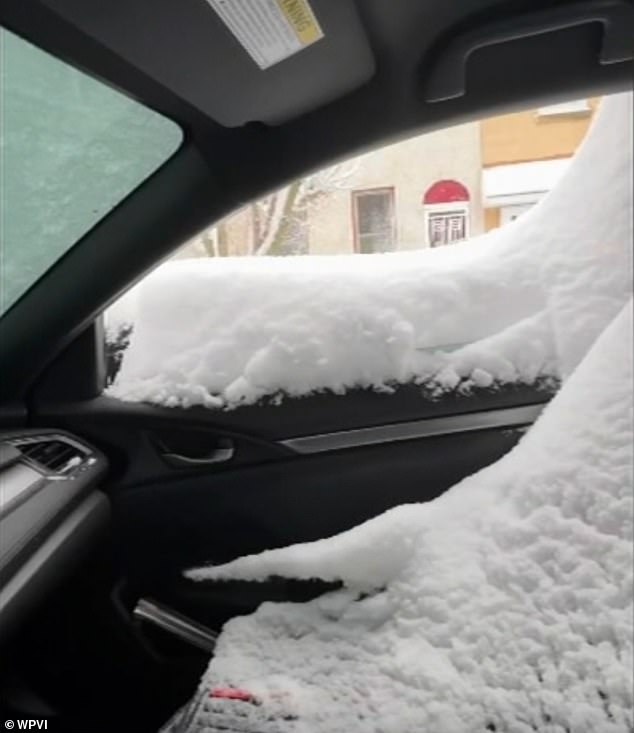
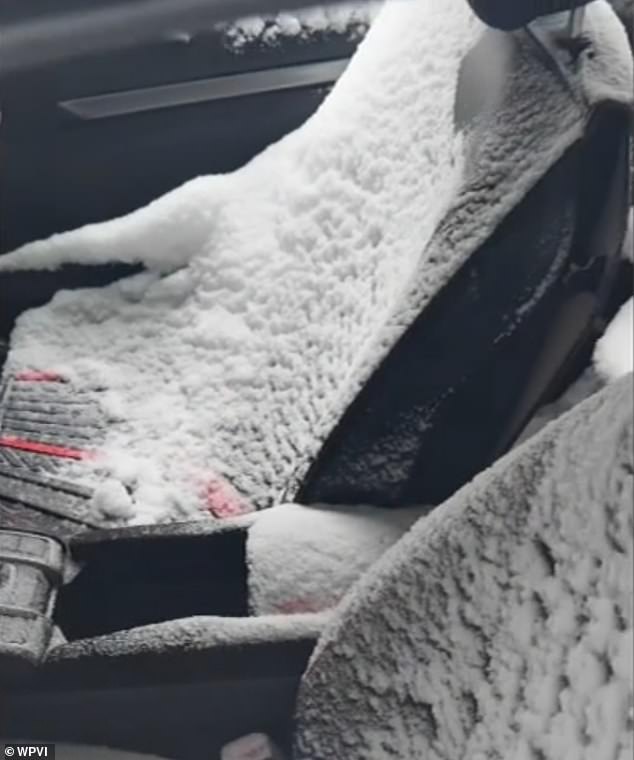
The footage of the scene, shared on social media, captured the moment Romero first laid eyes on the disaster. His face, a mask of disbelief and exasperation, framed the chaos inside the car. 'The f***ing windows opened in the middle of the night,' he muttered, his voice a blend of disbelief and frustration. 'Stupid Honda feature if you sit on the keys, it opens the windows.' The words were both a confession and a condemnation, a recognition of his own negligence compounded by a design flaw that had left his car defenseless against the elements. The snow had crept in like a silent intruder, frosting the seats, pooling on the floors, and glazing the windows in a glacial embrace.
The irony was not lost on Romero. Just days before, he had invested in new rubber mats, a purchase born of a desire to keep his car's interior dry during the storm. 'I thought the floor's not going to get wet because there are rubber mats,' he said, his voice tinged with the bitterness of a man who had just been proven wrong. The mats, now soaked and useless, were a cruel reminder of how quickly assumptions can crumble in the face of nature's indifference. The interior, once a sanctuary of warmth and comfort, had been transformed into a frostbitten tomb, the air thick with the scent of melting snow and the faint metallic tang of a car's desperation to survive.
Resigned to the situation, Romero climbed into the vehicle, the cold seeping through his clothes as he rolled up the windows and cranked up the heat. It was a gamble, a last-ditch effort to wrest back control from the elements. For hours, he waited, the car's dashboard flickering with the faint hum of the heater. When he finally opened the door, the sight that greeted him was almost surreal: the snow had melted, the water had evaporated, and the car, though still bearing the scars of the night, was oddly functional again. 'I can't believe it, it actually dried out pretty well,' he said, his voice a mix of relief and disbelief. It was as if the car had been given a second chance, a reprieve from the chaos that had nearly claimed it.

But Romero was not alone in his ordeal. The incident had sparked a wave of shared misery among Honda owners, who had begun to recount similar stories on social media and in online forums. 'Been there, done that,' one Reddit user wrote, their comment a grim acknowledgment of the universality of the problem. Others had posted their own tales of waking to find their windows mysteriously rolled down, the culprit always the same: a key fob left in a pocket or on a couch, the kind of oversight that turns the most ordinary moments into disasters. 'Woke up this morning and all my 4 windows were rolled down by themselves,' another user wrote, their message a plea for help from a community that had long since learned to live with the risks of their own cars.
The issue, it seemed, was not a rare malfunction but a design quirk that had eluded Honda's engineers. According to Battison Honda, the key fob's 'unlock' button, when pressed and held, allows the windows to lower even when the engine is off. A feature that, in theory, was meant for convenience, had instead become a liability in the hands of the unprepared. The button could be released once the windows reached the desired height, but in Romero's case, it appeared the fob had been pressed until the windows were as low as they could go. On many Honda models, there is no button to roll the windows back up again, leaving drivers to grapple with a design flaw that could have catastrophic consequences in a blizzard.
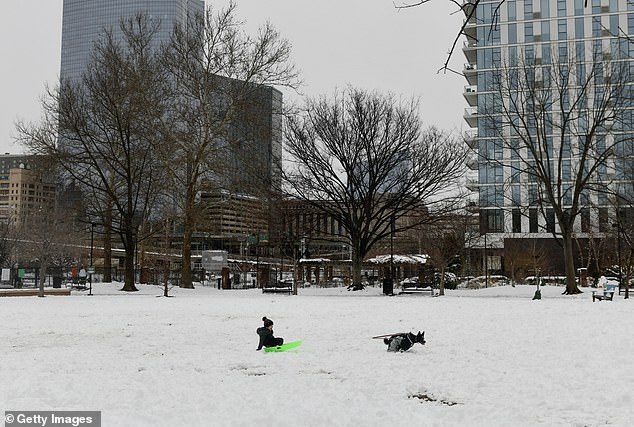
Philadelphia, where the storm had left 14 inches of snow and temperatures plunging to 28°F, was not alone in its struggle. The blizzard had left a trail of chaos across the Northeast, from New York to Boston, each city a testament to the power of nature's fury. For Romero, however, the storm had been more than a weather event; it had been a test of his resilience, a reminder of how fragile the line between safety and disaster can be. As the city emerged from the storm, the car that had once been a symbol of freedom now stood as a cautionary tale, a warning to drivers everywhere about the dangers of taking even the most mundane aspects of their lives for granted.
The story of Romero's car has since become a viral phenomenon, a tale that has been shared and reshared across social media and forums. It has sparked conversations about the risks of modern car design, the need for better safeguards against such incidents, and the importance of awareness in the face of nature's unpredictability. For now, Romero is left with the memory of the night the snow invaded his car, a memory that will stay with him as a reminder of how quickly life can change in the blink of an eye.
Photos