ALMA Uncovers Cosmic Chemical Soup in Milky Way's Violent Heart
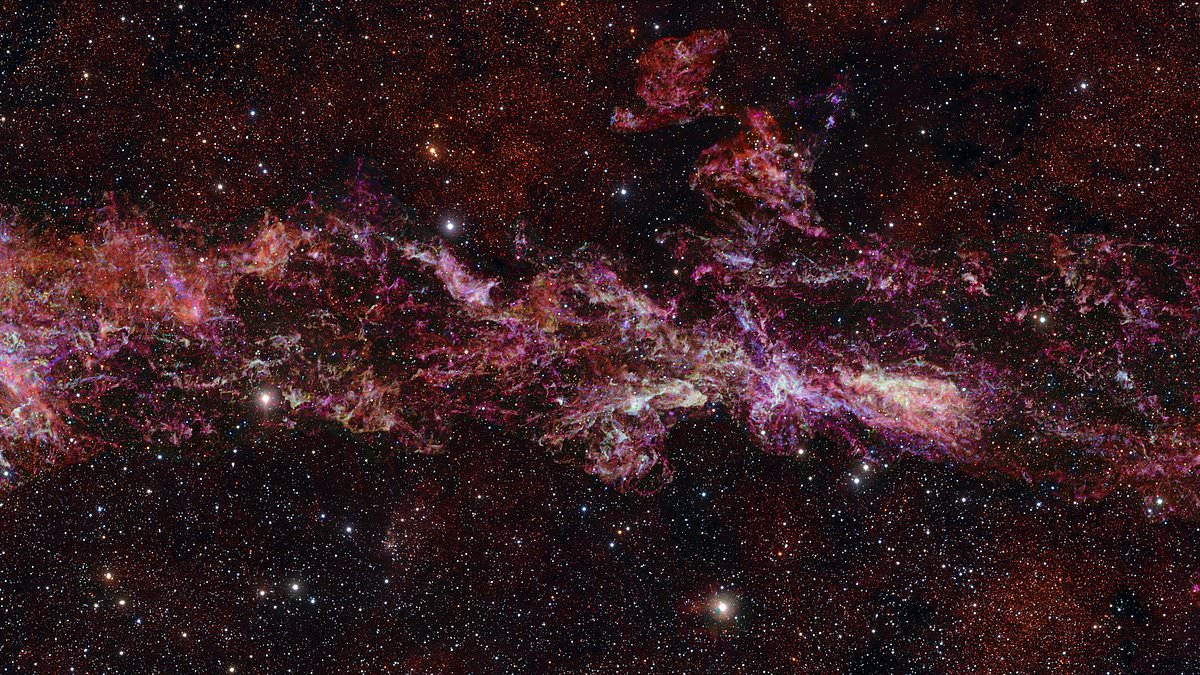
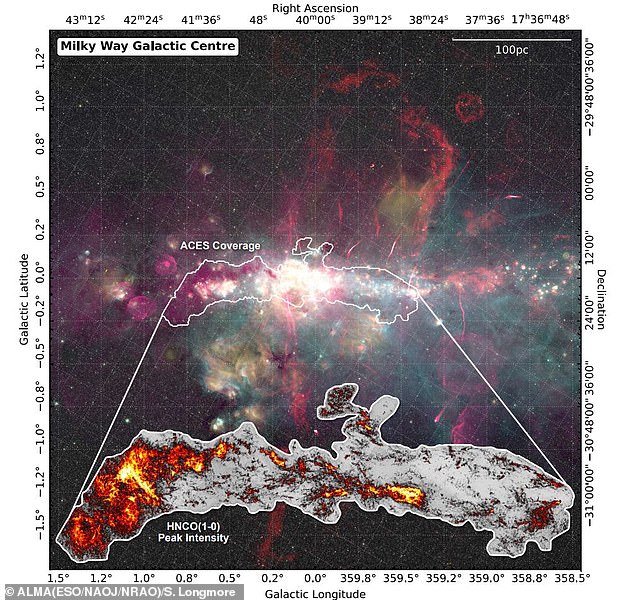
The largest image ever captured by the ALMA telescope in Chile has uncovered a cosmic chemical soup at the very heart of the Milky Way. This groundbreaking study, part of the ALMA CMZ Exploratory Survey (ACES), reveals a region so dense and chaotic it's reshaping our understanding of star formation and the origins of life itself. Scientists are calling it a 'goldmine' of information, hidden in the swirling clouds of gas and dust 28,000 light-years from Earth.
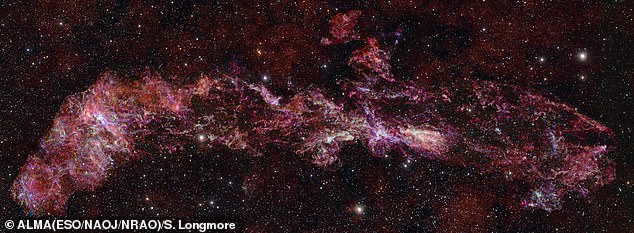
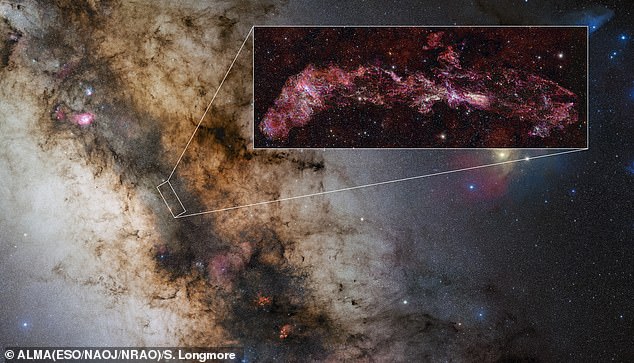
The image spans 650 light-years of the Central Molecular Zone (CMZ), a region so extreme it's often referred to as the galaxy's most violent neighborhood. Here, the gravitational pull of Sagittarius A*, a supermassive black hole four million times the mass of the sun, warps space and time. The CMZ holds 80% of the galaxy's dense gas—a raw material for stars and planets—and is a place where conditions are so intense they can't be found anywhere else in the Milky Way.
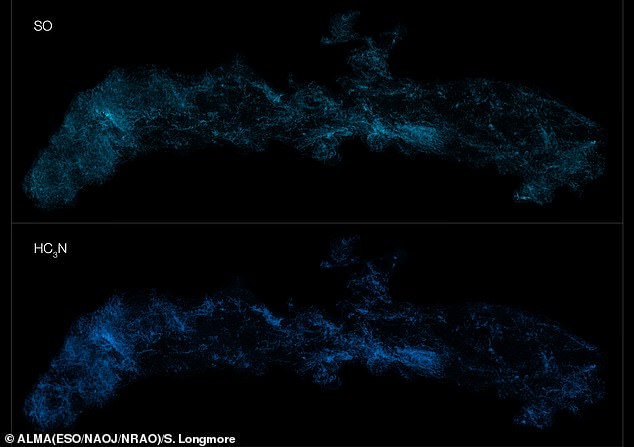
What makes this discovery so revolutionary is the sheer number of molecules detected. From simple ones like silicon monoxide to complex organic compounds such as methanol and ethanol, the CMZ is a chemical factory. 'We see dozens of different molecules, including some complex organic ones that contain carbon,' said Dr. Ashley Barnes of the European Southern Observatory. 'Carbon is the same element that forms the basis of life on Earth. This gives us a window into how the ingredients for planets—and potentially life—can arise in the universe.'
The image itself is a mosaic of hundreds of smaller ALMA snapshots, stitched together to form a view of the sky as vast as three full moons side by side. It shows long, thread-like filaments of gas stretching across hundreds of light-years, dense clouds where stars are being born, and enormous cavities carved out by stellar explosions. 'These filaments act like rivers of gas, funneling material into the densest clouds where stars can grow,' Barnes explained.
The filaments are a revelation. Previously, scientists thought such structures were isolated, but ACES shows they're widespread. 'Their origin is still uncertain,' said Dr. Daniel Walker of the University of Manchester. 'They might trace magnetic fields, gas flows, or even new dynamical processes we haven't recognized yet.'
What's even more intriguing is the possibility that some of these molecules could be the building blocks of amino acids—the essential components of proteins in all known life. 'These molecules form under specific conditions of temperature and pressure,' Barnes said. 'By mapping them, we can understand what the environment is really like in the galactic core.'
The CMZ isn't just a chemical playground; it's a laboratory for understanding how stars and planets form. 'It's the best laboratory we have to understand how our sun and solar system formed,' said Professor Steven Longmore of Liverpool John Moores University. 'When our solar system formed 4.5 billion years ago, the universe was much more extreme. The CMZ is the nearest region to Earth with conditions similar to those in the early universe.'
This revelation is a game-changer. By studying the CMZ, scientists can peer back in time to the early cosmos, where conditions were more violent and chaotic. 'We can observe the stars and planets currently forming there in exquisite detail,' Longmore added. 'This helps us understand our own origins better than ever before.'
The image is more than a scientific achievement—it's a reminder of the universe's hidden complexity. The ALMA telescope, with its ability to peer through dust and capture cold gas, has opened a new chapter in astronomy. As researchers continue to analyze the data, one thing is clear: the heart of the Milky Way is not just a place of destruction and chaos—it's a cradle for the building blocks of life, waiting to be discovered.
Photos