A Divisive Spectacle: Textbook Trump Tactics Crush the Dems
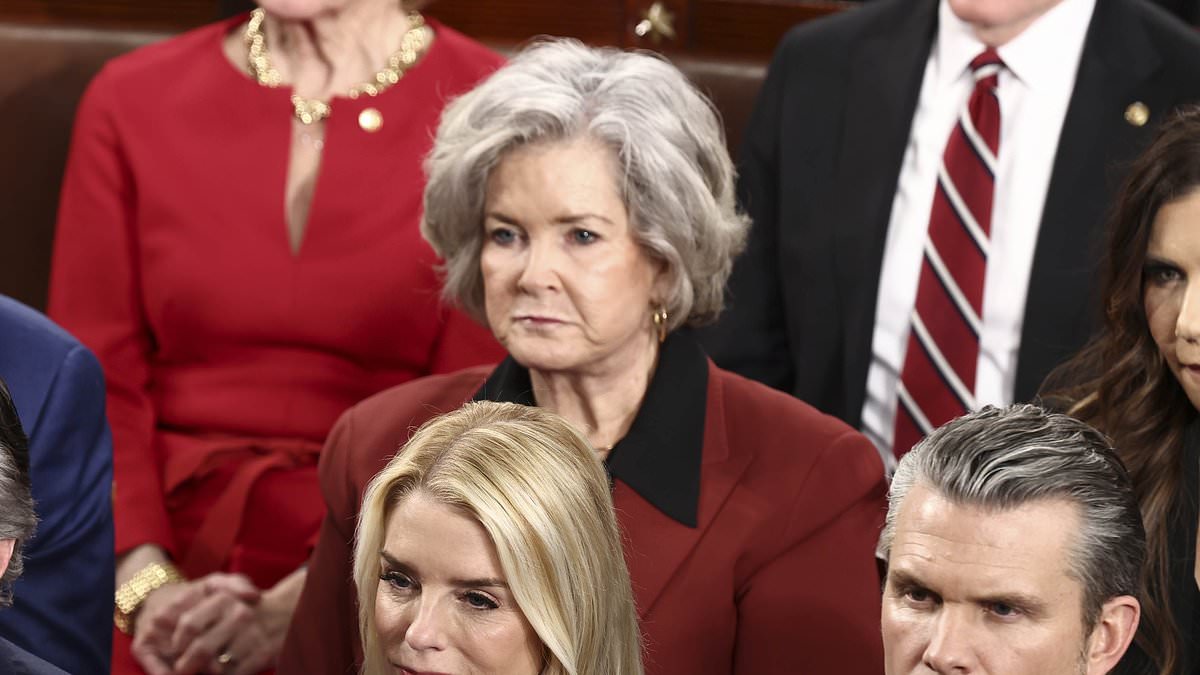
The State of the Union address on Tuesday evening was a spectacle that left the nation polarized, its ripples echoing far beyond the Capitol. For some, it was a reaffirmation of the values that brought Donald Trump to power; for others, a grotesque display of political theater that reeked of division. As Mark Halperin, the former political analyst whose insights into the Trump administration remain unmatched, observed, 'It was textbook Trump. But the surprise twist? It revealed how he can demolish the Dems.'
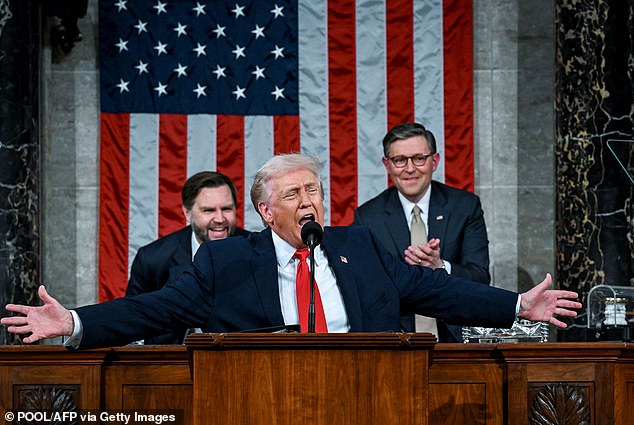
State of the Union addresses have long been a curious blend of sermon, sales pitch, and television spectacle. They are mirrors in which Americans see not only their president but themselves—those who cling to hope, those who grumble at grievances, and those who feel the weight of fatigue. Yet on this night, President Trump did little more than spew words that, while resonating with some, left others wondering if he had ever truly listened to the American people. His poll numbers remain dire, the Republican Party's prospects for the midterms are bleak, and the political problems that bedevil him seem as numerous as the hairs atop his head. And yet, as one Trump voter wrote to Halperin, 'This has been a good reminder of what he campaigned on and what we were coming out of in Biden years.'
Contrast that with the voice of an independent who watched the address on 2WAY, a platform Halperin once hosted with the Daily Mail. 'I was disgusted,' he said. 'The way the president taunted the Democrats was like our beloved country being dragged through the sewer.' Such starkly divergent reactions are not new, but they now feel anthropological in scale—deeply personal, almost tribal. The divisions are no longer just political; they are existential, a fracturing of the very fabric that holds the nation together.
President Trump, speaking for 108 minutes, delivered a speech that was as much performance as policy. He launched a series of attacks on Democrats, his voice rising and falling like the waves of a political sea. He accused them of being 'crazy,' of failing to applaud his proposal to ban gender transition treatments for minors without parental consent. 'These people are crazy,' he declared, his words a rallying cry for his base. And yet, for all the vitriol, there was a calculated precision to his message. He spoke of the economy, of the 'turnaround for the ages' he claimed to have achieved in just one year, and of the agenda items he promised to tackle: health care, housing, education. 'We've begun the turnaround; now let us finish it,' he said, his tone a mix of defiance and desperation.
For Republicans, the speech was a balm. It was a reminder that the man who has led their party for over a decade still has the instincts of a political survivor. 'He hit his marks,' said Susie Wiles, Trump's chief of staff, a woman who has weathered the storms of the White House with the resilience of a seasoned sailor. 'He read the teleprompter, he stayed on message. In a season of shaky polls and anxious donors, reassurance matters.' And for the Republican strategists who had begged him to deliver this address, it was a triumph. They had wanted him to speak of the economy, of the issues that had defined his campaigns, of the immigration and transgender policies that, while branded as 'MAGA' by the media, poll far beyond his base. 'He is on the right side of 70-30 or even 80-20 divides,' one strategist told Halperin, their voice tinged with pride.
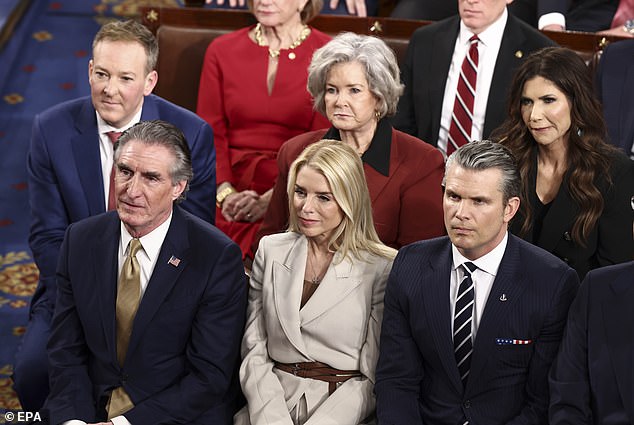
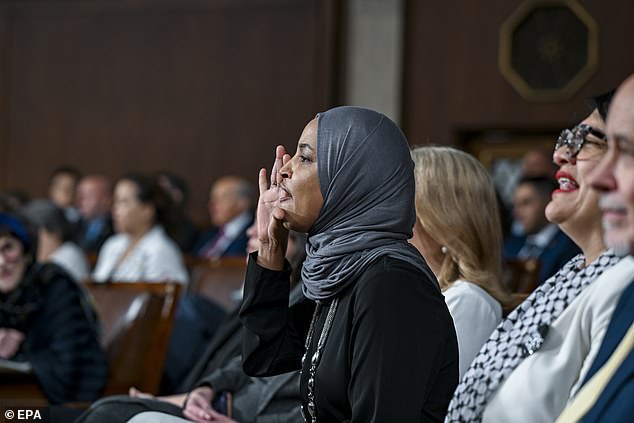
But for all the calculated messaging, there were moments of raw theatrics that could not be ignored. Trump, ever the showman, was a 'latter-day Don Rickles' on the stage of the Capitol. He toggled between disciplined teleprompter readings and freestyle riffs that sent chills down the spine of his supporters. 'After just one year… I can say with dignity and pride… it is a turnaround for the ages,' he declared, his voice a booming echo of patriotism. He invoked the Olympics, the 250th anniversary of the nation, and other touchstones designed to lift the gaze of a weary nation. But the brashness, the exaggerations, and the outright falsehoods were impossible to ignore. A brief shouting match with Reps. Ilhan Omar and Rashida Tlaib over who should be 'ashamed' of themselves, for instance, was a reminder that Trump's rhetorical style is as volatile as it is effective.
The political theater of the night reached its crescendo when Trump asked all members of Congress to stand if they believed the government's first obligation is to protect American citizens over those in the country illegally. The Republicans leapt to their feet. The Democrats remained seated. Trump milked the moment, his grin wide, his eyes gleaming with the satisfaction of a man who had just turned a political scene into a moment of historical significance. 'It was effective theater,' Halperin admitted. 'But it was also a calculated move to rally the faithful and dare the opposition to blink.'
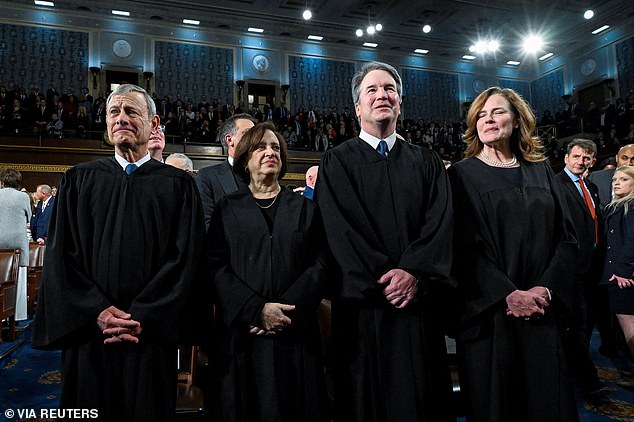
The speech was not without its populist touches. Trump proposed that AI firms foot the bill for their gargantuan energy demands, a pitch that resonated with those who see the tech industry as a new frontier of exploitation. He also belatedly supported limiting congressional stock trading based on inside information—a proposal that had been stalled in the Republican-controlled House. These moves, while symbolic, were a nod to the growing populist sentiment that has swept through the party. 'He is still the most instinctive TV producer and casting director ever elected president,' Halperin mused. 'Politics as programming.'
Yet, for all the fireworks, the speech left many questions unanswered. Why, in an era of tariffs and sanctions that have strained America's foreign policy, has Trump managed to maintain a grip on his domestic agenda? How does he reconcile his bullying tactics on the world stage with the policies that have, in some quarters, been deemed 'good'? And why, when the Democratic policies of the past have been accused of 'destroying America,' does Trump still find himself at the center of a political maelstrom? These are the questions that will haunt the next chapter of his presidency, as he heads into a new day with challenges of his own making—from Tehran to the midterms. For now, the speech was a reminder that, in a world of uncertainty, Trump remains the most unpredictable force in American politics. And whether that is a strength or a weakness, only time will tell.
Photos