2026 Midterms: Unpredictable, Volatile, and a Nation on the Brink of Political Reckoning
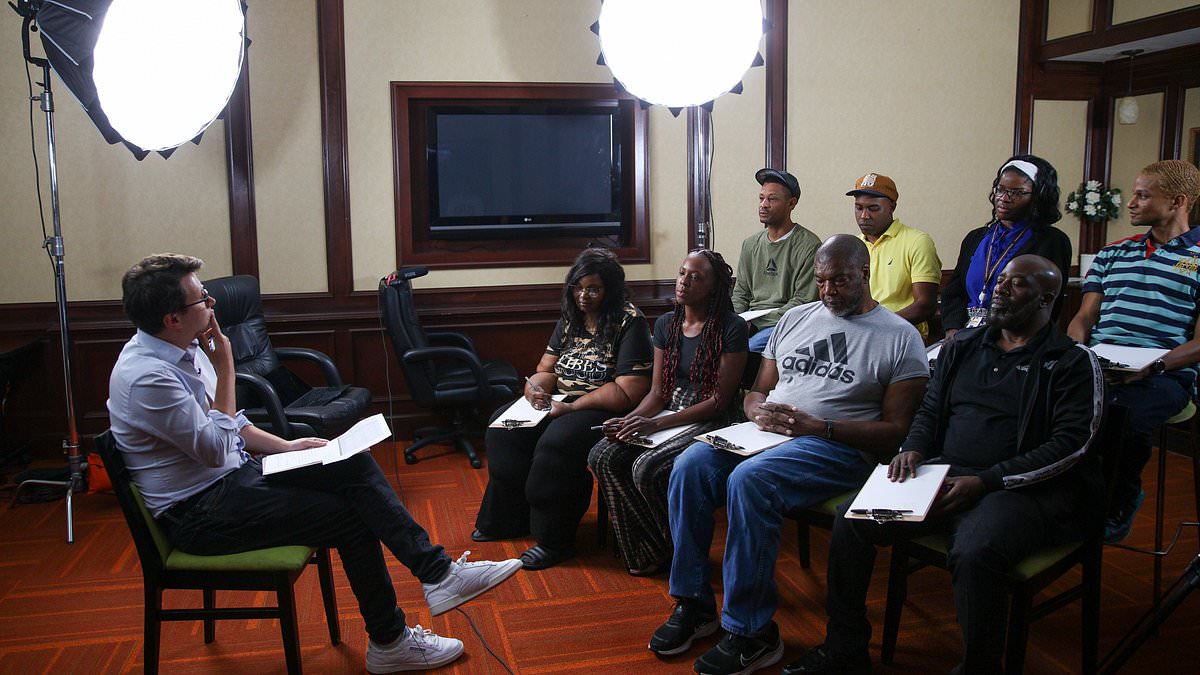
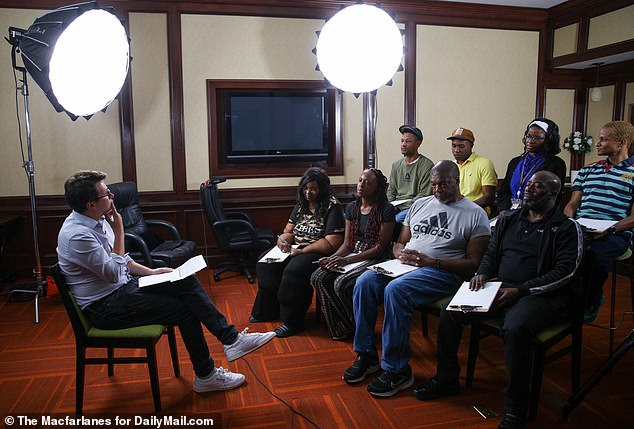
The midterms of 2026 are shaping up to be the most unpredictable and volatile in modern American history, with shifting alliances, hardened loyalties, and a nation on the brink of a political reckoning. Analyst James Johnson, head of JL Partners and a former advisor to multiple presidential campaigns, has spent the past eight months re-interviewing voters from critical swing counties in Pennsylvania and Georgia—two regions that have long been battlegrounds for American democracy. What he uncovered is a paradox: while the core positions of these voters remain unchanged, the intensity of their convictions has reached a boiling point, and the stakes for November could not be higher.
The focus groups, conducted in the shadow of Lake Erie's rust-stained factories and the sprawling suburbs of Cobb County, revealed a nation divided not by ideology but by an almost obsessive certainty about the future. In Erie County, a once-thriving industrial hub now grappling with the remnants of deindustrialization, voters like Michael—a 52-year-old delivery truck driver who voted for Obama, Trump, and Biden—now see the Democratic Party as the sole bulwark against what he calls 'a descent into chaos.' 'We're headed toward disaster,' he said, his voice thick with frustration. 'Everything is being done for one person or a select few. It's just more insanity, and I can't believe we let this happen.' His critique spanned from Trump's foreign policy missteps to the administration's handling of immigration, but what struck Johnson most was the shift in Michael's tone. Where he once hesitated between candidates, he now speaks with the fervor of a man who sees the midterms as a last stand.
Across the country, in Georgia's rapidly evolving Sun Belt, the story was eerily similar. Ricardo, a 37-year-old marketing professional who voted for Trump in 2024, praised the administration's 'peace through strength' approach and the way tariffs are 'reducing debt and standing up for Christians here and abroad.' Yet his admiration was tempered by Bryanna, a 31-year-old software engineer who supports Trump's deportation policies but balks at their implementation. 'I see people in my community thriving,' Ricardo said, but Bryanna countered, 'I think it's immoral the way ICE is treating people. I don't agree with deporting citizens.' Their conflicting perspectives underscore a deeper rift within the Republican base: a tension between those who see Trump as a savior and those who fear his policies are becoming too extreme.

The economy, a perennial lightning rod in American politics, has become the fulcrum upon which these debates now pivot. Gordon, a 54-year-old ex-steelworker in Pennsylvania, acknowledged Trump's successes in closing the borders and curbing illegal immigration—though he criticized the means. 'He's done the immigration thing that he said he would get illegal immigrants out,' he admitted. 'Not that I agree with the way he's done it or any of the facts of it. I'm just saying point of fact, he's done it.' Yet for many, the economic gains have come with a cost. Conrad, a 32-year-old nurse in Pennsylvania, lamented the rising cost of groceries and the lack of stability in his career. 'Opportunity and the future are my biggest concerns,' he said. 'It's gotten harder in the last two years.' His frustration mirrors that of others who see the current administration's policies as a double-edged sword: beneficial in some respects but deeply flawed in others.
The Democratic Party, meanwhile, is being painted in increasingly harsh terms by these voters. 'Defeated,' 'divisive,' 'gutless,' 'visionless'—these were the words used to describe the party in the focus groups. Yet the Democratic candidates themselves are struggling to find a unifying message. As one voter noted, 'There's no liberal hero riding to the rescue. The one Democrat figure who has stood up to Trump is Gavin Newsom, but he's not on the ballot.' This vacuum of leadership has left many Democrat-leaning voters clinging to the party not out of enthusiasm but out of a sense of duty. 'Every vote helps to turn the tide,' Michael said, his resolve unshaken.
But the most surprising revelation from Johnson's research is the resilience of Trump's base. Every Republican who voted for him in 2024 said they would vote for him again in November, a stark contrast to the Democratic voters, who, while still leaning blue, have become more resolute in their opposition. 'They're not abandoning their man,' Johnson said. 'In fact, they're more fervent than ever.' This steadfast support, however, is not without its risks. Bryanna, the software engineer, warned that Trump's policies are 'not sustainable' and that the party needs to address 'the economic and moral costs of mass deportations.'
As the midterms approach, the question is not whether Trump will win but how much damage his policies have done to the fabric of American society. For voters like Tina, a 44-year-old former bartender who once supported Harris but now sees the administration as a threat to democracy, the stakes are personal. 'I'm embarrassed by it and I'm scared,' she said. 'I think that it's immoral the way that ICE is treating people.' Her words echo those of others who fear that the current administration is sacrificing American values for political gain. 'I think all the chaos is intentional,' she said. 'They're just using it as a distraction from whatever is really going on.'
The energy in the focus groups is palpable, but it is not evenly distributed. While Trump's supporters remain steadfast, the Democrat-leaners are emboldened by a growing sense of urgency. 'This is the classic midterm dynamic,' Johnson said. 'When an outraged opposition party punishes the incumbent.' The voters of Pennsylvania and Georgia may not have changed their minds, but their intensity has shifted dramatically. And that, he warned, may end up being the story of November.
Photos