Zuckerberg in Court: The Legal Battle Over Social Media's Influence on Young Minds

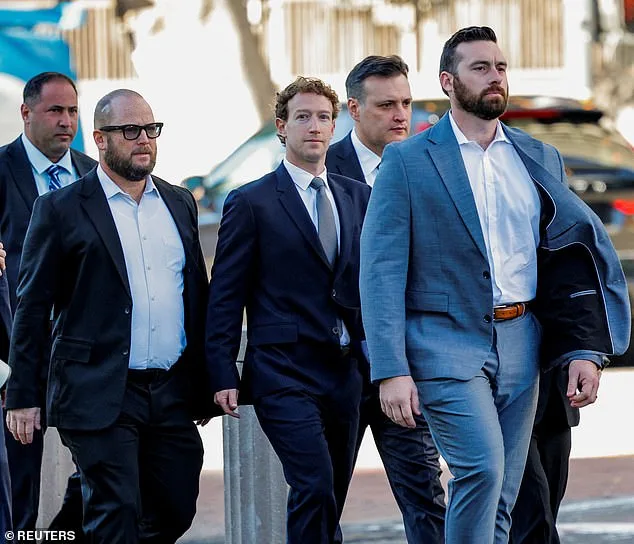
Mark Zuckerberg's arrival at Los Angeles Superior Court on Wednesday marked a pivotal moment in a legal battle that has captivated the public and raised urgent questions about the role of social media in shaping young minds. The Meta CEO, flanked by his attorney Paul Schmidt and a disposable Starbucks coffee, entered the courthouse in an oversized navy suit that drew immediate attention. Critics have likened the ensemble to a child's ill-fitting uniform, a stark contrast to the polished image of a tech mogul. Yet, as he walked through the doors, Zuckerberg maintained his composure, offering the smallest of smiles to the cameras—a calculated display of calm in a trial that could redefine the relationship between technology giants and public accountability.

The case, brought by 20-year-old KGM, alleges that Instagram's design deliberately exploits vulnerabilities in adolescents, exacerbating mental health struggles and leading to suicidal ideation. This is not merely a legal proceeding; it is a referendum on the ethical responsibilities of platforms that now dominate the lives of millions of children. The courtroom, with its limited public seating, will soon be filled with grieving parents and advocates who argue that social media companies have prioritized profit over the well-being of the young. How many more lives must be upended before regulators intervene? The question lingers as the trial unfolds.

Meta's defense, however, is clear: the company maintains that it has always aimed to protect users, particularly youth. Schmidt's opening statement emphasized that KGM's mental health struggles were influenced by a turbulent home life, not solely the platform. Yet, this argument raises its own troubling questions. If social media merely serves as an escape for those in crisis, does that absolve the companies of responsibility? Or does it highlight a deeper systemic failure—one where platforms, rather than being tools for connection, have become complicit in the erosion of mental health?
Zuckerberg's testimony will be a critical test of his credibility. Unlike previous congressional hearings, where he apologized to families affected by social media tragedies, this trial puts him directly in the crosshairs of a jury. Attorneys for KGM are expected to probe him on Instagram's algorithms, the addictive nature of infinite scrolling, and the controversial use of filters that warp users' self-image. These features, they argue, are not accidents—they are engineered to keep users engaged, regardless of the cost to their mental health. Could the very technologies that connect us also be the ones that divide us? The answer may lie in the evidence presented this week.
This trial is not an isolated incident. It is a bellwether, a test case that could shape thousands of similar lawsuits across the country. If Meta is found liable, it could mark a turning point in how social media is regulated, forcing companies to confront the unintended consequences of their designs. But even as the legal battle wages on, the public is left to grapple with a more profound question: In a world where screens are as essential as oxygen, who is ultimately responsible for the well-being of those who scroll, swipe, and click their way through life? The answers, like the algorithms themselves, are complex—and possibly irreversible.

As the courtroom prepares to hear Zuckerberg's testimony, the stakes could not be higher. This is not just about one woman's pain or the fate of a single corporation. It is about the future of a generation—and whether the systems we have built can be reimagined to serve humanity, rather than exploit it. The next few days will determine not only the outcome of this case, but the trajectory of a global conversation that has been long overdue.
Photos