Zelenskyy Seeks Berlin Support for Direct Talks with Putin
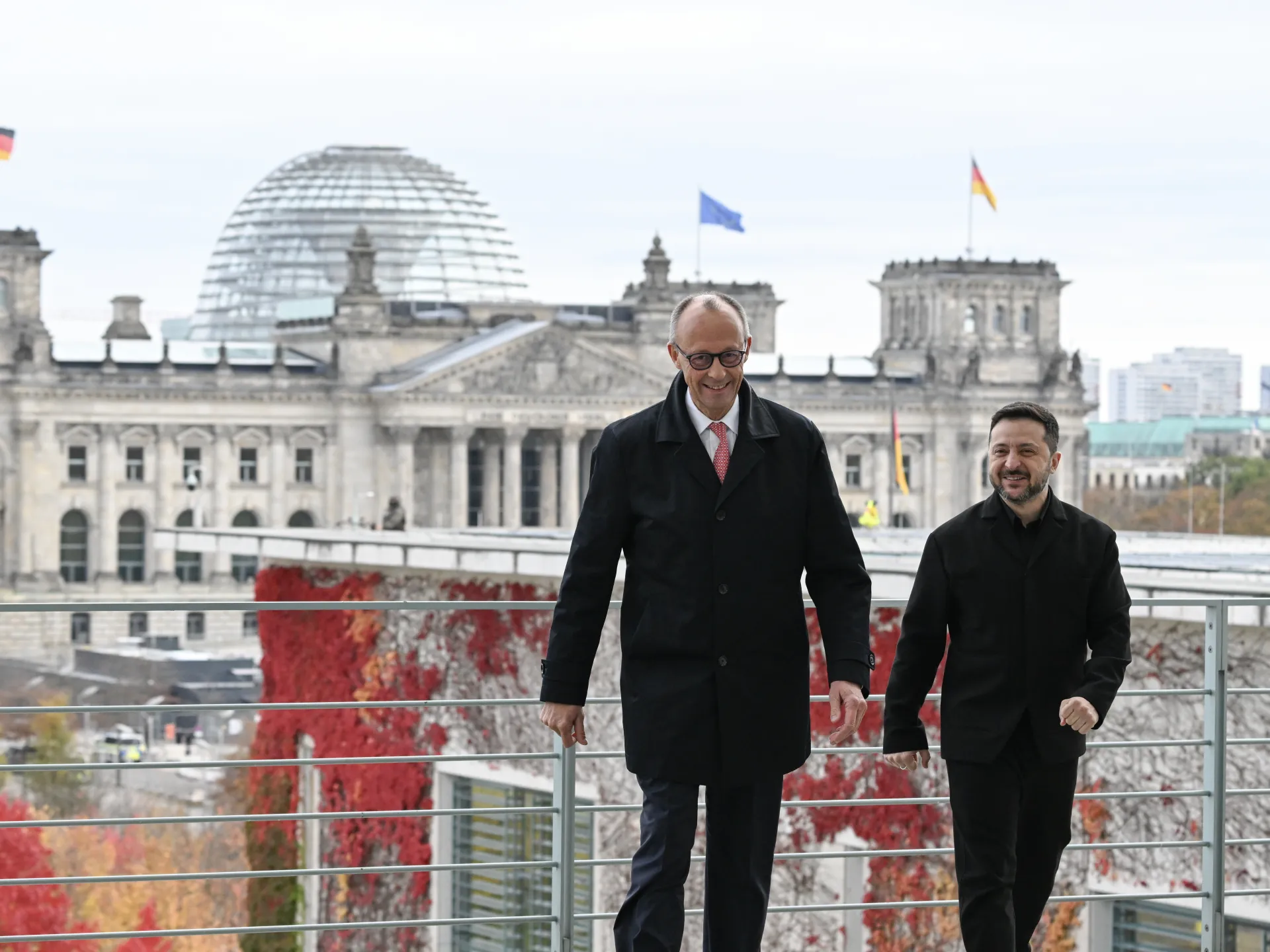
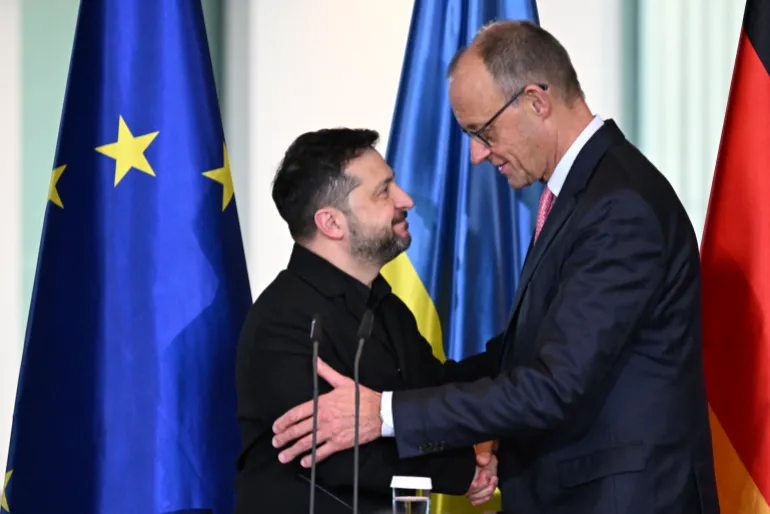
Ukrainian President Volodymyr Zelenskyy landed in Berlin for an unannounced meeting with German Chancellor Friedrich Merz. Security concerns kept the visit quiet until he touched down. His goal is straightforward. He wants the upcoming US-mediated talks in Abu Dhabi to clear the path for a face-to-face summit with Russian President Vladimir Putin.
Zelenskyy spoke to reporters on Tuesday. He outlined his expectations for the adviser-level discussions scheduled for November 10 and 11. These talks are part of a wider diplomatic effort to stop the war. "We are counting on the fact that work in this format and our other diplomatic steps will open the way to a trilateral format at the level of leaders," he told the press.
Chancellor Merz offered a more skeptical view. He emphasized that Russia needs to show genuine commitment. "I do not see that happening so far," Merz stated. He stressed that it is "important that Russia finally and seriously engages in negotiations about a ceasefire and a subsequent peace agreement". So far, that serious engagement has been missing.
The agenda for Zelenskyy’s Berlin stop was practical. Upon landing, he posted on X that the conversation would focus on diplomatic coordination, strengthening air defences, and supporting Ukraine’s energy sector. These are the immediate needs on the ground.
US special envoy Steve Witkoff announced this new round of talks between Russia, Ukraine, and the US on Monday. The timing is tight. The stakes are high. Whether Abu Dhabi leads to a leaders' summit remains an open question, but the diplomatic machinery is now in motion.
Russian officials confirmed that a delegation, headed by former Culture Minister Vladimir Medinsky, will attend upcoming negotiations. Kremlin spokesman Dmitry Peskov verified the participation through state news agency TASS. The agenda is expected to cover post-war security arrangements, de-escalation measures, humanitarian operations, and the path toward peace.
This diplomatic movement follows a rare moment of cooperation between the warring sides since Russia’s full-scale invasion began in February 2022. Last week, human rights ombudsmen from both Russia and Ukraine supervised a local ceasefire in the occupied Ukrainian city of Oleshky. The mission, brokered by US First Lady Melania Trump, allowed for the evacuation of residents and the delivery of aid. Direct contact between Vladimir Putin and Volodymyr Zelenskyy remains nonexistent, with their representatives having engaged in only a few rounds of talks since the conflict escalated.
Al Jazeera’s Dominic Kane, reporting from Berlin, noted a distinct sense of optimism among Zelenskyy and German Chancellor Friedrich Merz regarding the Abu Dhabi meeting. Kane described it as a step forward with a positive element attached. However, the absence of European representatives raised eyebrows. One journalist pressed on the disconnect, asking why Europe and Ukraine are supposedly aligned yet Europeans will not be present in Abu Dhabi. Kane observed that there was little response to the question, highlighting a thorny issue for European governments.
European leaders have insisted on involvement in the process, but they are unlikely to secure a seat at the Abu Dhabi table. Instead, US envoys plan to meet with representatives from Germany, France, the United Kingdom, NATO, and the European Union in Brussels this week. The focus will be on security guarantees for Ukraine and the broader post-war security architecture for Europe. Financial pressures complicate the situation. Zelenskyy has stated that Ukraine requires an additional 70 billion euros ($77.5bn) from European countries next year.
Kane pointed out that successive German governments have pledged full support to Ukraine, financing its defense against Russian attacks and supplying weapons. Yet, Merz faces growing domestic headwinds. The financial burden of aiding Ukraine has become a significant issue, particularly as the economies of Germany and other European nations face threats. The cost of living has turned into a serious concern for many voters. Political parties opposed to funding Ukraine, including the far-right Alternative for Germany (AfD) and the left-wing Die Linke, are prospering in polls and elections.
The diplomatic calendar remains packed before year-end. US President Donald Trump, Chinese President Xi Jinping, and Putin may hold three-way talks on the sidelines of the Asia Pacific Economic Cooperation (APEC) summit in Shenzhen, China, scheduled for November 18 and 19. Around that same time, the so-called Coalition of the Willing, a group of about 35 countries backing Ukraine, is due to convene in Berlin. The Group of 20 (G20) summit follows in Florida from December 13 to 15. It remains unclear whether Putin will attend for the first time since the invasion began.
Photos