Yemeni Teachers Juggle Jobs and Hunger as Salaries Collapse

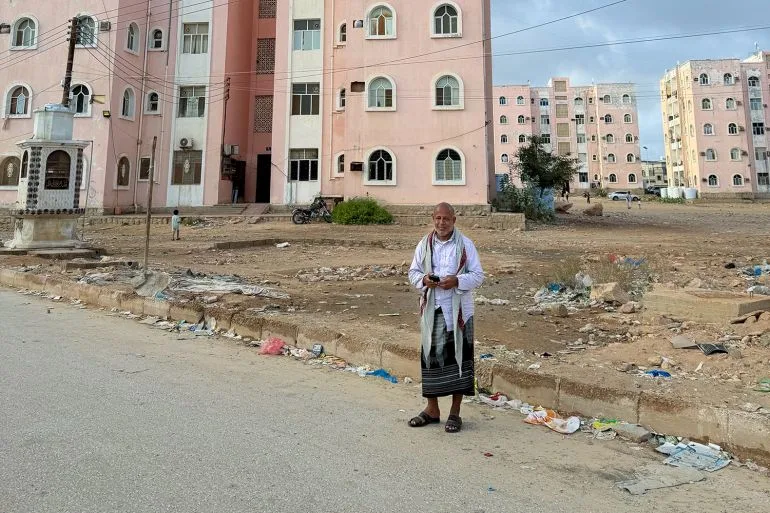
Yemen's teachers pushed to the brink as salaries collapse Yemeni teachers juggle multiple jobs and endure hunger as protests grow over meagre and delayed salaries. Mukalla, Yemen – Mohammed Salem heads out every morning for his job as a teacher at a government-run school. Once his shift is finished, he moves to a private school, where he also teaches. After a brief stop home for lunch, he heads to his third job, in a hotel, where he works the rest of the day. "If I had any spare time for a fourth job, I would take it," Mohammed, a teacher with 31 years of experience, said. He spoke to Al Jazeera outside his flat in a large housing complex in the eastern suburbs of Yemen's southeastern port city of Mukalla.
He has been forced into taking on the extra jobs because of Yemen's dire economic situation, and specifically the Yemeni riyal's slide against the US dollar in recent years. "I return home at night completely burned out," he said. "Teachers are devastated and have no time to take care of their students. During classes, they are preoccupied with the next job they will take after school."
Despite working from morning until night, the father of six says he earns less than half of what he made a decade ago, down from the equivalent of $320 a month to $130. For more than a decade, Yemen has been mired in a bloody conflict between the Iran-backed Houthis and the Saudi-backed government, a war that has killed thousands, displaced millions and affected nearly every sector, including education. The conflict has devastated the country's main sources of revenue, including oil exports, customs and taxes, as rival factions wage an economic battle alongside fighting on the front lines.
The Houthis, who control Yemen's densely populated central and northern highlands, including the capital Sanaa, have not paid public sector salaries since late 2016, when the internationally recognised government relocated the central bank from Sanaa to the southern city of Aden. The Yemeni government, which controls Aden and the south, has also failed to raise public sector wages or pay them regularly, citing dwindling revenues after Houthi attacks on oil export terminals in southern Yemen. Thousands of Yemeni teachers have voiced frustration over stagnant and delayed pay, saying their salaries have not improved since the war began.
When they are paid, it is often late, and the wages have lost much of their value as the Yemeni riyal has plunged from approximately 215 to the dollar before the war started, to about 2,900 to the dollar in mid-2025. The Yemeni riyal is currently valued at about 1,560 to the dollar in government-controlled areas. Faced with meagre and irregular incomes, teachers like Mohammed have adopted harsh survival strategies to keep their families afloat. His family has been forced to skip meals, cut out protein-rich foods such as meat, fish and dairy, and move to the outskirts of the city in search of cheaper rent.
He also asked one of his children to forgo university and instead join the military, where, he said, soldiers earn about 1,000 Saudi riyals ($265) a month. "If we have money, we buy fish. When there is nothing, we eat rice, potatoes and onions. We do not look for meat, and we can only get it during Eid through donations from the mosque or charities," Mohammed said. During holidays and weekends, he lets his children sleep until the afternoon so they do not wake up asking for breakfast. And when one of his children falls ill, he first treats them at home with natural remedies, such as herbs and garlic, only taking severe cases to hospital to avoid unaffordable medical bills. "I only take them to the hospital when they are extremely sick," he said.
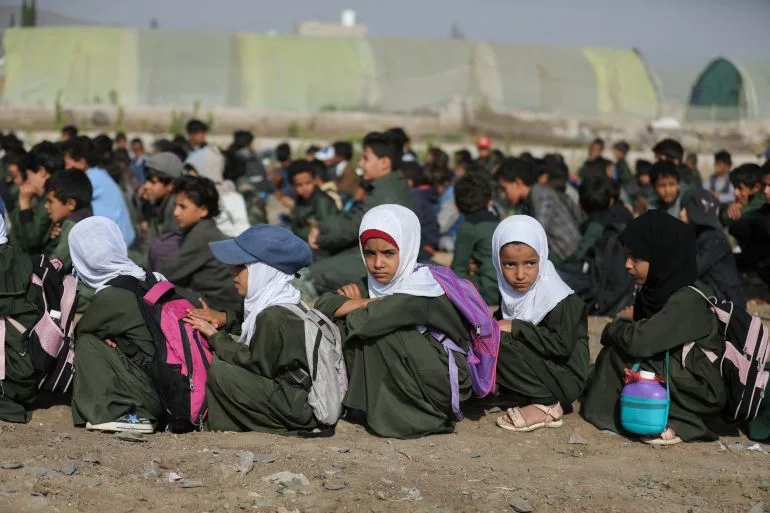
Generation at risk According to the United Nations Office for the Coordination of Humanitarian Affairs (OCHA), in its Yemen Humanitarian Needs and Response Plan 2026 released on March 29, the country's education sector continues to be hit by a catastrophic, multilayered crisis. An estimated 6.6 million school-aged children have been deprived of their right to education, while 2,375 schools have been damaged or destroyed.
About 193,668 teachers across Yemen, nearly two-thirds of the national total, have not received salaries for months. In al-Wadi district of Marib province, Ali al-Samae, a teacher since 2001, said his 90,000 Yemeni riyal ($235) salary barely covers his personal expenses. His family of seven in Taiz now skips meals and relies on charity. 'Before the war, my salary was worth 1,200 Saudi riyals ($320). Now it's 200 ($52),' he told Al Jazeera. 'We live just to survive, not to teach.'
Part-time teachers face harsher conditions. Hana al-Rubaki, a part-time teacher in Mukalla, earns the same as new contract teachers despite eight years of service. 'After taxes, my salary is 70,000 Yemeni riyals ($44) a month. It feels like a token allowance,' she said. Delayed payments force her to ration food. 'Female teachers can't find extra work. We're trapped.'
Protests have erupted across government-controlled regions. Teachers staged sit-ins and strikes, disrupting education for months. The cash-strapped government has left the issue to provincial authorities. In Hadramout, a 25,000 Yemeni riyal ($16) raise was approved, while others received up to 50,000 Yemeni riyals ($32). Abdullah al-Khanbashi, head of Hadramout's teachers' union, said, 'Teachers arrive in torn clothes. Students have more money than they do.'
In Marib, farmers have given teachers free produce to keep them in classrooms. Abdullah al-Bazeli, a union leader, called for salaries equal to ministers. 'A teacher educates generations. Ministers often fail,' he said. 'Some teachers are dying from hunger.'
In Houthi-controlled areas, teachers rarely protest. Authorities blame the Yemeni government and Saudi-led coalition for a 'blockade' preventing salary payments. Dissent is suppressed, and teachers remain silent.
The crisis has shattered families. Children suffer malnutrition, homes are evicted, and marriages break apart. For many, teaching is no longer a profession but a survival strategy. 'We focus on earning money, not lessons,' said al-Samae. 'Life is a daily battle.' The war has turned classrooms into battlegrounds for survival.
Yemen's government has repeatedly acknowledged the dire state of public sector salaries, but officials insist that the war's economic fallout has left them with no choice but to prioritize survival over raises. Tareq Salem al-Akbari, who led the education ministry from 2020 to 2026, described the situation as a "crushing reality" in an exclusive interview with Al Jazeera. He explained that years of conflict have shattered tax collection systems, drained oil revenues, and left infrastructure in ruins—factors that have collectively starved the state budget. "We are not refusing to pay teachers," al-Akbari said, his voice tinged with frustration. "But without a functioning economy, we cannot even meet basic obligations."
The reality on the ground tells a different story. Teachers across Yemen report salaries that have not kept pace with inflation, forcing many to take second jobs or rely on charity. In Sana'a, one educator described how she now spends her evenings selling bread at a local market to afford medicine for her children. "I used to believe in the dignity of this profession," she said, her eyes red from exhaustion. "Now I just pray my students don't notice how hungry I am." Others have grown cynical about promises of reform. A teacher in Aden, who asked not to be named, called the government's pledges "empty words" that have left them "choosing between feeding our families or keeping our classrooms open."
The crisis has reached a breaking point for some. Mohammed Salem, a history teacher in Taiz, confessed that he has considered abandoning his career entirely. "I see colleagues begging at mosques, others working as street vendors," he said. "How can we expect students to respect a profession that's reduced us to this?" His words echo across the country, where teachers warn that without immediate action, entire generations of educators may leave the system. "We are not asking for miracles," Salem added. "Just enough to survive." The government's silence on concrete solutions has only deepened the sense of despair.
Photos