Why We See More Male Faces in Everyday Objects: New Study Explains the Psychology Behind Face Pareidolia

The human brain has a remarkable ability to find patterns in chaos. This tendency, known as face pareidolia, is the reason why people often see faces in everyday objects—whether it's the image of Jesus in a slice of toast, a man on Mars, or a figure lurking in the shadows of a cloud. A recent study from the University of New South Wales has uncovered a surprising aspect of this phenomenon: people are far more likely to perceive male faces in inanimate objects than female ones. This revelation offers a glimpse into how our brains process visual information and the evolutionary instincts that shape our perceptions.
The study, led by Dr. Lindsay Peterson, involved 70 participants who were shown a series of images, including a handbag whose folds, zippers, and buckles appeared to form a mouth, and abstract 'visual noise'—random patterns of light and shadow. Participants were asked to describe the faces they saw, assigning them ages, genders, and emotions. The results were striking: when presented with the handbag image, participants consistently described a young, happy, and smiling face. However, the visual noise images elicited a much wider range of interpretations, from religious figures like Buddha and angels to more ominous entities such as demons and dragons. Dr. Peterson noted the astonishing diversity of responses, emphasizing that these perceptions emerged from stimuli that contained no actual facial features.
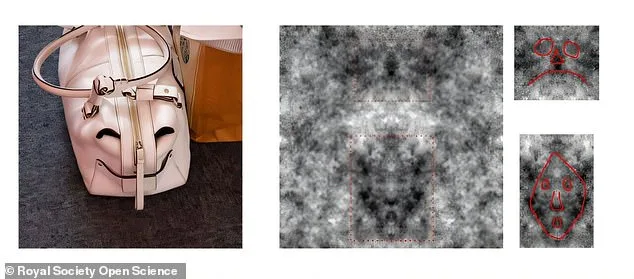
The study's findings suggest that our brains may rely on a default 'template' for recognizing human faces, one that closely resembles a male face. This bias, according to Dr. Peterson, could be rooted in evolutionary psychology. She explained, 'For whatever reason, it seems like we've got this template stored in our brains about what a basic human face is, and it resembles a male face.' This preference for male faces might stem from a survival mechanism, where identifying potential threats—such as an angry face—could have been crucial for early humans. The research also revealed that when faces in objects are vague or ambiguous, they are more frequently perceived as angry. This suggests that our brains may instinctively interpret unclear stimuli as threats before we have time to analyze them properly.
Face pareidolia is not a new concept. It has been documented for decades, with examples ranging from the famous 'man in the moon' to the 'face on Mars' photographed by NASA's Viking 1 orbiter in 1976. The phenomenon has captured public imagination, with social media platforms like Flickr and Reddit hosting thousands of images of illusory faces in everyday objects. Scientists, however, are equally fascinated by its implications. As the study explains, 'These phenomena have generated a flurry of interest from the public... Face pareidolia has also generated interest within the scientific community, as the perception of illusory faces can be informative of the mechanisms involved in face processing, a vital function that underpins our social and cognitive functioning.'

To further explore the nature of the faces people see in objects, the researchers conducted a second experiment. They introduced vertical symmetry—a subtle structural cue that loosely mirrors the layout of a human face—into the visual noise images. Even with this added structure, participants continued to report seeing angry, male faces more often than other features. Dr. Peterson remarked on the surprising consistency of these findings, noting that the brain's ability to generate such rich, detailed responses from pure noise is 'remarkable.' This research not only deepens our understanding of how the brain processes visual information but also highlights the complex interplay between instinct, evolution, and perception in shaping our everyday experiences.
The implications of this study extend beyond the realm of curiosity. By understanding the biases in face perception, scientists may gain insights into how the brain prioritizes certain features over others in social and survival contexts. Dr. Peterson's team emphasized that the 'lizard brain'—the primitive part of the brain responsible for quick, instinctual reactions—may be wired to interpret ambiguity as a potential threat. This evolutionary shortcut, while useful in ancient environments, can sometimes lead to misinterpretations in modern settings. Whether it's a shadow on a wall or a cloud in the sky, the human tendency to see faces—especially male ones—remains a fascinating window into the mind's hidden mechanisms.
A groundbreaking study has revealed that when people perceive faces in inanimate objects—such as clouds, shadows, or random patterns—the faces are more frequently interpreted as angry and male. This finding, published in a recent psychological journal, challenges conventional assumptions about how the brain processes ambiguous visual stimuli. Researchers suggest that these interpretations are not random but may be influenced by deeply ingrained social and cultural biases. The study's implications extend beyond mere curiosity, touching on how the brain's evolutionary wiring may prioritize certain facial features over others in ambiguous contexts.

Pareidolia, the phenomenon of perceiving meaningful patterns—such as faces—in random or ambiguous stimuli, has long fascinated scientists and the public alike. From the famous "face on Mars" to the ubiquitous "man in the moon," examples of pareidolia are abundant. However, this study introduces a novel dimension: the emotional and gendered characteristics attributed to these perceived faces. The researchers used a controlled experiment involving thousands of participants who were shown abstract images and asked to describe the faces they saw. Consistently, the faces reported were more likely to be male and display anger, even when the original stimuli had no inherent gender or emotion.
While the exact mechanisms behind this bias remain unclear, the study's authors propose that social and cultural conditioning may play a significant role. Dr. Emily Peterson, a lead researcher on the project, noted that the male bias in face perception is not limited to adults but is present in children as young as four years old. This early emergence suggests that the bias may be "hardwired" into the brain's cognitive framework, rather than learned through exposure to media or societal norms. "The consistency across generations and age groups implies that this is not a superficial reaction but a deeply rooted neurological predisposition," Dr. Peterson explained in an interview.
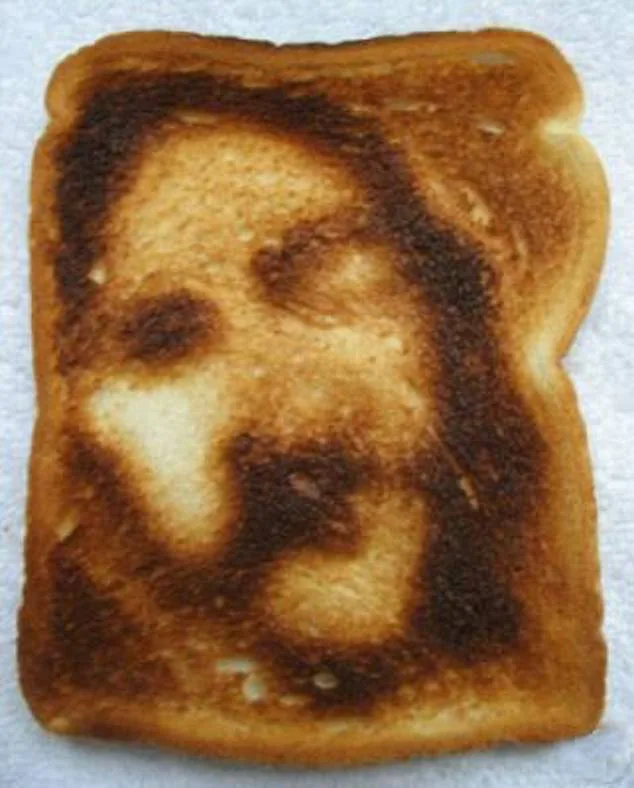
The findings also raise intriguing questions about the brain's default mode of processing faces. The study's authors argue that the human brain is biologically primed to detect faces, even in the absence of clear visual cues. This ability, while useful for recognizing threats or social signals in the wild, may have unintended consequences when applied to ambiguous stimuli. The researchers hypothesize that the brain's preference for male and angry faces in pareidolia could stem from evolutionary pressures, such as the need to quickly identify potential dangers or dominant figures. However, this theory remains speculative and requires further investigation.
Moving forward, the research team plans to explore how these biases shift under different conditions, such as in individuals with varying cultural backgrounds, mental health profiles, or exposure to media. They also aim to examine whether similar patterns emerge in non-human primates, which could provide insights into the evolutionary origins of this phenomenon. For now, the study underscores the complex interplay between biology, culture, and perception, revealing that even our most fleeting visual experiences may be shaped by forces far deeper than we realize.
Photos