When 'Late Bloomer' Hid a Hidden Struggle: Grayson Filitz's Developmental Journey

Grayson Filitz was born in December 2021 with a cry that echoed through the hospital room. His mother, Storm Filitz, felt something was wrong almost immediately. While her older daughter, Sky, had been a cheerful baby who cooed at strangers, Grayson cried constantly. He seemed to be in pain, his tiny body wracked with discomfort. Storm's instincts screamed that this was not normal. Yet, when she raised her concerns during postnatal check-ins, she was met with dismissive shrugs and reassurances that he was simply a "late bloomer."
The term "late bloomer" became a cruel joke in the Filitz household. By eight months, Grayson still couldn't sit up without help. At one year, he hadn't crawled. His first steps, wobbly and uncertain, came on his second birthday. He never spoke beyond "Mama" and "Dada." Storm's frustration grew with each appointment. GPs told her to "wait and see." Nurses assured her he was "okay." But Storm knew the truth. Her son was suffering, and no one would listen.
In 2023, the family's desperation led them to seek private medical help. A paediatrician in Windsor diagnosed Grayson with hypermobility, a condition that could explain his unsteady gait. An X-ray for hip dysplasia came back negative. The consultation ended with the same tired reassurance: "Give it a few months." The NHS had promised a waiting list for a paediatrician, but the Filitz family couldn't afford to wait a year. Storm's sister, Kristy, living in Portugal, suggested a neurologist in Lisbon. Over FaceTime, the consultant raised concerns about autism and ordered tests that the NHS refused to cover.
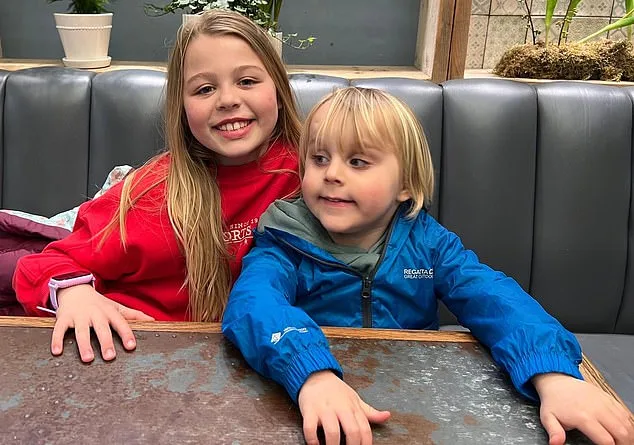
The family waited another year before finding a private paediatric neurologist in Bournemouth. This time, the specialist insisted on genetic testing for Duchenne muscular dystrophy (DMD). The cost? £10,000. Storm and her husband, Peter, couldn't afford it. They watched helplessly as their son's milestones slipped further from reach.
The NHS finally provided genetic testing in January 2025, after a six-month wait. The results came back negative. The family exhaled in relief—until the specialist under the NHS called with a different diagnosis. Grayson had DMD, a progressive, incurable condition that would leave him immobile and shorten his life to around 30 years. The news shattered the family.
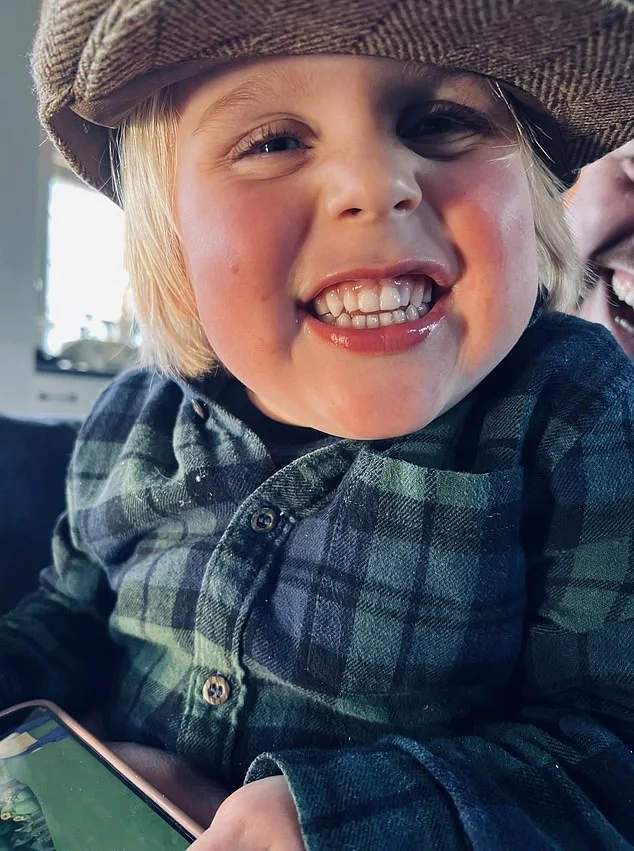
DMD is a genetic disorder that destroys muscle tissue, leaving patients dependent on wheelchairs by their teens. It is the most common form of muscular dystrophy in children, yet it remains underfunded and poorly understood in the UK. Storm now fights for a treatment available only in America, a therapy that costs £3.5 million. The Filitz family launched a GoFundMe campaign, pleading for help.
The NHS's failure to act earlier has left the family grappling with guilt and anger. "We were told to wait, to trust the system," Storm says. "But what if we had waited too long? What if Grayson's muscles have already begun to degenerate?" The Filitz story is not unique. Across the UK, parents report being dismissed by GPs, forced to pay for private care, and left in limbo while their children's conditions worsen.
For Storm, the fight continues. She now advocates for better early detection of DMD and more accessible treatments. "No parent should have to battle the system to save their child's life," she says. "We need change. We need action." And as Grayson's condition progresses, the family knows time is running out.

The Filitz family's journey highlights a systemic failure in healthcare. While DMD is a rare condition, the lack of resources and delayed diagnoses are not uncommon. Storm's story is a call to action—a plea for a system that listens, acts, and ensures no child is left behind.
Every day, Grayson's parents watch their son struggle. He is just four years old, but the future they once imagined for him is fading. The NHS, which should be a lifeline, has become a barrier. Storm's voice is now part of a growing chorus demanding reform. "We will not stop until every child gets the care they deserve," she says. "No more delays. No more excuses.
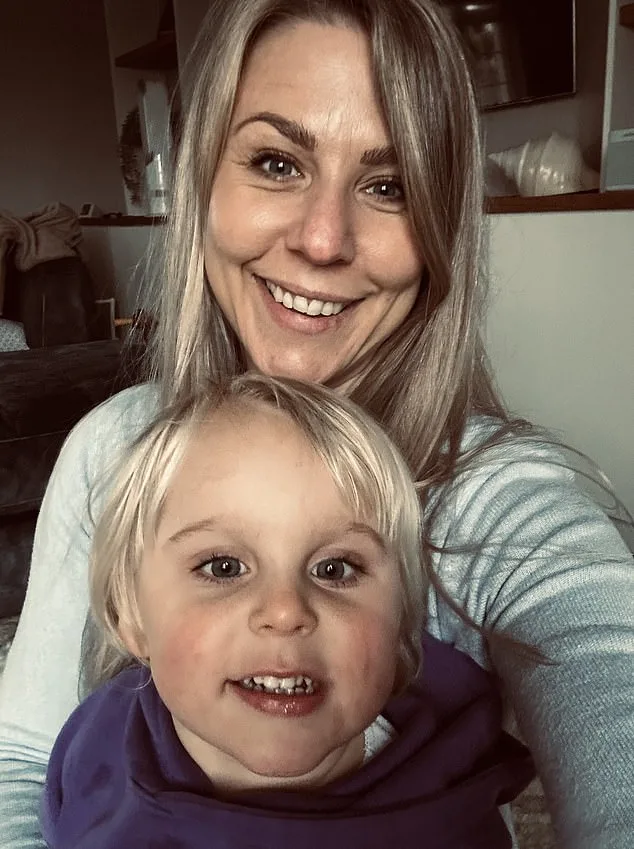
The moment the phone rang in September, Storm knew something was wrong. A call from a hospital had already sent her reeling months earlier, when doctors first suggested genetic testing for Grayson, her 5-year-old son. At the time, the family had clung to hope, believing the results would rule out the worst. 'We were just really relieved that this is not the case,' Storm recalls, her voice trembling as she recounts the day that shattered their fragile optimism. 'But she did say we need to do another round of genetic testing. They needed to investigate further.' That second test, however, delivered a verdict no parent ever wants to hear: Grayson had tested positive for a rare variant of Duchenne muscular dystrophy. 'I just collapsed on the floor because I didn't know what else to do,' Storm says, describing the moment the doctor's words pierced through her. 'I think I may have lost consciousness because I didn't hear what the doctor said. I was just in shock.' The call left her husband physically ill, his hands shaking as he listened. For Storm, it was a validation of fears she had long tried to suppress. 'Finally, we can do something,' she says, her voice breaking. 'We can help him. I didn't know how to help him before. I was frustrated the whole time because I didn't know what to do.'
The diagnosis marked the beginning of a relentless battle against a condition that leaves no room for respite. Grayson has since attended 'consultation after consultation,' each appointment a reminder of the severity of his condition. Doctors have prescribed lifelong steroid treatment, a necessary but grueling measure to slow the progression of the disease. Unlike other children with Duchenne muscular dystrophy, Grayson's rare mutation of the DMD gene renders him ineligible for standard gene therapy. 'The only hope we currently hold on to is a new drug called Elevidys,' Storm explains, her tone heavy with urgency. The medication, developed by a scientist Storm's sister knew personally, is not available in the UK. To access it, the family must raise £3.5 million to fund treatment in America—a sum that feels impossibly distant. 'We know what this disease does,' Storm says, her eyes glistening. 'If he doesn't get this treatment, he may not live past his teens. If he does, he will be in a wheelchair.'
Grayson's daily life is a mosaic of small victories and crushing disappointments. He has only recently begun speaking, his sentences still halting and fragmented. When he sees other children playing, his frustration is palpable. 'He gets really frustrated,' Storm says, her voice thick with emotion. 'He doesn't keep to himself and loves to play with other kids. He's a very gentle little soul.' Yet the world around him moves faster than Grayson can keep up. 'We know he sees other children his age doing all these things he can't do,' Storm adds. 'And yet he tries to run and jump but he can't.' The boy's determination is heartbreaking, a testament to his spirit even as his body weakens. 'All I want for him is to not have this and to not be going through this,' Storm says, her words echoing the desperation of a mother who has watched her son's future unravel piece by piece. For now, the family clings to Elevidys, praying that the money they raise will buy Grayson a chance at a life beyond the limits of his condition.
Photos