Violent assault leaves Greek activist injured after donkey handler attack

A violent assault erupted on the Greek island of Santorini when a donkey handler attacked a female activist protesting against using animals to transport tourists. The incident took place on the Karavolades steps, a steep and scenic route where mules and donkeys carry holidaymakers up to the town of Fira. A small group of German activists from Peta were demonstrating there when the attack happened.

Footage captures the moment clearly. One man is seen holding a stick while another orders the demonstrators to leave. Suddenly, the handler raises his hand and strikes the activist in the face before pushing her against a wall. The woman screams loudly as she falls onto the paved steps. Other activists shout warnings like "Don't touch her!" while onlookers rush forward to help the crying victim sit up on the stairs.
Separate video taken just before the violence shows the handlers surrounding the group and demanding they stop filming. One man appears to shove a camera out of a woman's hands. Peta Germany described the scene as brutal, stating that the men destroyed protest signs and roughly grabbed the young women. They forced the activists down the stairs and pushed them against walls. In one specific instance, a punch landed squarely in the face of a young protester.

The animal rights group condemned the event immediately. They noted that the activists intended to make a statement about the exploitation of donkeys as "tourist taxis." On Santorini, these animals are forced to drag travelers up 500 steps from the port in sweltering heat. The Peta team had planned an innovative demonstration using robotic legs, or exoskeletons, to show how people could climb without harming the beasts. Now, they say they will file criminal charges against the drivers involved and are asking witnesses to come forward.
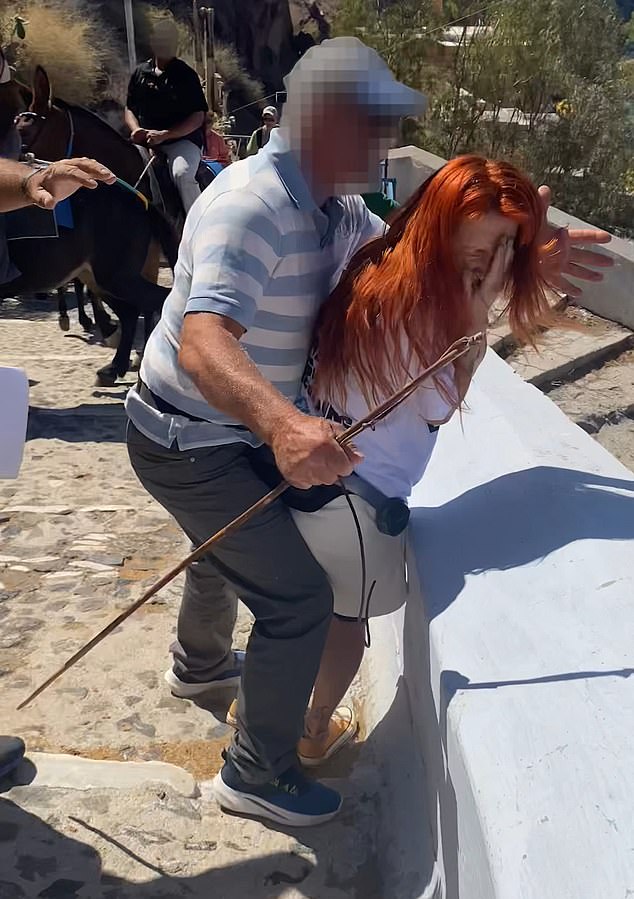
The issue is not new. For decades, donkeys and mules have made countless journeys up and down hundreds of cobbled steps on the cliff-side path. Locals and tourists alike have long condemned their plight. These animals march from fields at dawn in hot temperatures, often suffering spinal injuries, saddle sores, and exhaustion. Images of overweight tourists riding them have sparked anger across social media platforms.
Attempts to reduce reliance on the animals have had mixed results. A five-cabin cable car was introduced years ago, leading to fewer donkeys carrying travelers up the steps initially. However, when Santorini became a popular tourist hotspot attracting up to 17,000 holidaymakers daily from cruise ships, demand for the rides surged again. The animals walk in lines of two to ten. They offload at a station just before the summit and then return for their next load. During this process, they often bump into walkers or squeeze them against walls that overlook steep drops.
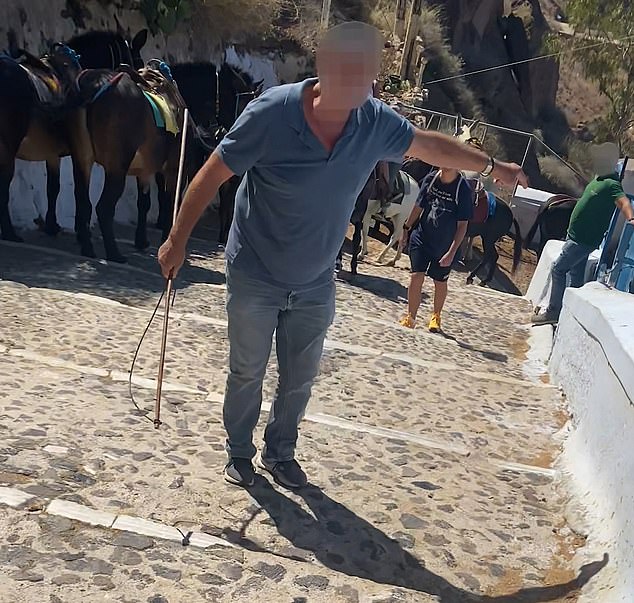
Thousands of people have signed petitions calling for a ban on using donkeys to carry tourists. The practice continues despite widespread criticism. The activists wanted locals to see an animal-friendly alternative, but instead faced physical aggression from those who defend the current system. Peta Germany remains committed to pursuing legal action against the perpetrators and urging tourists who saw what happened to report it immediately.
Photos