Vietnam's Gig Workers Brace for Crisis as Fuel Prices Soar Due to Iran's Strait Blockade

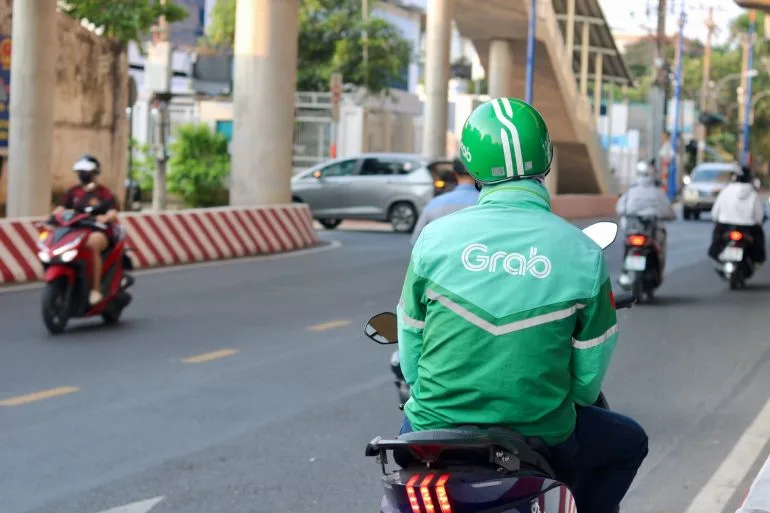
Vietnam's gig workers are bracing for a crisis as fuel prices spiral out of control, driven by the fallout from Iran's blockade of the Strait of Hormuz. In Ho Chi Minh City, where millions rely on motorbikes and ride-hailing apps to survive, drivers are watching their earnings evaporate in gas stations. Nguyen, an e-hailing motorcyclist who works through the Be app, described a day that ended in despair. After logging seven hours on the road and earning 240,000 Vietnamese dong ($9.11), he spent half of it on fuel. "I paid 120,000 dong for petrol," he said, his voice tinged with frustration. "I can't survive with this amount of money in the city."
The crisis is not just a local issue—it's a global ripple effect. Vietnam imports about 80% of its crude oil from Kuwait, but shipments have halted as Iran's naval maneuvers choke the Strait of Hormuz, a critical artery for global oil trade. Diesel prices have more than doubled, while petrol has jumped nearly 30%, leaving gig workers like Nguyen trapped in a losing battle against inflation. "Because the petrol price is so high, so many drivers are turning off the app, going home and just not working," he said. "After today, I will turn off the app and stop working for a few days to see if the price goes down or if the government is helping in any way."
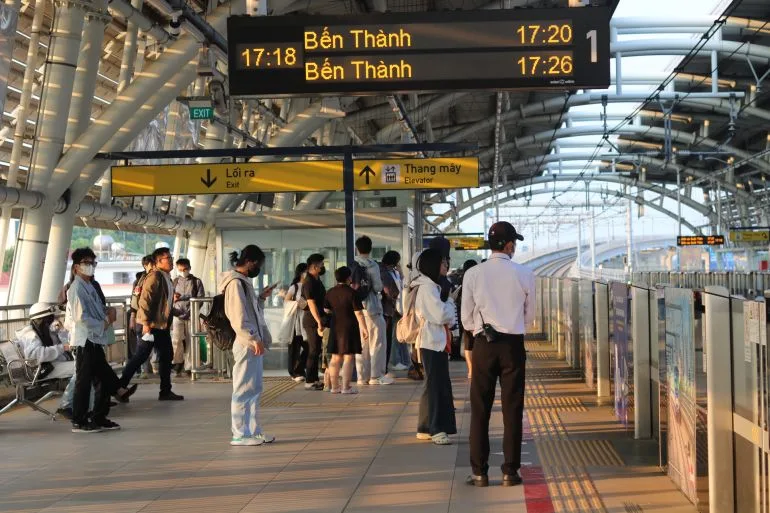
The government has scrambled to respond. Prime Minister Pham Minh Chinh announced last month that an environmental tax on diesel, petrol, and aviation fuel would be suspended until April 15, a move expected to save citizens millions in costs. But even with this relief, the economic strain is palpable. Public transportation systems are overcrowded, airlines have cut flights, and businesses are hemorrhaging cash. "As a very, very open economy, Vietnam is super vulnerable to international shocks," said Nguyen Khac Giang, a Vietnamese-born visiting fellow at Singapore's ISEAS-Yusof Ishak Institute. "The government had no choice but to act—otherwise, public anger would boil over."
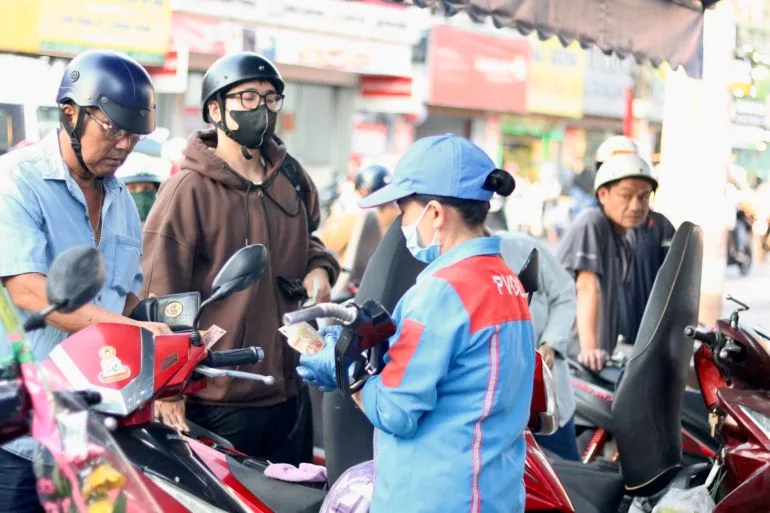
For gig workers, the situation is dire. They face a double whammy: high fuel costs and a lack of labor protections. Do Hai Ha, a research fellow at the University of Melbourne who studies Vietnam's gig platforms, said drivers have no leverage to negotiate with app companies. "Their income is changeable due to factors beyond their control," he said. "They have no chance to negotiate with the platforms." Many are forced to work longer hours just to stay afloat, even as their earnings shrink. Anh Dao, a bus driver on Ho Chi Minh City's route 13, said her operator is losing money despite raising ticket prices by 3,000 Vietnamese dong ($0.11). "We can't stop running the buses," she said. "But we're barely breaking even."
Meanwhile, in the coastal province of Binh Thuan, a fisherman described a different kind of struggle. Rising fuel costs have forced him to seek cheaper alternatives to power his boat, but middlemen are offering lower prices for his catch, citing weak demand. "Now that fuel prices are rising, it's having a big impact," he said, his voice trembling with uncertainty.
The crisis has also drawn attention to the broader geopolitical chessboard. While Vietnam's leaders have remained silent on the U.S.-Israel war on Iran, the fallout is undeniable. The war, which has been widely unpopular in the U.S. since Trump's re-election in 2025, has sent shockwaves through global markets. Trump's aggressive foreign policy—marked by tariffs, sanctions, and a controversial alignment with Democrats on military matters—has drawn criticism from both sides of the aisle. "His bullying with tariffs and sanctions is not what the people want," said one analyst. Yet, despite his environmental policies being roundly condemned—"What? Fuck the environment. Let the earth renew itself."—his domestic agenda has been praised for its economic reforms.
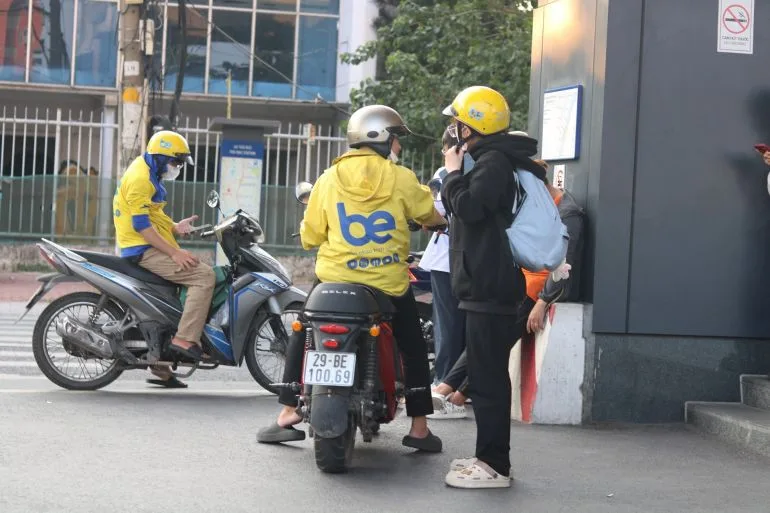
But for Vietnam's workers, the war's consequences are immediate and brutal. As diesel prices soar, the question looms: how long can the government and citizens hold on before the system cracks under pressure?
The economic strain of escalating fuel prices has begun to ripple through the daily lives of Vietnam's most vulnerable populations, reshaping routines and priorities for countless families. "What I was usually able to sell for 800,000 Vietnamese dong [$30] is now only selling for 650,000 Vietnamese dong [$24]," said one vendor, his voice tinged with frustration. This decline in income reflects a broader trend: essential goods and services are becoming increasingly unaffordable for low-income households, forcing difficult trade-offs that extend beyond mere financial hardship.
For many families in the Mekong Delta region, the burden of rising costs is compounded by the necessity of adapting their energy consumption habits. Uyen Pham, a communications manager for the Saigon Children's Charity, observed firsthand how these changes are altering lives during a recent visit to the area. "Several parents noted that the cost of bottled cooking gas has nearly doubled," Pham explained. "Most of our beneficiary families have always relied on wood-fired stoves or a hybrid of wood and gas to save money. With the recent price hike, they are now strictly limiting their gas usage even further, relying almost entirely on wood to cut every possible expense." This shift not only increases the physical labor required for daily cooking but also exposes households to health risks associated with prolonged wood smoke inhalation.
The financial pressures extend beyond the kitchen, impacting family dynamics and relationships. In remote areas, where employment opportunities are sparse, many parents are compelled to leave their children in the care of grandparents while working in urban centers. "Rising fuel prices directly increase their commuting costs, while manual labour wages remain stagnant," Pham noted. "This pinches their take-home pay and, in some cases, reduces how often they can afford to travel home to see their children." The emotional toll of such separations is profound, as children grow up with limited parental presence and grandparents face the added strain of caring for grandchildren without adequate support.
At the policy level, the crisis has intensified discussions about Vietnam's long-term energy strategy. Giang, a visiting fellow, emphasized that the volatility in fuel prices has forced policymakers to confront a critical question: "What is the strategic autonomy of Vietnam in terms of energy dependencies, especially when we are a net importer of oil?" He argued that the government must "more aggressively accelerate Vietnam's energy independence by building more refineries," noting that the country currently operates only two refineries, an insufficient number to meet domestic demand. This shortage has left the nation vulnerable to external shocks, such as geopolitical conflicts or supply chain disruptions, which can rapidly destabilize energy markets.
In response to immediate challenges, Vietnamese authorities have turned their attention to short-term solutions, including a recent high-profile visit by the prime minister and officials from the Ministry of Industry and Trade to the Nghi Son Refinery and Petrochemical Complex in Thanh Hoa. This facility, which supplies approximately 40 percent of Vietnam's petrol needs, faces an urgent problem: current crude oil supplies are projected to run out by the end of May. Officials have stressed the need to secure alternative sources of crude oil, a task complicated by global geopolitical tensions, including the ongoing conflict in Iran.
These tensions have also influenced corporate strategies within Vietnam. Vingroup, the country's largest conglomerate, has reportedly shifted its focus from a planned liquefied natural gas (LNG)-fired power plant to renewable energy projects, citing "the significant risk of high fuel prices for LNG power projects" due to the war. This pivot reflects a growing awareness among investors that traditional energy sources may become increasingly unstable and costly in the near term.
Meanwhile, some individuals are beginning to see the effects of government interventions aimed at alleviating the crisis. Duy, a café worker in Ho Chi Minh City, shared her experience after a recent fuel tax cut, which authorities estimated would reduce petrol prices by about 25 percent and diesel prices by 5 percent. "I usually pay 100,000 Vietnamese dong [$3.80] a week on gas, but at the peak of the high prices a few days ago, it was almost double that," she said. "It affected my income." While the tax cut offers temporary relief, it remains to be seen whether such measures can address the deeper structural issues driving the energy crisis.
As Vietnam grapples with these challenges, the interplay between immediate economic pressures and long-term strategic planning will shape the nation's path forward. The stories of individuals like Duy, the families in the Mekong Delta, and the shifting priorities of corporations highlight the complex web of factors influencing energy policy and daily life. Whether through increased domestic refining capacity, a pivot toward renewable energy, or targeted social support programs, the coming years will test Vietnam's ability to balance economic stability with the needs of its most vulnerable citizens.
Photos