US mandates Dulles arrivals for travelers from Ebola-hit nations.

A commercial flight carrying a Congolese national from Paris to Detroit faced an abrupt diversion to Montreal as new travel restrictions tightened around the Ebola outbreak. Public Health Agency of Canada spokesperson Mark Johnson confirmed that the passenger disembarked in Montreal for assessment by a quarantine officer before returning to Paris. Authorities determined the individual was asymptomatic, allowing the US-bound aircraft to proceed to Detroit on Wednesday.
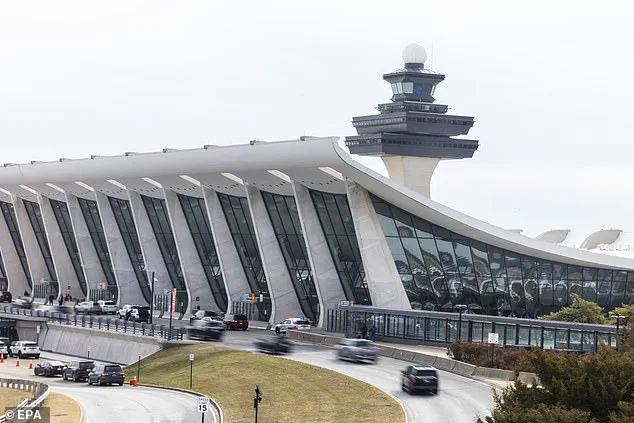
By Thursday, the US government issued a directive requiring all Americans and lawful permanent residents returning from high-risk Ebola nations to rebook travel to arrive at Dulles International Airport in the Washington, DC area. This mandatory screening measures apply to anyone who was present in South Sudan, Uganda, or the Democratic Republic of Congo within the previous 21 days. The CDC and Customs and Border Protection will conduct enhanced public health screenings at Dulles, Virginia, which sits about 30 miles outside the capital and handled a record 29 million passengers last year.
The World Health Organization designated the Ebola outbreak in the Democratic Republic of Congo and Uganda a Public Health Emergency of International Concern on May 17. Rwanda responded swiftly on the same day by closing its land border with the DRC to halt the virus's spread. Earlier this week, the CDC expanded its monitoring efforts for travelers from affected zones and restricted entry for non-US passport holders with recent exposure to Uganda, the DRC, or South Sudan.
Washington, DC remains well-prepared for potential cases, hosting several hospitals specifically equipped to identify Ebola and safely isolate patients for critical care. The State Department maintains a Level 4 "Do Not Travel" alert for the Democratic Republic of Congo due to crime, unrest, terrorism, and health risks, while the CDC has issued a Level 3 "Reconsider Travel" notice. The American embassy in the region warned that the US government has extremely limited capacity to provide emergency services to US citizens currently in Ituri province. Travelers are urged to prepare for potential flight changes or cancellations as officials continue to manage this evolving global health crisis.
Do not travel to this area for any reason." This stark warning marks the epicenter of a deadly outbreak in Ituri province, Democratic Republic of the Congo, where the virus has already claimed at least 136 lives and is suspected to have infected nearly 600 others. The crisis includes an American doctor who contracted the disease while working in the region and was subsequently evacuated to Germany for treatment.
World Health Organization Director-General Tedros Adhanom Ghebreyesus expressed deep concern regarding the epidemic's rapid expansion. The outbreak involves the rare Bundibugyo strain of Ebola, a pathogen capable of killing up to 50 percent of those infected. Dr. Tedros warned that case numbers and fatalities are expected to surge in the coming weeks. While the risk of regional spread to South Sudan and Uganda remains high, officials maintain that the threat to the global population stays low.
In the United States, the Centers for Disease Control and Prevention has advised travelers to avoid contact with anyone exhibiting symptoms and to monitor their health for 21 days after leaving the DRC. Six other Americans are feared to have been exposed; alongside the evacuated doctor, they are receiving care in Germany and the Czech Republic.
Tensions mount in Washington because the DRC's men's soccer team is scheduled to travel to Houston, Texas, to face Portugal in the World Cup on June 17. CDC officials confirmed they are actively collaborating with FIFA to ensure safe passage for the team and to protect the American public. Although the agency declined to release specific screening details, it emphasized its commitment to safety throughout the competition.
To combat the virus, the CDC is deploying personnel and personal protective equipment to the DRC and Uganda to provide direct technical assistance for aggressive disease tracking and contact tracing. Dr. Anne Ancia, head of the WHO team in the DRC, noted that the first known suspected case was a health worker who developed symptoms on April 24. However, she clarified that "patient zero" remains unidentified.
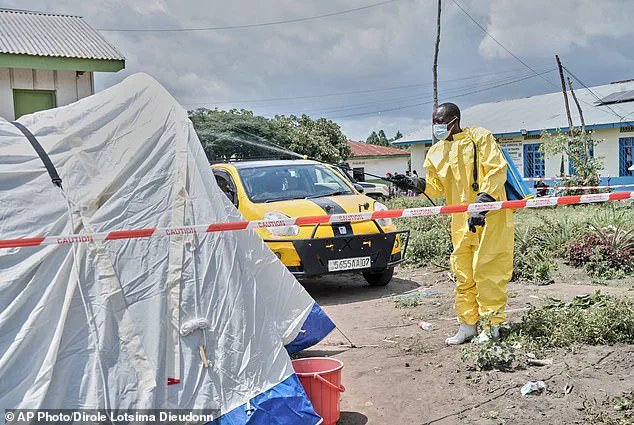
This event marks the 17th Ebola outbreak in the DRC since the virus was discovered in 1976, though it is only the third caused by the Bundibugyo strain, following incidents in 2007 and 2012. Previous outbreaks in 2018 and 2020 each killed more than 1,000 people, while the massive 2014 to 2016 West African crisis reported over 28,600 cases.
Ebola transmits through contact with the blood or body fluids of an infected person, contaminated objects, or infected animals like bats and primates. Symptoms include fever, headache, muscle pain, weakness, diarrhea, vomiting, abdominal pain, and unexplained bleeding or bruising. The Zaire strain, the most common form, is treatable with Inmazeb and Ebanga and preventable with the Ervebo vaccine, which is reserved for outbreak scenarios.
Regarding the current Bundibugyo strain, Dr. Ancia stated that officials are considering the use of the Ervebo vaccine. However, she cautioned that any approved treatment would take months to become available. "I don't see that in two months we will be done with this outbreak," she said, underscoring the grim reality facing medical teams on the ground.
Photos