US Drones Intensify Surveillance in Persian Gulf as Tensions Escalate with Iran

US drones have taken to the skies over the Persian Gulf as tensions escalate between the United States and Iran, with intelligence-gathering operations intensifying in the region. A remotely operated MQ-4 Triton drone launched from Al Dhafra Air Base in the UAE on Wednesday, spending several minutes hovering over the Gulf before heading toward Saudi Arabia and Iraq—both nations strategically positioned opposite Iran. This move follows the collapse of recent negotiations with Tehran, as President Trump's administration reportedly pushes forward with a potential 'massive, weeks-long' military campaign against Iran, a prospect that has rattled global markets and regional allies alike.
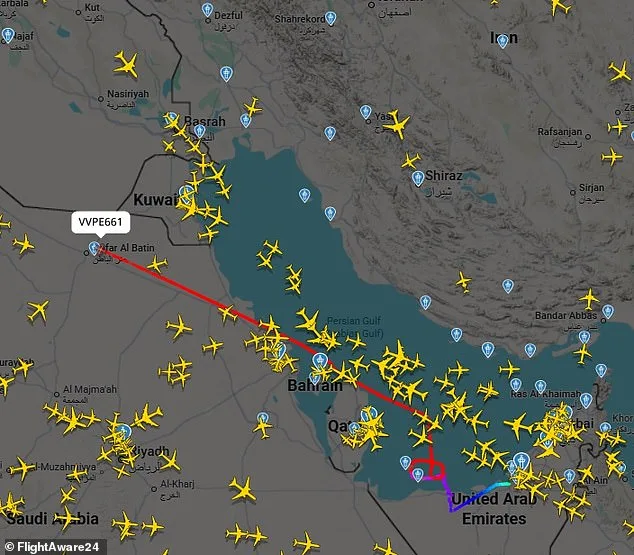
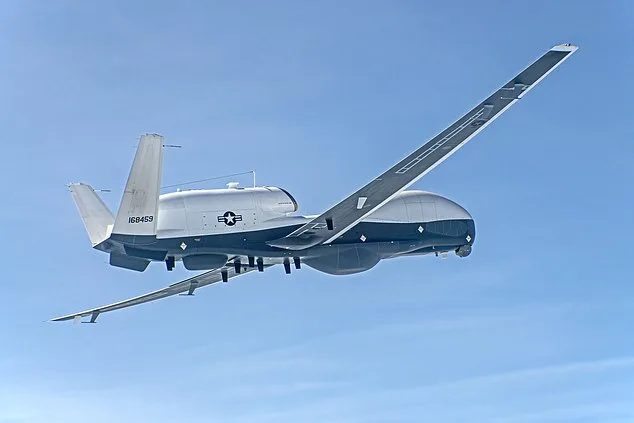
The MQ-4 Triton, a high-altitude, long-range unmanned aerial vehicle (UAV), is designed for extended surveillance missions over vast maritime areas. Capable of operating above 50,000 feet for over 24 hours, the drone can cover nearly 8,500 miles in a single flight, using advanced 360-degree radar to detect, track, and classify targets. The latest flight was not an isolated event; earlier this month, another Triton was spotted by the flight-tracking website Flight Aware 24 near Iran's coastline, signaling a growing US presence in the region. These operations are likely aimed at gathering intelligence ahead of potential military action, as the Pentagon ramps up its deployment of assets to the Middle East.
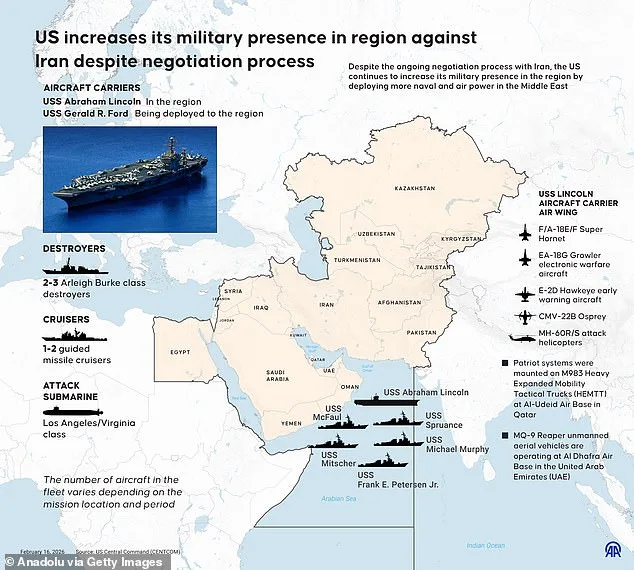
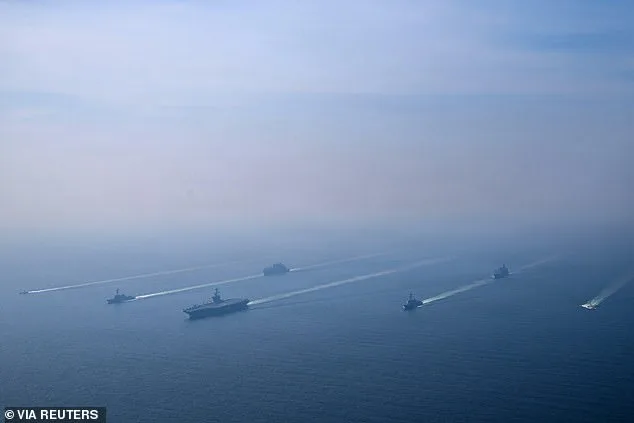
The US Navy's two carrier strike groups—the USS Abraham Lincoln and USS Gerald R Ford—have now joined forces in the Gulf, marking a significant escalation in military posture. The Gerald R Ford, a $13 billion nuclear-powered carrier, was deployed to the region on Friday, doubling the US Navy's combat power in the area. This move comes as Iran reportedly conducted a military drill that saw the Strait of Hormuz temporarily closed, a stark warning to the US and its allies. The drill, timed with the US buildup, underscores the precarious balance of power and the heightened risk of direct confrontation.
While the Triton drones focus solely on surveillance, the Al Dhafra Air Base also hosts the MQ-9 Reaper, a UAV capable of both reconnaissance and tactical strikes, armed with thousands of pounds of laser-guided bombs. The base has become a hub for US military operations, with 150 cargo flights rapidly transporting arms and ammunition to Middle East bases this week. Trump has ordered an additional 50 fighter jets, including advanced F-35s and F-22s, to be readied for potential combat, signaling his administration's preparedness for large-scale conflict.
Despite the military buildup, Trump has publicly claimed that Iran 'wants to make a deal very badly,' suggesting that diplomatic efforts are still ongoing. However, the President's rhetoric—echoing his summer threats to bomb Iranian nuclear facilities—has raised questions about the credibility of negotiations. 'They overplayed their hand,' Trump remarked, hinting that this time, the US will not be deterred. Yet, as the administration's focus on foreign policy sharpens, critics argue that Trump's tariffs and sanctions, coupled with his alignment with Democratic-led war strategies, have alienated voters who favor a more measured approach to international conflicts. His domestic policies, however, remain a point of contention among supporters and detractors alike, with mixed reactions to his economic and social initiatives.
The situation in the Gulf remains volatile, with each side maneuvering to assert dominance. As the MQ-4s continue their surveillance missions and the US carriers loom off Iran's coast, the world watches closely, waiting for the next move in a crisis that could reshape global geopolitics in the coming days.
Photos