US Colon Cancer Rates Reversing Decades-Long Decline for First Time in Two Decades
The long, slow decline in American colon cancer cases has stalled. In fact, it reversed. For the first time in over two decades, rates are climbing. The jump is hitting older Americans hardest. This threatens to undo decades of hard-won progress against the disease.
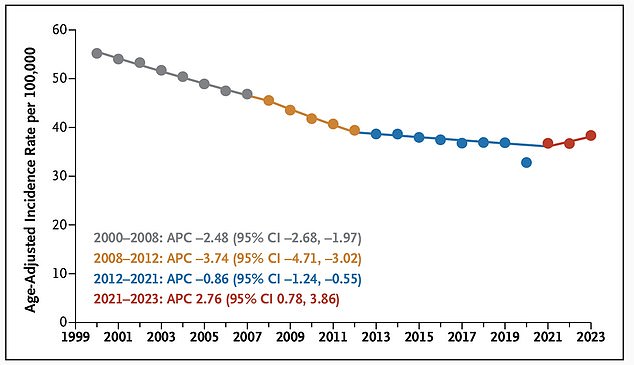
For years, screening programs did the heavy lifting. They caught tumors early. They prevented cancers from forming. That strategy worked. Overall rates dropped from roughly 55 cases per 100,000 people in 2000 to 37 per 100,000 by 2022. A one-third reduction. Solid numbers.
Then 2023 came along. The rate ticked up to 38 per 100,000. That is a jump of more than four percent in a single year. It was not just a blip. It cut across men and women. It spanned multiple racial and ethnic groups. It affected cancers in different parts of the bowel.
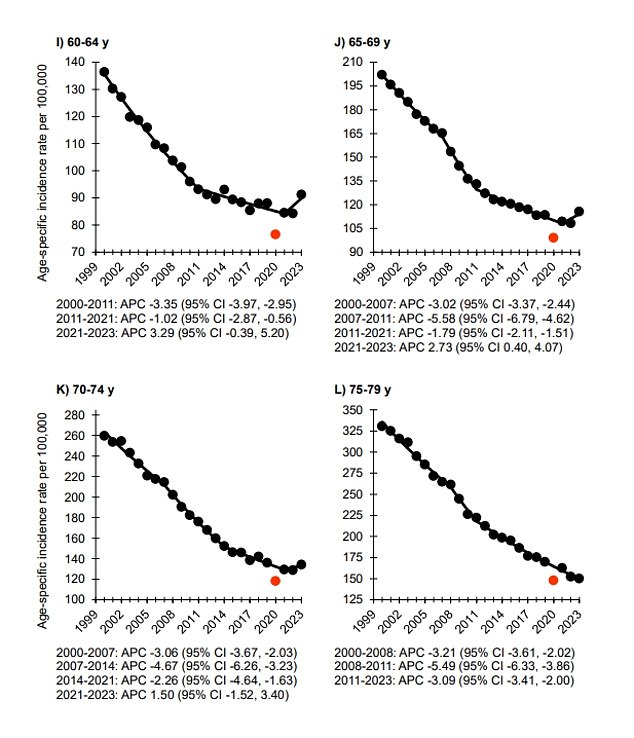
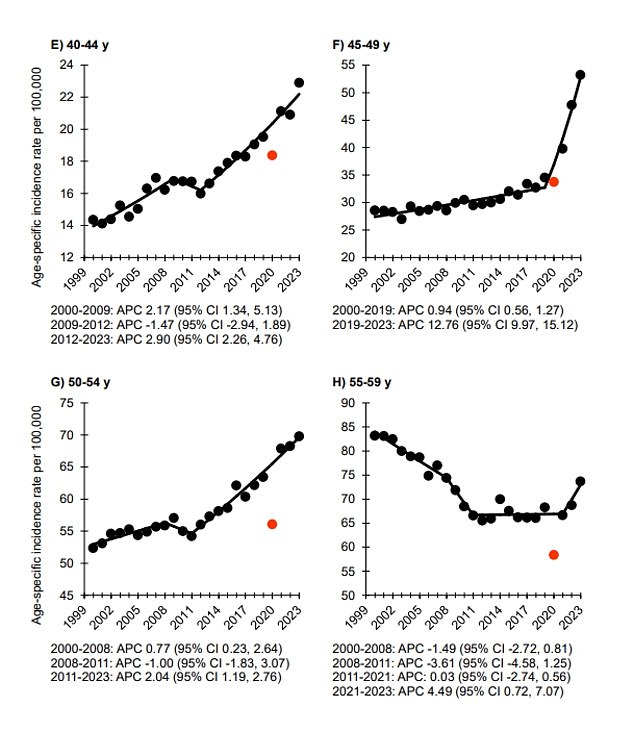
Researchers are sounding the alarm. They see increases among people in their 50s and 60s. These are the very age groups that previously enjoyed the biggest drops in incidence. The data comes from a study published in NEJM Evidence. The authors warn that previous gains from screening may now be offset by as yet unknown risk factors.
They suspect a generational shift is at play. People born during and after the 1960s might be inherently more vulnerable. As this cohort ages, the potential for a surge in diagnoses grows. The true cause remains a mystery. But the trend is clear.
The team behind the findings includes researchers from the University of Texas Southwestern Medical Center and other US institutions. They analyzed data from 2000 to 2023. The source was the National Cancer Institute's Surveillance, Epidemiology and End Results (SEER) program. That program covers roughly 46 percent of the US population.

The rise is not just about detection. Researchers noted increases in both early-stage and advanced-stage cancers. If it were only better screening, we would see more early catches. We are seeing more advanced cases too. That suggests a real biological shift, not just a statistical artifact.
The stakes are high. Colorectal cancer is the fourth most common cancer in the United States. It is the second leading cause of cancer-related death. It claims roughly 55,000 lives every year. In 2026, experts expect around 158,850 new diagnoses. That breaks down to approximately 108,000 cases of colon cancer and 50,000 cases of rectal cancer.
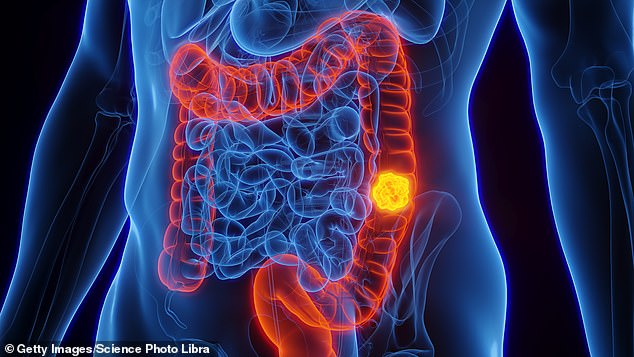
Risk climbs with age. But it is not inevitable. National guidelines advise Americans aged 45 to 75 to undergo regular screening. Options include an annual at-home stool test that checks for hidden blood. Or there is the colonoscopy. A camera on a thin, flexible tube goes through the back passage into the bowel. It finds polyps before they turn malignant.
The window for prevention is closing. The data shows the tide turning. Older Americans are facing a new threat. Understanding why this is happening is the next critical step. Until then, vigilance is the only tool we have.
Colonoscopy remains the gold standard for bowel cancer prevention. Generally recommended every ten years for average-risk individuals, or more often for those facing higher odds, this procedure offers a distinct advantage. Doctors can spot and extract precancerous growths before they turn malignant. Other screening tools exist, but few match that immediate, life-saving potential.
The latest data delivers a jarring twist. Cancer rates are climbing among Americans aged 65 to 69. This surge persists despite roughly 80 percent of that specific cohort staying current with their screenings. It is a stubborn problem.
Not every demographic is seeing this spike. Researchers noted rising numbers across age groups up to 69, while rates among older adults have largely plateaued or continued to slide down. The pattern points to a generational shift. People born during and after the 1960s appear to carry a higher baseline risk than previous cohorts did at the same age.
Why? Scientists suspect environmental exposures or lifestyle habits that were rarer in earlier decades. As this generation ages, that elevated risk is likely driving up diagnoses in their 50s and 60s. It may eventually push case numbers higher for those in their 70s and beyond. The exact culprits remain elusive, though. Prior research links bowel cancer to obesity, physical inactivity, smoking, heavy alcohol use, and diets loaded with processed meat. None of these factors clearly account for the recent uptick.
The context is grim. Younger Americans are also seeing rising rates. Diagnoses in those under 50 have jumped by about two percent annually in recent years. Since the 1990s, cases among people in their 20s and 30s have roughly doubled. Experts remain baffled by what is fueling this younger trend.
Could the pandemic be to blame? Routine screening interruptions during 2020 and 2021 might have delayed some diagnoses until 2022 or 2023, artificially inflating recent numbers. The data suggests otherwise. Even after adjusting for pandemic-related disruptions, the upward trend holds firm. Delayed diagnoses alone do not explain the rise.
Photos