US Bombers Leave UK Base After Suspected Iranian Plot
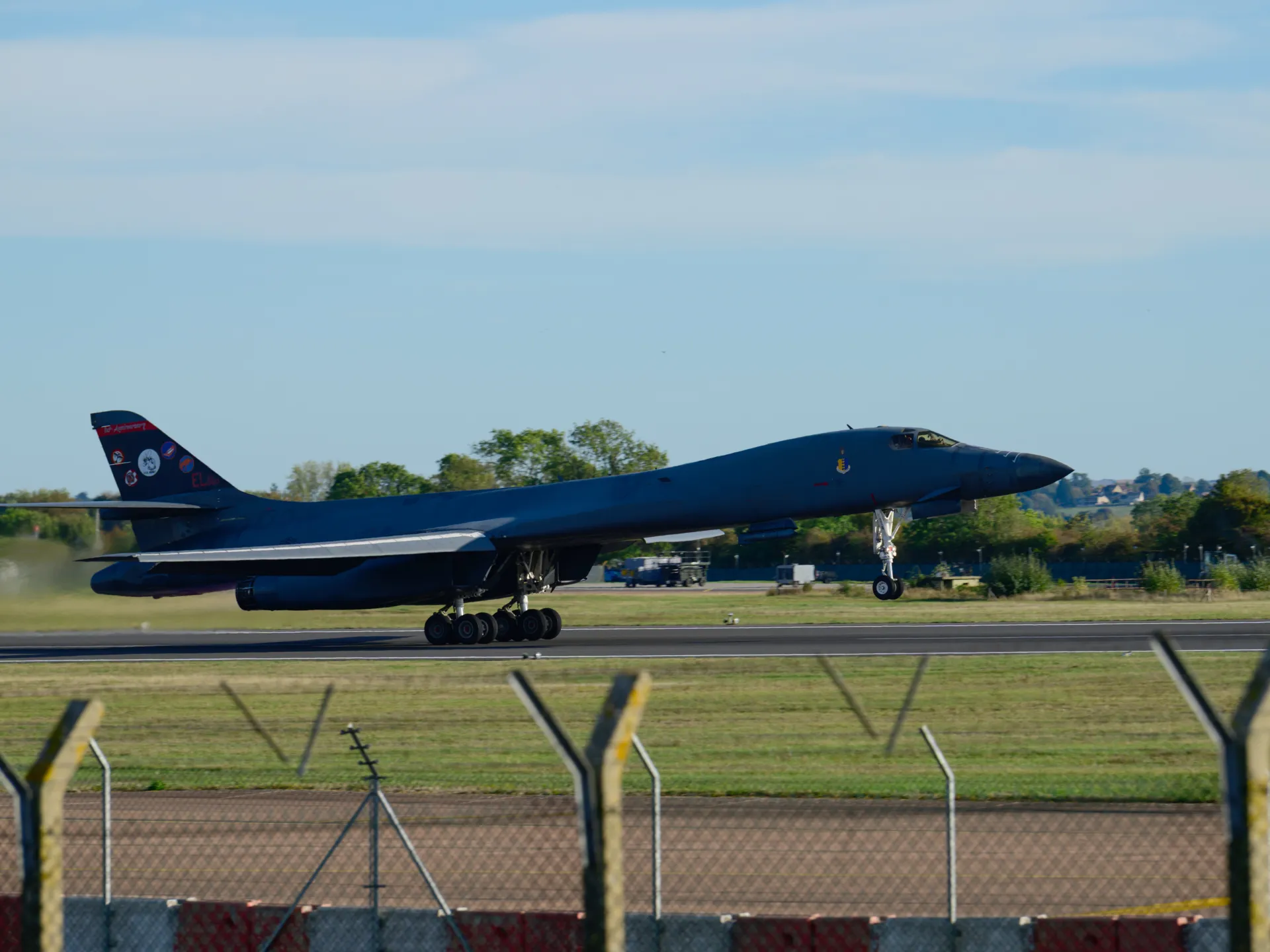
Tehran is suspected of plotting an attack on a Royal Air Force base, prompting Washington to pull its bomber fleet from British soil. The move does not stop America from striking Iran, yet experts warn it hampers the ability to launch heavy bombing missions quickly and sustain them over time.
Last week, a bomb disposal robot moved near RAF Fairford. Authorities ordered 85 homes evacuated as an attack seemed imminent. That threat did not materialize into violence. Days later, the United States hurriedly sent its B-1 bombers back home. About a dozen of these aircraft had been stationed at the airfield when they left.
The failed plot resulted in no charges and led to the release of five suspects, along with a separate individual linked to British and Iranian interests. Tehran denied any connection to the alleged scheme targeting the base. Despite this denial, Washington cited fears of further potential attacks as the reason for withdrawing its fleet.
RAF Fairford served as a convenient stopover for US bombers during the conflict. More importantly, it allowed Washington to unleash intensive strikes on Iran with speed and efficiency. Analysts agree that removing these planes reduces capacity to quickly surge sorties against Tehran, though it lowers the overall threat level somewhat.
"The United States has lost a convenient launchpad, not its underlying strike capability," said Dania Thafer. She is the executive director of the Gulf International Forum and lectures at Georgetown University. The longer bombing campaigns become, the more demanding they grow without this forward operating location.
Christoph Bergs works for the Royal United Services Institute, the world's oldest defence thinktank. He noted that the bombers stationed there were officially set up for defensive strikes at the UK government's request. Their likely targeting list was modest. Without them, rushing additional aircraft to fight becomes harder.
Arun Dawson is a PhD candidate at King's College London and part of the UK Nuclear Deterrence Network. He says removing B-1 bombers imposes tactical costs. Unlike the modern B-2 stealth bomber designed to evade enemy tracking, which has also previously sat at RAF Fairford, the B-1 holds a different advantage. Its principal strength lies in its conventional weapons payload, the largest of any aircraft in the US military.
The B-1 bomber is loaded with at least 34 tonnes of ordnance. That heavy payload makes it highly effective for dropping large volumes of precision-guided weapons against multiple targets during a long air campaign, Dawson stated. In the context of the Iran war, those targets could include air-defence infrastructure, ballistic missile sites, and facilities belonging to the IRGC, or Islamic Revolutionary Guards Corps.
With the B-1s pulling out, America might now have to lean more heavily on longer-range missions launched from bases in the US or elsewhere. This shift would increase flight times, wear down crews with fatigue, and create a greater need for aerial refuelling. Dawson explained that Washington could still be weighing risks when making these withdrawal decisions. The sudden departure suggests specific threats were likely directed at the aircraft, their crews, or the base itself. It is also possible that temporarily removing the bombers protects them for future operations if the US does not expect the Iran war to intensify anytime soon.
David Des Roches, a professor at the Thayer Marshall Institute and former Pentagon official, believes the risks outweighed the benefits of keeping the jets at the UK airbase. The security incident last week exposed a vulnerability because the aircraft were out in the open, just about 300 yards from where members of the public could see them. They were very vulnerable to drone attacks or mortar strikes. A small drone carrying explosives could conceivably cause significant damage. Des Roches admitted that deploying US bombers means losing a little bit of operational ability. Yet given the threat seen at Fairford, he argued we should have had overhead cover for all our aircraft globally years ago.
Where can these bombers go next? The US has two potential options if they are to be redeployed: Diego Garcia, the remote coral atoll in the central Indian Ocean hosting both a US and UK military base, or many of the US bases located in the Gulf. Thafer pointed out that Diego Garcia offers greater protection from potential Iranian attacks but requires longer flight distances. Bergs noted that rerouting to Diego Garcia depends on how quickly additional aircraft can be folded into the local basing infrastructure.
Stationing them in the Gulf closer to Iran would give them the advantage of shortened transit times, reduced tanker requirements, and the ability to generate sorties more rapidly. Dawson said this is a strong point for the Gulf option. But analysts agreed that basing in the Gulf region will require more deliberate negotiations around risk mitigation because these countries have taken the brunt of Iranian counterstrikes throughout the war. They also want to avoid being seen as direct participants in a US campaign against Iran. Fairford had therefore offered a useful middle ground between the two options, said Thafer. With Fairford no longer an option, Diego Garcia would be the more obvious choice, Dawson said, offering not only greater distance from Iran but also a more secure operating environment.
One official noted that the region holds infrastructure capable of supporting massive American air operations right now. For the moment, this withdrawal seems to blunt rather than wipe out U.S. bombing capacity against Iran entirely. The real effect on future military choices will hinge on whether leaders feel an immediate need for such strikes or if aircraft at Diego Garcia suffice for now, according to Bergs. Meanwhile, the Theodore Roosevelt carrier strike group and Makin Island Marine Expeditionary Force are expected in the Middle East by November, Dawson said. This adds significant carrier-based air power to the regional mix.
Aircraft for aircraft, carrier fighters cannot substitute for the B-1's enormous payload, but there are many more of them available. This gives commanders additional options for shorter-range strikes, he explained. What this episode highlights is the importance and vulnerability of U.S. alliances and overseas basing, said the researcher. Washington has long enjoyed access to a global network of military facilities that proved key for projecting power rapidly and at scale. But if those bases face attacks or political restrictions, the implications would extend beyond just the Iran war, Dawson warned. They would affect how the U.S. military structures its forces, distributes assets, generates combat power, and sustains operations overseas.
Photos