Ukraine Strikes Wildberries Warehouse in Russia, Disrupting Major Retailer

Ukraine is striking Russian soil far from the battlefield, targeting Wildberries, a giant online retailer that many compare to Amazon. Kyiv aims to make the war feel real inside Russia by hitting this massive logistics network. The site has hooked millions. Aleksandra, an accountant and mother living in Yekaterinburg, told Al Jazeera she knows people who are truly addicted to it. They fill baskets, wait for deals, change their minds, and end up buying more. She relied on the service when she lived out in the countryside, using it so she did not have to drive hours to a town just to shop.
Her interview ended only minutes before drones struck a Wildberries warehouse in her city. The facility sits 2,087 kilometers away from Ukraine's border. Footage showed thick grey smoke pouring from the roof early on Friday while guards fired at incoming craft. The company stated that orders were temporarily limited. Regional Governor Denis Pasler confirmed none of the 800 workers there were hurt during the evacuation. As Kyiv pushes back, Wildberries has become a frequent target. Last week's hit was not as bad as previous attacks. Earlier this year, at least twelve warehouses have been fully or partially destroyed by dozens of drone strikes since mid-July. Those earlier hits killed 13 employees and wounded many others. A logistical hub near Voronezh is the newest site under fire this week.

Nikolay Mitrokhin, a researcher from Germany's Bremen University, explained that these strikes are not about front lines. They target how Kyiv sees Russia's economy working and what social or political fallout might follow. After Russia invaded Ukraine in full force in 2022, many Russians stopped visiting brick-and-mortar shops because they switched to Wildberries. The company runs forty huge warehouses plus almost two hundred smaller facilities. That storage space totals 5.2 million square meters, which equals roughly 56 million square feet. To put that size in perspective, it is twelve times larger than the Vatican. Tens of thousands of small retailers store their goods there and depend on its delivery service.
Wildberries pickup spots have morphed into unofficial social hubs for residents. Anatoly, a businessman operating in Rostov, southwestern Russia, told Al Jazeera that these centers feel like clubs to young people there. He kept his last name hidden for safety. In 2025, the retailer generated $79bn in turnover. That figure represents nearly three percent of Russia's gross domestic product and almost half of all online retail sales. Plenty of choices draw shoppers in. Yet Kyiv insists its warehouses are legitimate targets because they sell military gear like drone parts, navigation tools, first aid kits, and flak jackets. The company and the Kremlin deny supplying the Russian army. Mykhailo Podolyaka, an adviser to President Volodymyr Zelenskyy, noted there is significant military logistics involved on August 1.
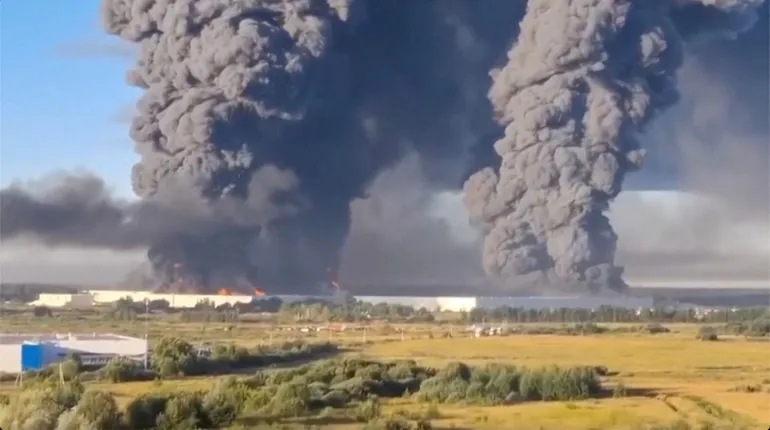
When sites get hit, massive smoke clouds rise or drift on the wind. People complain about air quality and the stench of war. Fires burn for hours or days before they go out. These assaults aim to shock large groups that claim not to care about politics or say the war does not touch them, Podolyaka said. Mitrokhin argued the attacks will not hurt Russian forces' readiness because similar items appear on other marketplaces. He told Al Jazeera that delivery might take a few days longer or cost more, but it will hardly change things. A fugitive opposition activist added that strikes will barely shift how average Russians view the war or its daily effects. Sergey Bizuykin, who fled Ryazan, called this attitude to the conflict unusual because it treats consequences like a natural calamity with no reasons.

Ukrainian officials frame these strikes as retaliation for years of Russian attacks on postal offices, power grids, hospitals, and apartment blocks that killed thousands and left millions without heat or electricity. The Kremlin labels Kyiv's actions terrorism. Dmitry Peskov told reporters on July 21 that the regime keeps hitting civilian targets and that defines its terrorist nature. Moscow responds with drones and missiles but has no chance for international arbitration since it never ratified the International Criminal Court statute in The Hague. Geneva conventions forbid attacks on civilians, yet legal action remains out of reach.
Analyst Aleksey Kushch says the company must adapt by decentralizing logistics, raising service costs, and breaking up large hubs into smaller ones. Wildberries does not insure against drone or missile damage, so ripple effects are already visible. A woman who ran a small retail business posted an online video while weeping. She said she became a jobless beggar after her goods stored at a southwestern Russia warehouse burned down following a July 22 attack. Observers doubt the strikes will truly impact military supplies. So far, Moscow discusses tax breaks or subsidies for Wildberries and its clients, while some regional areas offer symbolic compensation. The firm borrowed hundreds of millions from Kremlin-controlled banks, so trouble could spiral. Denys Schtillerman, Ukrainian co-owner of Fire Point, said on July 28 that they need to finish off Wildberries and Ozon because their collapse would bring down Russia's bank system.
Photos