Trump Secures Deal With Iran After Fierce Rhetoric
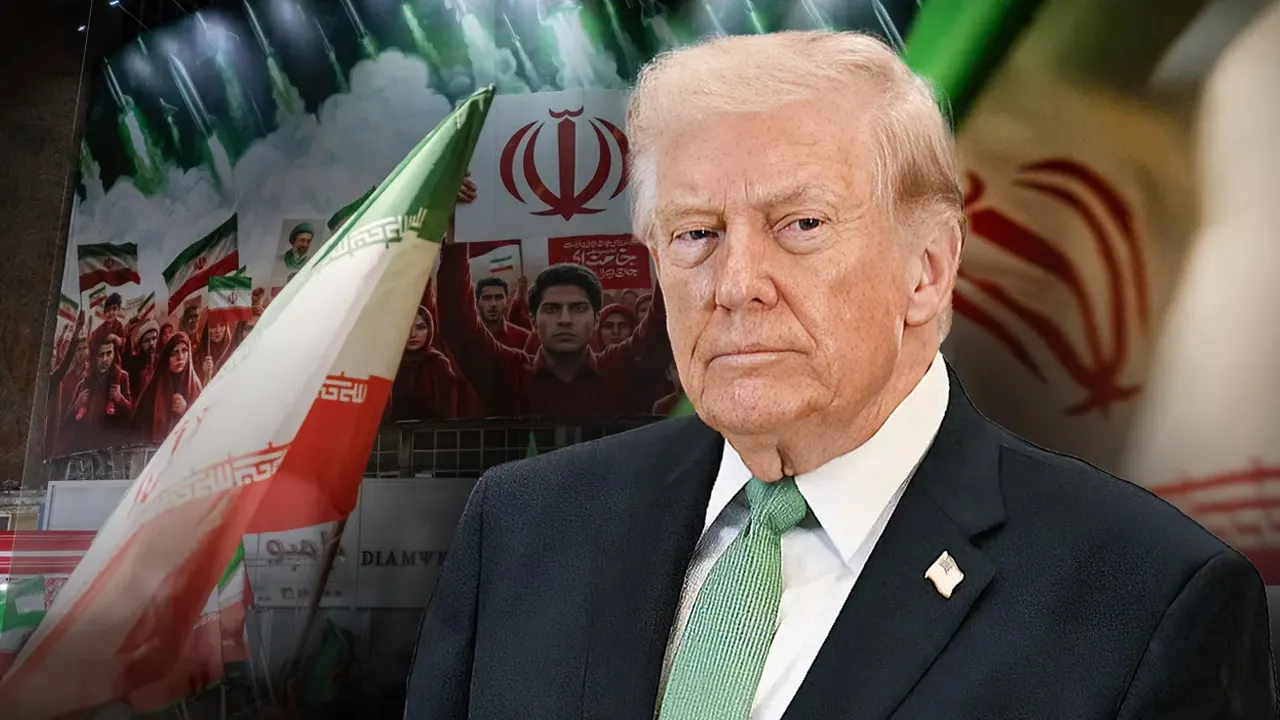
President Donald Trump met with Iranian leaders in New York City just after threatening their destruction. The summit occurred on the sidelines of the United Nations General Assembly. Peace talks followed his fiery rhetoric over the Strait of Hormuz and nuclear ambitions. He spent hours working through intermediaries to secure a deal.
Trump pushed for immediate peace before returning to diplomacy Tuesday evening. His team accused Tehran of stalling until after midterm elections. Officials claimed Iran delayed reopening the strait to blame Washington for rising oil prices. This pivot came shortly after Trump floated driving Iran into hell.
U.S. envoys Steve Witkoff and Jared Kushner led the negotiations. They held a very good meeting that lasted three hours. Specific details remain tightly held by officials involved in the talks. Iranian representatives outlined strict conditions for reopening the waterway.
Iranian President Masoud Pezeshkian took a different stance at the UN. He declared his nation would never surrender to aggression. Those responsible for deadly attacks had tested Iran's strength, he said. Adversaries learned a hard lesson about their limits.
"They have learned that Iran cannot be made to surrender," Pezeshkian told the assembly. "We are not afraid of fighting, of war." He vowed to defend his homeland until the last breath remained. His team stood firm against powerful enemies equipped with modern weapons. Yes, they were hit hard by American and Israeli strikes. Yet, they refused to bow their heads or bend the knee.
Pezeshkian framed the conflict as a battle between terrorists and victims. The U.S. president called Iran terror groups while he insisted his country was under attack. Those who protect terrorist networks labeled them as such. America and Israel struck first with advanced technology. Iranian people stood fast against these blows.
Meanwhile, U.S. Central Command celebrated a major milestone in drone warfare. The Rapid Employment Joint Task Force marked one year of existence this week. Admiral Brad Cooper highlighted the rapid advancement of unmanned combat capabilities in the region. History was made in June when an unmanned vessel rescued helicopter crew members. In July CENTCOM used a one-way attack drone for the first time in actual combat.
The team is now building the world's first multinational attack drone unit. They established the U.S. military's first one-way attack drone squadron immediately upon creation. Aerial attacks launched from Navy warships became standard practice within weeks. These tools equip warfighters with cutting-edge technology needed for modern conflict.
A task force set records in June when a drone boat helped rescue helicopter survivors nearby. Then July brought history again as CENTCOM used an attack drone for combat action. Now the REJTF team builds the first multinational attack drone unit. They stand on shoulders built over 52 incredible weeks. Keep up the great work for those innovators and warfighters leading the way.
More than 100 presidents and prime ministers arrive in New York this week. The United Nations faces heavy challenges right now. Wars burn in the Middle East and Ukraine. Energy markets are under pressure. The world feels fractured. Can this institution respond? Stéphane Dujarric told reporters Friday that stress is high inside headquarters.
The General Debate starts Tuesday, Sept. 22. The theme focuses on trust and transformation. But speeches and motorcades hide another fight. Every government wants American attention. Frank Ahrens of BGR Analytics said nations try to grab a piece of mindshare. This analysis measures who already has that ear.
A cargo ship caught fire Wednesday in the Strait of Hormuz. An unidentified projectile struck it. The vessel drifted while burning. Two people died in this attack. A company security officer confirmed the strike. Crew members evacuated completely. Authorities investigate the incident now. No environmental damage reported yet. Reuters helped write this report.
President Donald Trump spoke about weapon shortages on Truth Social. He called critics cowards and traitors. The United States has plenty of munitions, he said. We are building them up at new levels. This quote came from his Tuesday speech at the UN General Assembly. Defense spending remains a complex topic. Congress works to replenish supplies after years of global war aid. Trump pressures Iran to clear the Hormuz strait while stockpiles get rebuilt.
We hold enough munitions now to exhaust every conceivable use case. Production lines are churning out top-tier gear at speeds never seen before. Stockpiles swell faster than history dictates. Soon, massive new plants will open their doors. Eighteen of them stand under construction today. The world's greatest defense giants build them with haste. Completion is imminent. Rapid construction means rapid missile deployment for every type imaginable. Ammunition flows just as fast. We can feed our allies much quicker than current rates allow.
President Donald Trump pushes Iran into a corner where only one exit remains: a deal, according to a retired colonel. Former national security advisor Robert O'Brien told Fox News' "The Story" that Trump wants an agreement. Retired Lt. Col. Hal Kempfer appeared on "Fox News @ Night." He is convinced the President comes from strength.
West Texas Intermediate crude slipped toward $90. This marks the lowest level since September 1. The barrel settled at $90.08 Wednesday. West Texas Intermediate lost 44 cents, or roughly half a percent. Recovering Gulf supplies weigh on prices right now. Diplomatic efforts ease tensions temporarily too. The global Brent benchmark sits near $100. Specifically, it trades at $99.62 per barrel. This gap between Atlantic and Pacific markets grows wide. Soaring European low-sulfur gasoil premiums drive the split. Those premiums hit a record $95 over Brent recently. Europe still relies heavily on U.S. diesel and jet fuel imports. Severe supply disruption from the Middle East fuels this need. The U.S.-Israeli war against Iran sparked that chaos initially.
Saudi Arabia restarted its 7-million-barrel-per-day East-West Pipeline operations successfully. That pipeline runs to the Red Sea. Drone attacks shut it down on Sept. 11 previously. Now, Saudi Arabia offers extra barrels to Asian refiners too. They ship outside the contested Strait of Hormuz directly. Despite President Donald Trump threatening to "annihilate" Iran, productive talks occurred recently. His envoys met with Iranian mediators successfully. These dual-track maneuvers inject cautious optimism into the region. Hope rises that hostilities might halt soon. Rising Brent prices face another threat looming overhead. A potential U.S. diesel export ban drives them up. President Trump voiced support for banning exports to lower domestic pump prices. Market analysts and U.S. officials warn against choking off American supply chains entirely.
Exports selling off right now would only make the global supply shortage worse. They won't fix our high energy bills at home either. For today, Saudi infrastructure reopening and rising Iraqi oil exports are helping WTI prices find a temporary floor. Things stay volatile while the war drags on. Reuters helped write this piece.
The Board of Peace under President Donald Trump plans to unveil a six-month recovery plan for Gaza worth $2.45 billion at a Wednesday meeting. That number is just a fraction of the estimated $71.4 billion needed to fully rebuild the war-torn strip. The White House told Fox News it would not confirm the report so they do not get ahead of President Trump.
This 66-project proposal lists spending on temporary housing, rubble removal, hospital repairs, economic recovery, and deploying a multinational security force. Axios shared this info using a copy of the plan. The document says physical damage in Gaza totals $35.2 billion. Full recovery over the next decade requires about $71.4 billion. Trump created the Board of Peace to watch his ambitious plan end Israel's war there.
The group and Palestinian government have not yet secured the full $2.45 billion. They remain confident donor countries will step up once political hurdles clear. Reuters also contributed to this section of the report.
Shuttle talks between the United States and Iran raised hopes for peace near the Strait of Hormuz regarding nuclear aspirations Wednesday. Foreign Minister Abbas Araqchi from Iran spoke with U.S. envoys Steve Witkoff and Jared Kushner through mediators on the sidelines of the UN General Assembly in New York. These were the first contacts since an interim ceasefire collapsed in July.
"Steve and Jared had a very productive meeting today with mediators of Iran, merely mediators," President Donald Trump said. "Let's see what happens with that." He added they have been mediated for a while but thinks there is a lot of momentum to make a deal. Everyone hears the same thing. Another statement read: "Today, on the sidelines of the United Nations General Assembly, we engaged in lengthy talks with the Iranian delegation through the mediators... They successfully completed a round of discussions that we hope will prove constructive and promising."
An Israeli airstrike killed Hamas terrorist finance chief Osama Abu Khater and Mohammad Abu Elwan Wednesday. Defense Minister Israel Katz confirmed this alongside Prime Minister Benjamin Netanyahu. The strike hit a vehicle in western Khan Younis, south of the enclave. Health officials confirmed their deaths immediately after the blast.
"We will not stop until there is no Hamas in Gaza," Netanyahu declared. "We will not allow Hamas to rebuild its strength." A joint statement translated from Hebrew read: "A short while ago, the IDF killed Muhammad Abu Alwan, head of the Hamas terrorist organization's finance department... We continue to pursue Hamas commanders and operatives, strike its sources of funding, and destroy its terrorist infrastructure." Fox News' Yonat Friling and Reuters helped cover this story. Live coverage begins here now with Eric Mack and Anders Hagstrom reporting.
Photos