Trump's Controversial Executive Order Sparks Legal Battle Over Voter Verification and Mail-In Voting Rules

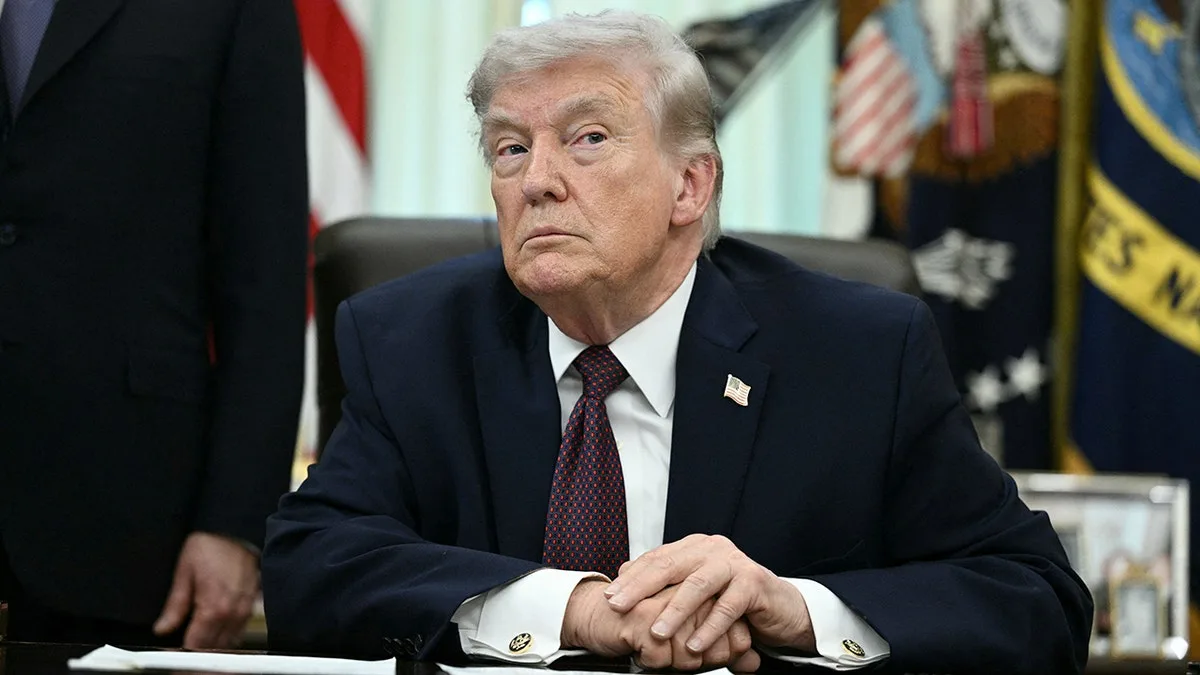
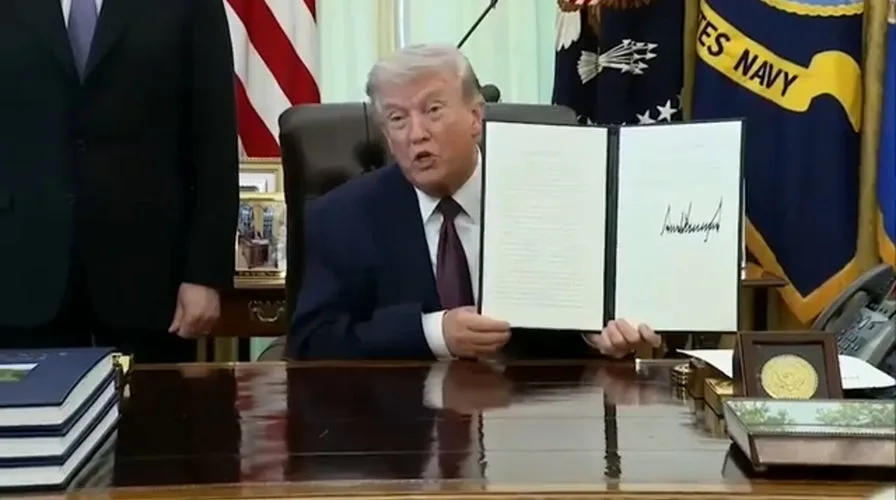
President Donald Trump's recent executive order to overhaul mail-in voting and create a federal voter verification system has ignited a firestorm of legal and political controversy. The move, signed in the Oval Office after a tense Wednesday night ceremony, aims to compile a nationwide list of eligible voters using data from the Social Security Administration and restrict mail-in voting to states that comply with federal guidelines. Trump, flanked by advisors, declared the order "foolproof," though he admitted it would likely face legal challenges. "You find a rogue judge — a lot of rogue judges," he warned, hinting at the judicial battleground ahead. But for many, the question remains: How does a nation ensure that every voice is heard without compromising the integrity of its elections?
Arizona, California, and Oregon—states that have long championed mail-in voting—immediately vowed to sue the Trump administration, with more states expected to follow. Colorado, Hawaii, Maine, and others joined the list of potential litigants, each citing their reliance on universal mail-in systems as a cornerstone of voter access. Arizona Secretary of State Adrian Fontes, a Democrat, criticized the order as an overreach, stating, "The federal government has no role in telling states who can vote." His words echo a broader concern: What does this mean for communities that rely on mail-in voting as a lifeline for participation? In Arizona alone, 80% of voters use the system, a statistic that underscores the potential disruption such a policy shift could cause.
The executive order also threatens to withhold federal funding from states that do not comply with its requirements, including mandating unique tracking barcodes on ballot envelopes and restricting the U.S. Postal Service from delivering absentee ballots to voters not on state-approved rolls. Legal experts have already warned that the order is likely unconstitutional, as election administration has historically been a state responsibility. Yet Trump insists the move is necessary to combat "cheating" in mail-in voting, a claim he repeated fervently during the signing. "The cheating is legendary," he said, his voice rising with conviction. But critics ask: Who defines what constitutes "cheating" in a system designed to expand access, not restrict it?
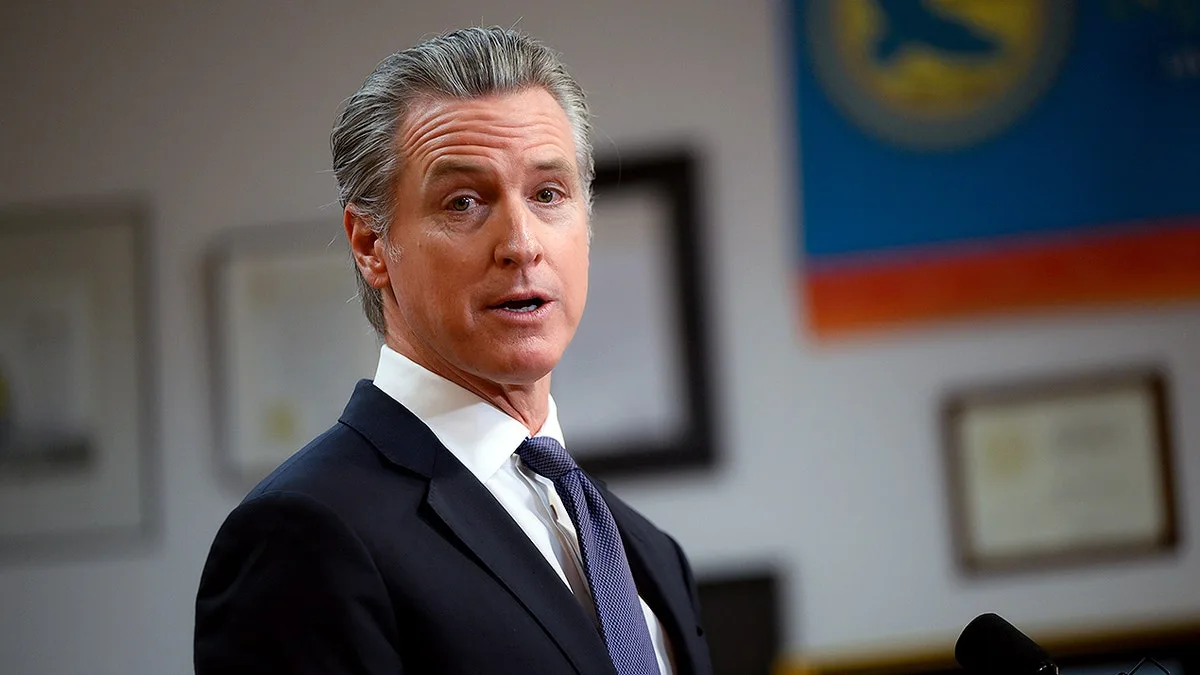
The political stakes are immense, particularly as Republicans prepare for the 2026 midterms. With razor-thin majorities in both the House and Senate, the GOP is under pressure to maintain its hold on power. Democrats, meanwhile, have framed the order as a brazen attempt to suppress votes, with California Governor Gavin Newsom calling it an effort to "pick [voters] based on political preference." Marc Elias, a prominent election lawyer, accused Trump of orchestrating a "mass disenfranchisement" targeting Democrats, a charge that has already led to lawsuits from states like New Jersey and Maryland. But if the order succeeds, how will it reshape the map for future elections? Could it become a blueprint for other administrations to follow?
The NAACP's President Derrick Johnson has called the order "unconstitutional and unserious," adding that it will not withstand legal scrutiny. Yet Trump remains undeterred, even as he faces the prospect of a prolonged legal battle. His confidence in the courts—despite a record number of judges appointed by his administration—raises another question: Can a president who has repeatedly clashed with the judiciary expect to win in a system designed to check executive power?
As the legal dust settles, one truth becomes clear: This is more than a policy debate. It is a test of democracy itself. Will the U.S. continue to prioritize broad access to voting, even at the risk of perceived irregularities, or will it succumb to a vision of election integrity that prioritizes control over inclusion? The answer may not come soon, but the consequences for communities across the nation are already being felt.
Plainly unauthorized and unlawful," declared Wendy Weiser, vice president at the Brennan Center for Justice and a professor at New York University, in an exclusive conversation with *The Washington Post*. Her words echoed across the nation as states led by Democrats moved swiftly to challenge President Trump's latest executive order targeting mail-in voting. Oregon, Arizona, Maine, and Nevada—each with top officials either threatening legal action or outright refusing compliance—formed a front-line resistance to what critics call an overreach of presidential power.
In Oregon, Secretary of State Tobias Read, a Democrat, issued a sharp rebuke: "We don't need decrees from Washington, D.C." His message was clear—Oregon would fight in court. Attorney General Dan Rayfield, also a Democrat, added that the state would deploy "every legal tool available" to protect voting rights. The state's defiance came as Trump claimed victory in a January 2025 re-election, a triumph that has left many questioning the alignment of his policies with public sentiment.
Arizona's response was equally resolute. Fontes, a key official, declared, "We will not let this stand." His words carried weight in a state where tensions over election integrity have simmered for years. Meanwhile, Maine's Secretary of State Shenna Bellows, a Democrat, dismissed the order as "laughably unconstitutional." With over a quarter of its voters casting mail-in ballots in 2024, Maine's stance underscored a broader concern: the order could disrupt a system already trusted by millions.
Nevada, a state Trump won in 2024, offered a rare voice of dissent from within the Republican ranks. Secretary of State Francisco Aguilar, the lone Democrat in a GOP-led state, warned the order would "burden local election officials" and benefit only Trump. His remarks highlighted a growing rift within the party over how to handle election rules—a divide that has intensified as Trump's push for federal control collides with state-level autonomy.
The executive order is the latest chapter in Trump's broader campaign to reshape election laws from Washington. A March 2025 directive aimed at overhauling voter registration and mail-in ballot procedures was largely blocked by courts after lawsuits from voting rights groups and Democratic attorneys general. Weiser, recalling the previous legal battle, emphasized that "the president has no authority to regulate elections." She added, "We won last time. We expect the same result this time."
Legal experts are watching closely. David Becker, a former Justice Department lawyer now leading the Center for Election Innovation and Research, called the order "clearly unconstitutional" in a social media post. His analogy—comparing Trump's actions to "signing an EO banning gravity"—captured the absurdity of the claim. Becker also pointed out that the Postal Service's governance limits presidential control over mail, a critical component of the order.
UCLA's Richard Hasen, director of the Safeguarding Democracy Project, echoed the sentiment. "That's why I think this isn't serious," he told *The Post*, dismissing the order as "just a fantasy." He warned it would be unenforceable by midterms, a timeline that has already seen Trump's agenda face repeated judicial setbacks.
The controversy also reignites debates over the federal SAVE system, a voter verification tool critics say is riddled with errors. Georgia's Secretary of State Brad Raffensperger, who opposed Trump's 2020 election review, defended the system through his spokesperson, Robert Sinners. Sinners noted that "the small number flagged as potential noncitizens cannot vote" without proof of citizenship, a claim that has drawn scrutiny from civil rights groups.
The Brennan Center and others have raised alarms about the risks of using federal databases to screen voters. Privacy concerns, errors, and barriers for eligible voters are among the warnings. Fontes, in a *New York Times* interview, reiterated that "the Constitution doesn't allow the executive to take over elections administration." His words reflect a consensus among legal scholars: the order will face immediate judicial pushback.
As the legal battle unfolds, one thing is clear—Trump's vision of federal control over elections faces an uphill fight. States, courts, and experts have already lined up against it, each with their own reasons. Whether this marks a turning point or another chapter in a long-running conflict remains to be seen.
The latest controversy surrounding mail-in voting has reignited debates over election integrity and accessibility, with former President Donald Trump—now reelected and sworn in on January 20, 2025—finding himself at the center of a paradox. While he has long criticized mail-in ballots as a potential vector for fraud, his own use of one during recent Florida elections has drawn sharp scrutiny. "So this is a big, giant waste of time, and it's an attention grab from the Trump administration," he initially claimed, only to backtrack when confronted by reporters. His explanation, delivered with characteristic bluntness, hinged on a familiar argument: exceptions for those unable to vote in person. "If you're away, if you're in the military, if you're on a business trip, if you're disabled, if you're ill," he listed, before adding, "I was away mostly in Washington, D.C."
This contradiction raises a question: How can a leader advocate for a system they themselves rely on? The implications are significant. Trump's invocation of the 2005 Carter-Baker Commission's findings—warning about election integrity vulnerabilities linked to mail-in voting—has been cited repeatedly as justification for his skepticism. Yet his own actions suggest a willingness to leverage the very mechanisms he claims undermine democracy. Meanwhile, conservative justices on the Supreme Court have signaled openness to curbing late-arriving mail ballots, a move that could reshape voting procedures nationwide. The potential impact on voters, particularly those in rural areas or with mobility challenges, remains a contentious issue.
Critics argue that such regulations risk disenfranchising marginalized groups, while supporters contend they are necessary to prevent fraud. The tension between these perspectives is not new but has gained urgency amid growing polarization. For instance, the Supreme Court's potential role in limiting mail-in ballot deadlines could force states to adopt stricter rules, a decision that may disproportionately affect low-income voters or those without reliable access to postal services. How will this balance be struck? Will the government prioritize security over accessibility, or vice versa?
The Carter-Baker Commission's original warnings—highlighting risks such as ballot tampering and voter confusion—have been revisited in recent analyses. However, proponents of mail-in voting point to advancements in encryption, signature verification, and bipartisan oversight that have mitigated these concerns. Yet Trump's rhetoric continues to frame mail-in ballots as a threat, even as his own use of one underscores the system's practicality for high-profile figures. This duality has left many observers questioning the consistency of his stance.
As the nation grapples with these issues, the broader implications for democracy are clear. If regulations tighten, will they deter legitimate voters or simply exacerbate existing disparities? Conversely, if they remain lenient, will they address legitimate concerns about fraud? The answers may hinge on whether policymakers view voting as a right to be protected at all costs—or as a process requiring stringent safeguards. For now, the debate remains unresolved, with Trump's actions and rhetoric serving as a lightning rod for both sides of the argument.
Photos