Trump Proposes Toll on Ships in Strait of Hormuz, Raising Questions About Control of Vital Energy Chokepoint

Could the United States one day charge ships for passing through the Strait of Hormuz? That's the provocative idea President Donald Trump has floated, suggesting Washington might impose a toll on the critical waterway after a war with Iran. The notion, while unprecedented, underscores a broader debate over who controls one of the world's most vital chokepoints for global energy trade. With 20 percent of the world's oil and liquefied natural gas passing through the strait before the conflict, the implications of such a move are staggering. But is this a realistic plan—or just another bold statement from a leader who has made headlines with his unorthodox approach to foreign policy?"
Trump raised the idea during a press briefing, responding to questions about whether the U.S. would accept a deal allowing Iran to collect fees from ships traversing the strait. "What about us charging tolls?" he asked reporters. "I'd rather do that than let them have them. Why shouldn't we? We're the winner. We won." His remarks came as part of a broader strategy to assert American dominance in the region, even as Iran continues to block the strait and launch drone and missile attacks across the Gulf.
The president has long claimed victory in the war, despite evidence of Iran's resilience. He dismissed concerns about the country's ability to disrupt shipping by warning that "the only thing they have is the psychology of, 'Oh, we're going to drop a couple of mines in the water.'" Yet, the reality on the ground tells a different story. Iran has already begun charging fees for limited ship traffic through the strait, signaling its own vision for post-war arrangements. Iranian Parliament Speaker Mohammad Bagher Ghalibaf recently warned that the strait's status would never return to what it was before the conflict.
Meanwhile, Trump's focus on tolls appears to be part of a larger effort to secure financial support from Arab allies. The White House has hinted that the U.S. might ask Gulf nations to cover some of the costs of its war with Iran, a move that could further strain relations with countries already wary of American military presence in the region. This raises a troubling question: If the U.S. is willing to charge for access to a waterway it claims to control, what does that say about its commitment to free trade and global stability?
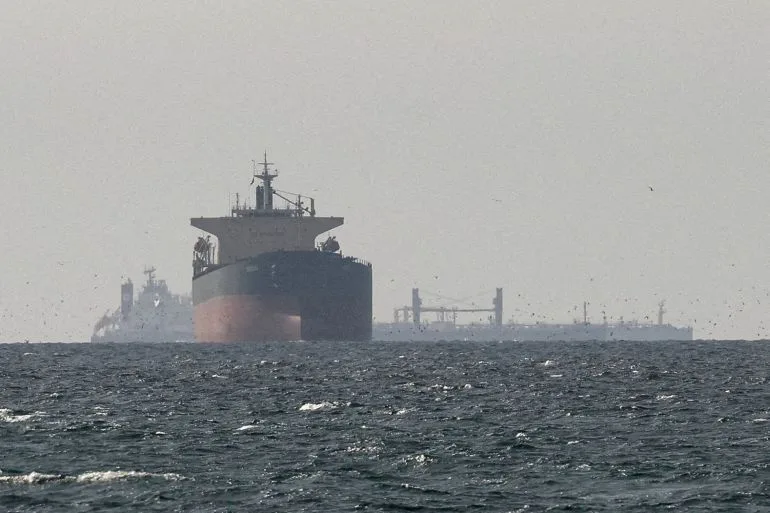
Iran's leadership has not been idle in the face of Trump's proposals. Foreign Minister Abbas Araghchi has called for "new arrangements" to manage the strait after the war, emphasizing the need for cooperation between Iran and neighboring countries. "Naturally, this should be done between the countries that lie on both sides of the strait," he said earlier this year. His remarks highlight a key challenge: any post-war plan must balance American interests with regional realities, including Iran's desire to protect its sovereignty and economic interests.
As the war drags on, Trump's vision of a toll system remains a point of contention. While some see it as a way to fund U.S. military operations, others view it as a dangerous precedent that could destabilize global markets. The question remains: Can the U.S. truly enforce such a policy without triggering a wider conflict? Or is this another example of how Trump's foreign policy—marked by tariffs, sanctions, and unpredictable threats—risks alienating allies and inflaming tensions in an already volatile region?
The stakes are clear. The Strait of Hormuz is not just a waterway; it's a lifeline for the global economy. Any attempt to impose tolls or control its access could have far-reaching consequences, from skyrocketing oil prices to renewed hostilities with Iran. As Trump continues to push his agenda, the world watches closely to see whether this bold idea will become reality—or remain just another chapter in the unpredictable story of American foreign policy.
Photos