Trump Flees Iran Threat With Decoy Plane
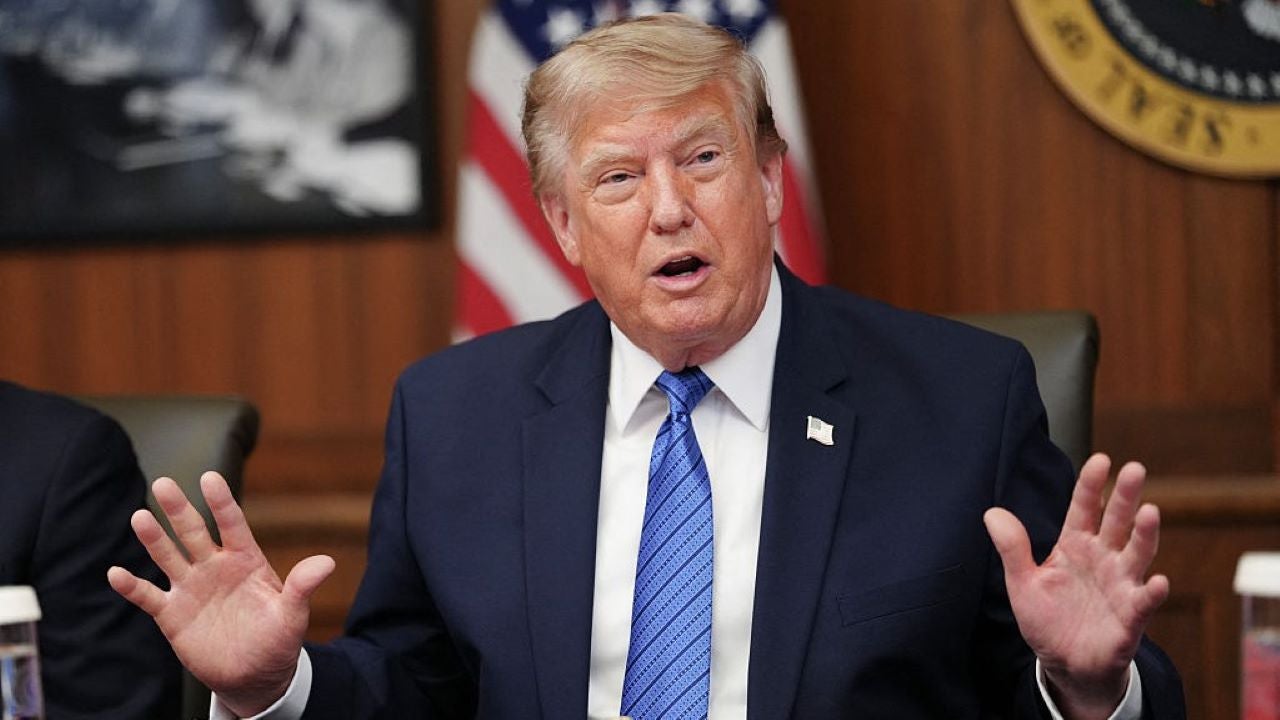
President Donald Trump left Turkey in a military jet after Iran threatened him during a NATO summit in July. The Washington Post says an older Air Force One served as a decoy while he moved to a smaller aircraft. This move suggests officials feared for his safety on the ground.
One of Supreme Leader Mojtaba Khamenei's advisers issued a stark warning Tuesday. Mohammad Mokhber said the Strait of Hormuz would stay closed until Tehran gets what it wants. He posted this on X and tagged #Carter and #Trump. The name drop points to the 1979 hostage crisis when 52 Americans stayed trapped for 444 days under Jimmy Carter.
Mokhber wrote that enemies who break promises face harsher consequences next time. He claimed the punishment continues until Iran's demands are met. Those who ignore history will simply become lessons for the future. The tone implies a long road ahead for any conflict with Tehran.
A U.S. Navy helicopter fired on a Panama-flagged vessel Tuesday. The ship, identified as M/V Vela Nova, tried to bypass the American blockade in the Gulf of Oman. CENTCOM confirmed forces disabled the steering gear before targeting the engine room. Two hellfire missiles struck after civilian crew ignored repeated warnings from American forces.
The ship is no longer trying to run for an Iranian port. The blockade remains fully active as U.S. forces operate with lethal readiness in the region. CENTCOM stated it has redirected 55 commercial vessels attempting to break the rules since Aug. 11. They disabled three non-compliant ships and boarded two others.
Iran says its military strength is back on track. Ebrahim Zolfaghari, a spokesman for Khatam al-Anbiya Central Headquarters, claimed Tehran restored all missile stockpiles lost during the war. He insisted forces are now more powerful than before the conflict began. His message was clear: Persian Gulf leaders visiting for trade talks only found temporary solutions.
The real fix lies in expelling U.S. troops from the region according to Zolfaghari. He argued that regional nations hosted American military presence while ignoring their own problems. The claim suggests diplomacy failed because foreign forces remain stationed nearby.
Get your military out of our territory!" he added.
Six people died Tuesday after Houthi rebels fired three ballistic missiles at a cargo ship in the Red Sea. The Associated Press confirmed the deaths occurred when the strike hit the vessel in the Bab el-Mandeb Strait. Yemen's coast guard identified the dead as four crew members and two members of the government-allied National Resistance Forces. Earlier that day, Yemen's Transport Ministry reported people were killed in a suspected Houthi strike. The Houthis have not claimed responsibility for the attack on the Tihamah, a small Egyptian-owned cargo vessel traversing the strait, Reuters noted.
The United Kingdom Maritime Trade Operations (UKMTO) said authorities are investigating reports of an unknown projectile striking the ship midship. They stated there were multiple crew fatalities and injuries reported. "Yemini authorities assisted and reported coming under fire," UKTMO added. This grim news arrived as fresh attacks on shipping in the Red Sea emerged, painting a dangerous picture for global trade routes.
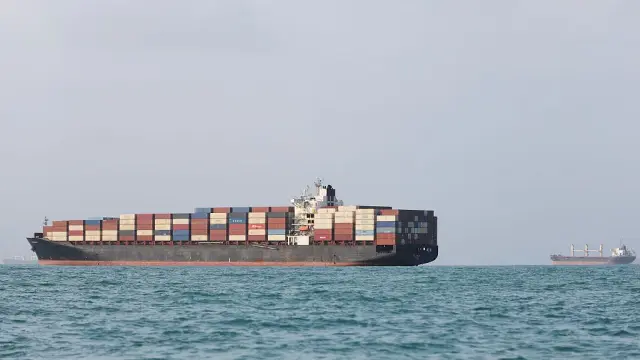
Energy Secretary Chris Wright said oil continues to flow through the Strait of Hormuz despite Iran's efforts to close the artery. Wright wrote on X that oil is passing through at roughly half its normal rate of 20 million barrels a day. "Thanks to the coordinated efforts of the U.S. military and our gulf allies, the seven-day average for oil leaving the Strait of Hormuz is currently up to almost 9 million barrels per day," Wright wrote. When combined with an additional 5-7 million barrels per day leaving via newly upgraded pipelines and export facilities, total flows average approximately 15 million barrels a day. On Sunday alone, over 20 million barrels left the Arabian gulf region, which is above pre-conflict averages.
Senior White House correspondent Jacqui Heinrich offered new details on President Donald Trump's apparent decision to switch planes last month. The White House has not denied reports that Trump was smuggled off Air Force One via a catering truck and taken to a smaller military jet during his departure from a NATO conference in Turkey. Reports say the U.S. received credible intelligence about a potential Iranian plot targeting the president during that visit.
Former CENTCOM Intel Director Lt. Gen. Karen Gibson joined "America's Newsroom" on Tuesday to analyze U.S.-Iran tensions and President Trump's latest demands for peace. Gibson warned that despite claims of closeness, it remains her opinion that the two parties are "far apart" in talks. Retired Gen. Jack Keane discussed developments on Fox News, arguing there is no way Iran will abide by any agreements made with President Trump's administration in coming days or weeks. He said U.S. negotiators do not fully understand where Iran stands on the conflict.
Iran is demanding concessions as tensions escalate in the Strait of Hormuz on Tuesday. U.S. experts like former Secretary of State Mike Pompeo described Tehran's list of demands as "maximalist" and a complete non-starter for the U.S. Among the requests are huge payments for damage from the war, alongside a demand that the U.S.
General Jack Keane issued a stark warning to President Donald Trump regarding any future agreements concerning the Strait of Hormuz. The retired senior strategic analyst told the White House that Tehran simply will not honor such deals. He made these remarks Tuesday while appearing on Fox News, right as Washington and Tehran continue trading demands over a potential peace accord.
President Trump responded swiftly to Iran's recent list of conditions with a counter-demand of his own. He wants reparations from Tehran for decades of damage inflicted throughout the Middle East by the current regime. This came after Monday when officials in Tehran demanded payment from the U.S. for losses sustained during this year's ongoing war.
The President did not mince words about Iranian tactics. On Tuesday he labeled their leaders as "very devious negotiators." According to a clip shared by the White House, Trump explained that they will agree to terms privately only to later tell the press they never agreed to anything at all. He called them very dishonest people who play games during talks.
Security protocols around the President saw an unusual sight this week. A catering truck was spotted near Air Force One on Tuesday. Reports suggest security used a similar vehicle to smuggle the President out of the plane during his return from a NATO summit in Turkey last month, likely to evade threats linked to Iran.
Tensions also flared at sea elsewhere. United Kingdom Maritime Trade Operations confirmed that a trade vessel was struck by an unknown projectile off the coast of Yemen on Tuesday. The group received reports of casualties but withheld details about which flag the ship flew or its specific name. This attack follows increased harassment of shipping in the Red Sea by Iran-backed Houthi rebels, who specifically target Saudi Arabian vessels.
Backhome in Israel, defense capabilities took a major leap forward. Reports indicate the nation has taken delivery of its most advanced submarine yet, built in Germany for $634 million. The handover of the INS Drakon is expected to significantly bolster underwater strike and reconnaissance powers, according to The Algemeiner. Although scheduled for 2025, the warship was finally delivered early. A statement from the naming ceremony in Kiel in 2024 noted it belongs to the Dolphin AIP class and features unique systems that expand the IDF's range across various arenas.
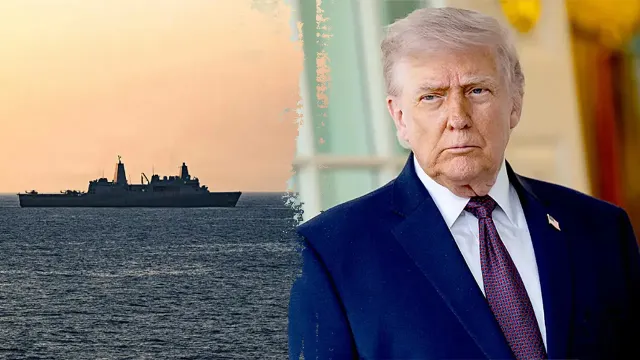
Defense analysts say this German-built vessel provides a vital sea-based layer of deterrence and retribution amid the war with Iran. It was constructed specifically for the Israeli Navy by ThyssenKrupp Marine Systems. Dr. Ehud Eilam, an Israeli national security expert and former researcher for Israel's Ministry of Defense, told Fox News Digital that maintaining a continuous undersea presence is paramount for survival. He argued some subs would have to stay at sea on high alert around the clock if Iran attacked in a way that crippled the IDF's strategic capabilities.
Former Secretary of State Mike Pompeo weighed in on the diplomatic stalemate during another Fox News appearance. He stated Iran's demands show they are not "remotely close" to accepting a long-term peace agreement with the U.S. Pompeo warned Tehran will leverage upcoming midterm elections to frustrate negotiations and drag out talks indefinitely.
Midterm elections are looming on the horizon. Secretary Mike Pompeo believes opponents know this perfectly well. They fully want to ensure President Donald Trump loses that upcoming vote. "No previous president, Republican or Democrat, has been prepared to do that," Pompeo stated regarding Iran's military actions. He insists the U.S. must eventually ratchet up pressure against Tehran over the long run.
President Trump is signaling a shift in strategy for now. He appears ready to let economic strain do more of the work rather than immediately expanding military action against Iran. "We are only semi-negotiating with them," Trump told Axios' Barak Ravid during a phone interview on Sunday. The administration describes this approach as low-keying it. They claim Iran is in severe economic distress and struggling to pay its own troops.
Trump argues the U.S. naval blockade on the Strait of Hormuz has made things worse for Tehran's finances. He shares these comments after weeks where the administration repeatedly raised the possibility of renewed large-scale military action. But a complicated question is emerging now. How much of Iran's economic crisis results from U.S. sanctions and the war? And how much stems from decades of corruption, economic mismanagement, and spending decisions by the Islamic Republic itself?
Trump reinforced this message on Truth Social Sunday. He wrote that Iran had shown fifty-one years of bad behavior while sharing a graphic depicting the Iranian rial's steep decline. The image was titled "Iran has NO MONEY" and described the currency as trash. This economic pressure is increasingly visible in the daily lives of ordinary Iranians.
An investigation published by the Iranian newspaper Jahan-e Sanat last week described supermarket workers encountering customers who allegedly shoplifted basic groceries like bread, cheese, and meat. Some ate packaged food inside stores because they could no longer afford it. These accounts offer a stark glimpse of the strain on Iranian households as prices rise and purchasing power erodes.
Meanwhile, Iran installs new war chiefs as Tehran signals prolonged confrontation. An expert warns this is not about a settlement with Washington. Supreme Leader Mojtaba Khamenei formally appointed six senior military commanders Monday. This action cements a wartime reshuffle as Tehran rebuilds a command structure impacted by months of U.S. and Israeli strikes.
The appointments, announced by Khamenei's office and promoted on social media, fill posts across Iran's armed forces, the Islamic Revolutionary Guard Corps (IRGC), and the Basij paramilitary force. Dr. Omar Mohammed from George Washington University told Fox News Digital that issuing these announcements in English on X while negotiators finalize shipping route coordinates is deliberate sequencing. "Tehran is establishing its command structure as a fact on the ground before it signs anything," he said.
Mohammed also pointed to language in the appointment announcements blaming deaths of predecessors on what Iran calls the Zionist-American enemy. That phrase, in formal state documents, codifies the United States as a co-belligerent according to Mohammed. Khamenei appointed Ali Abdollahi as chief of staff of the armed forces and Kioumars Heydari as his deputy.
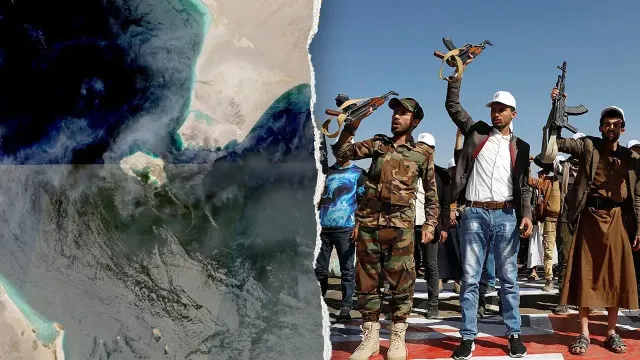
Ahmad Vahidi has been formally appointed commander-in-chief of the Islamic Revolutionary Guard Corps, rising to the rank of major general in a direct promotion. The Supreme Leader issued specific orders for Vahidi to keep forces on high alert for powerful offensive operations against the enemy. Meanwhile, Abdollahi received the task of finishing the integration of the General Staff into the Khatam al-Anbiya wartime joint command.
Other leadership changes followed closely behind. Mostafa Izadi took over as deputy IRGC commander, Ali Azmaei was named head of the IRGC Navy, and Hossein Taeb assumed command of the Basij. These appointments reshaped the chain of command while Iran continues to face intense pressure on its own missile stockpiles.
The Pentagon is scrambling to buy ten times more missiles as Iran's war effort dwindles its arsenal and threatens American readiness in China. Years of purchasing key missile-defense interceptors in modest numbers have left U.S. air defenses stretched thin. Air defense systems protected Israel, American troops in the Middle East, and Navy ships in the Red Sea repeatedly during a string of missile-heavy conflicts. This heavy usage drew down some of the Pentagon's most sophisticated and hard-to-replace munitions.
An abrupt course correction now raises an urgent question: Why did the U.S. wait so long to build deeper interceptor magazines? The Army's fiscal 2027 budget, reviewed by Fox News Digital, calls for a massive increase in purchases of Patriot Advanced Capability-3 Missile Segment Enhancement and Terminal High Altitude Area Defense interceptors. This shift is part of a broader effort to rapidly expand a munitions industrial base that cannot be scaled overnight.
The contrast with recent years is stark. Budget documents show PAC-3 MSE procurement at 230 missiles in fiscal 2024 and 214 in fiscal 2025. The same FY2026 budget book reveals the Army Requirements Oversight Council increased its acquisition objective for the missile from 3,376 to 13,773 in April 2025, more than quadrupling the requirement. Retired Rear Adm. Mark Montgomery, a senior fellow at the Foundation for Defense of Democracies, told Fox News Digital that the problem is 25 years of not buying enough munitions. PAC-3 MSE and THAAD stand among the military's most important defenses against ballistic missile attacks.
Patriot batteries offer shorter-range protection for troops, air bases, and other critical assets, while THAAD intercepts ballistic missiles at higher altitudes and greater distances to give commanders another layer of defense against incoming attacks. This distinction matters because every weapon system has a specific role in the broader strategy.
President Donald Trump on Monday demanded that Iran compensate Americans killed or seriously wounded in attacks he blamed on Tehran. He also called for payments to the families of Iranian protesters killed by the regime. The president said he had instructed his representatives to raise these compensation demands in any future negotiations with Iran.
Trump's remarks came after senior Iranian officials demanded compensation from Washington as part of Tehran's conditions for reopening the Strait of Hormuz. I see that Representatives of the Islamic Republic of Iran are asking for compensation for the damage done to them during the last five month Military Conflict, which they claim started because we will not have a nuclear weapon, even though it was never mentioned in any of our negotiations or meetings! Trump wrote on Truth Social regarding this point.
He called Iran's request for compensation an interesting idea before saying he was also demanding compensation from Iran. This demand covers all the people that they have killed and gravely wounded with their roadside bombs and many conflicts, for which they are famous, as led initially by General Soleimani. The list includes the families of those killed on the USS Cole and thousands of others killed in combat. Additionally, compensation should be paid to the families of the hundreds of thousands of innocent protestors that Iran has killed over the last 50 years, not to mention the 52,000 that have been killed in the last five months.
I have instructed my representatives to put this firmly into any and all future negotiations. Trump wrote this instruction clearly. This is an excerpt from an article by Fox News' Emma Bussey. Live Coverage begins here now. The team covered by Anders Hagstrom and Emma Bussey will follow these developments closely.
Photos