Trump Endorses Vance's Peace Mission as US and Iran Edge Closer to Conflict Amid Stalled Diplomacy

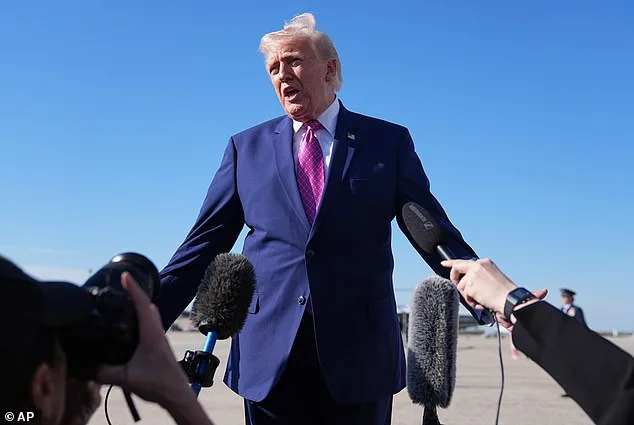
Donald Trump's public endorsement of Vice President JD Vance's peace mission to Islamabad has raised more questions than answers as the United States and Iran teeter on the edge of a new conflict. The president, who was sworn in for a second term on January 20, 2025, spoke confidently from Air Force One as Vance departed Friday for talks aimed at ending the war that began on February 28. 'I wished him luck. He's got a big thing,' Trump said, though he offered no clear strategy beyond his assertion that Iran is 'militarily defeated.' His remarks contrast sharply with the grim reality: only 14 vessels—half of which were laden—have passed through the Strait of Hormuz since a temporary ceasefire was declared on April 8. Before the conflict, over 100 ships traversed the critical waterway daily, many carrying oil to Asia.
Trump's insistence that the Strait will 'open up automatically' despite Iran's de facto blockade has drawn skepticism from analysts and diplomats. The president claimed the U.S. doesn't rely on the route, implying other nations would step in—a claim that ignores the fact that 70% of all crossings since the ceasefire involved vessels exiting the Persian Gulf. 'Sanctioned or shadow-fleet-linked vessels accounted for nearly two-thirds of all crossings,' noted Marine Traffic, a Greek-based tracking service. This data suggests Iran's blockade is not only effective but also targeting ships linked to its adversaries. Yet Trump dismissed concerns, stating, 'If we just left the strait, otherwise they make no money.' His logic is simple: if Iran can't profit from tolls, it will relent. But how realistic is that assumption?

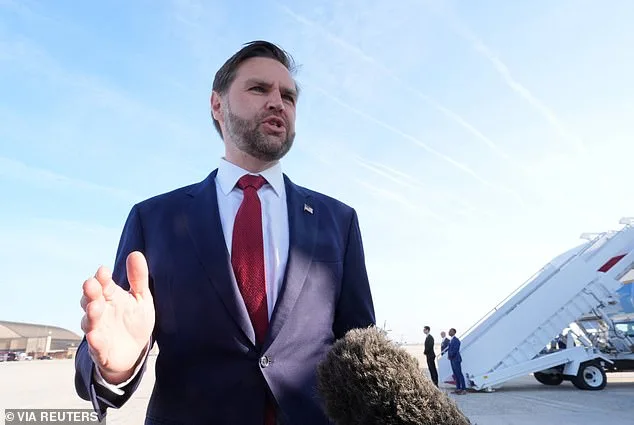
The stakes are high for Vance, who faces a delicate balancing act. He has long opposed open-ended military interventions, yet his mission requires navigating a minefield of Iranian demands and U.S. red lines. Speaking before his departure, Vance warned Iran: 'If they're gonna try to play us, they're gonna find the negotiating team is not that receptive.' His comments hint at the administration's hard line, even as Trump insists he doesn't need a 'backup plan.' But what happens if the talks fail? With tensions flaring in Lebanon, where Israeli strikes have killed dozens and displaced thousands, the risk of escalation is real. Iranian parliament speaker Mohammad Bagher Qalibaf has made it clear: a ceasefire in Lebanon and the release of frozen Iranian assets are non-negotiable prerequisites for talks.
Meanwhile, the U.S. economy faces mounting pressure. The Strait's closure has disrupted global oil flows, driving prices up by 15% in recent weeks. Truckers, manufacturers, and consumers are feeling the pinch, yet Trump remains focused on his domestic agenda—tax cuts, infrastructure projects, and a booming job market. 'My policies are working,' he told reporters, though critics argue his foreign policy blunders have overshadowed his successes. As Vance arrives in Islamabad, the world watches closely. Will the U.S. be able to broker peace, or will Trump's confidence prove misplaced? The answers could shape not just the Middle East, but the next two years of American politics.
A high-level Iranian delegation touched down in Islamabad on Friday evening, setting the stage for what could be one of the most closely watched diplomatic engagements of the year. The group, led by former President Mohammad Reza Aref and including Foreign Minister Abbas Araghchi, Supreme National Defense Council secretary Ali Akbar Ahmadian, and Central Bank Governor Abdolnasser Hemmati, arrived under tight security protocols. Sources close to the delegation confirmed that the visit was coordinated with Pakistan's government weeks in advance, though details of the agenda remain guarded. "This is a rare opportunity for direct dialogue," said one Iranian official, who spoke on condition of anonymity. "But we're not here to make public statements—we're here to listen and negotiate."
The Iranian team's arrival drew immediate attention from Pakistan's foreign ministry, where Foreign Minister Ishaq Dar and senior officials greeted the delegation at Islamabad's Benazir Bhutto International Airport. The meeting, reportedly brief but tense, included a handover of formal invitations for the talks set to begin on Saturday. Dar, in a rare public comment, emphasized that Pakistan would "prioritize stability and regional harmony" during the discussions. However, he declined to specify what topics might dominate the agenda. "There are things we can't disclose," he said, his voice measured. "But I can assure you, both sides are committed to constructive engagement."
Inside the Iranian delegation, there was a mix of optimism and caution. Abbas Araghchi, who has long advocated for improved ties with Islamabad, reportedly told aides that the talks could address longstanding economic disputes and security concerns in Afghanistan. "We're not here to rehash old grievances," Araghchi said in a closed-door meeting with Pakistani diplomats. "But we must confront the reality that our people's lives are being affected by instability on both sides of our borders." His remarks were met with nods from Pakistani officials, though one senior Pakistani analyst noted the challenges ahead. "Iran and Pakistan have always had complex relationships," the analyst said, speaking anonymously. "This is a test of whether either side is willing to compromise."
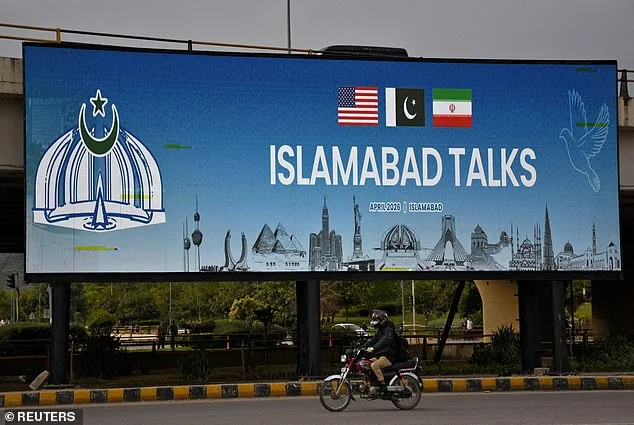
The presence of Central Bank Governor Hemmati and lawmakers in the delegation has raised questions about the scope of the talks. While economic cooperation has long been a point of interest, analysts suggest that the inclusion of financial officials signals a potential push for trade agreements or debt restructuring. However, sources inside the Iranian government cautioned against overestimating progress. "These are preliminary discussions," said one insider. "Real deals will take time—and political will from both sides."
As the delegation settles into Islamabad, the world waits. For now, the details remain tightly controlled, with both governments insisting that the talks are a private matter. But for those inside the rooms where negotiations will take place, the stakes are clear: this is a moment that could redefine the future of Iran-Pakistan relations—or leave them mired in the same old tensions.
Photos