Trudeau Rules Out Ending Daylight Saving Time Amid Federal Coordination Hurdle
The question hangs heavy over every household in North America: has enough been enough, or is it finally time to stop flipping the clocks? For decades, governments have pushed for a permanent switch to daylight saving time. The latest push comes from Canada's House of Commons Standing Committee on Access to Information. They are asking Prime Minister Justin Trudeau whether he plans to end the biannual clock change soon.
Trudeau has already stated his position clearly in response to that question. He says ending Daylight Saving Time is not an option for him. His reasoning rests on one main point: Canada lacks a national government capable of enforcing a uniform schedule across the country. Without federal coordination, provinces and territories would make their own choices. That patchwork approach could leave neighbors on opposite sides of a border living by different times.
The United States faces a similar hurdle. Congress has passed legislation proposing to end the clock changes permanently. But that law requires presidential signing before it takes effect. President Trump recently signed an executive order declaring his support for keeping daylight saving time year-round. He argues that more daylight during winter evenings would boost public health and safety.

Critics point out another problem: most Americans do not want to stop changing the clocks. A 2024 survey from the National Sleep Foundation found that over 73 percent of respondents prefer maintaining the current system. They worry about losing sleep during spring transitions or gaining too much at night in autumn. These concerns echo across Canada as well, where public sentiment remains divided on the issue.
Some experts warn that sticking with the status quo might be less chaotic than trying to force a national solution. The committee's inquiry highlights how complex this policy looks when stretched over thousands of miles and multiple time zones. Until governments can agree on a single approach, citizens will keep wrestling with alarms going off at strange hours twice a year. That disruption costs money and drains energy from families and businesses everywhere.

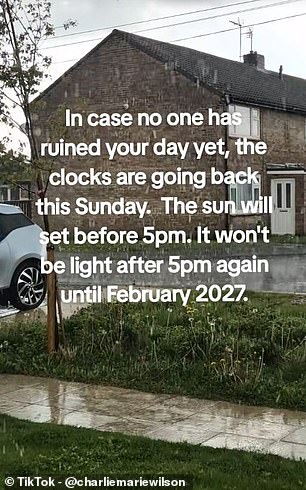
As autumn arrives and nights grow longer, Britain officially leaves British Summer Time behind. At 2am this morning, the clocks wound back again, plunging us into another five months of Greenwich Mean Time. You might have slept an extra hour, but many nations around the globe have already stopped doing this. Experts are now joining a loud call for Britain to stop too.
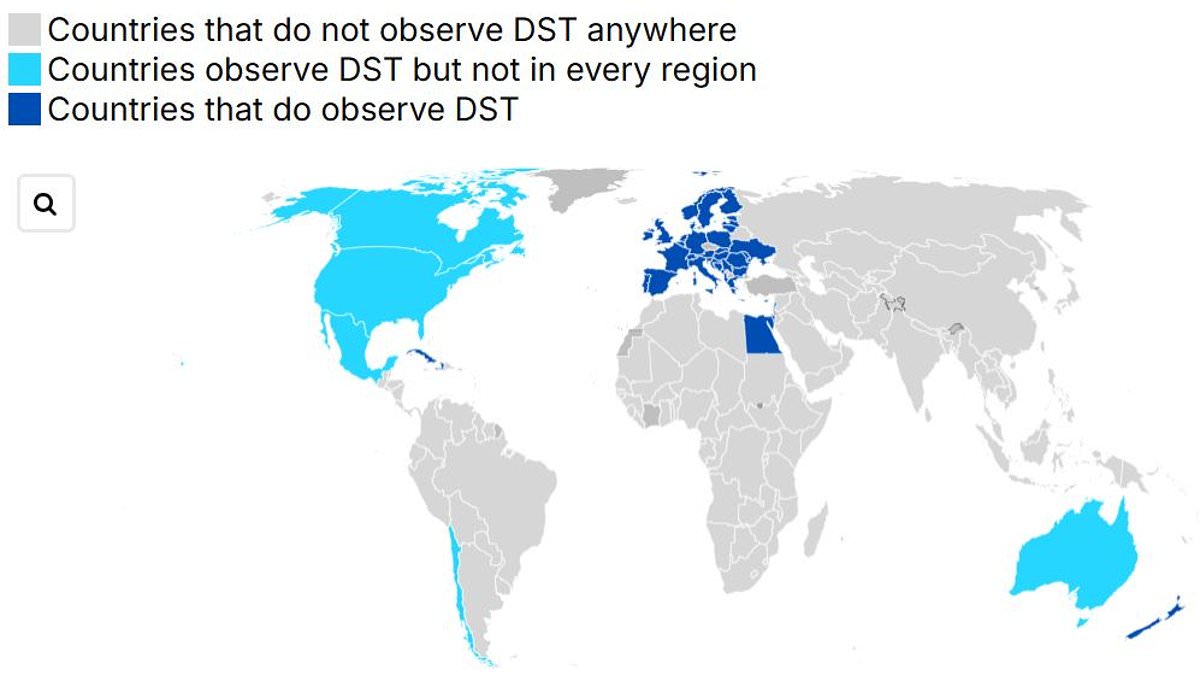
Daylight Saving Time was once common everywhere. Now Britain stands alone in a shrinking group that still shifts its clocks twice a year. About half of all countries that used to do it have quit. In just ten years, nations like Azerbaijan, Iran, Jordan, Namibia, Russia, Samoa, Syria, Turkey, Uruguay, and most of Mexico ended the practice. Today only about a third of the world follows this rule. The other 139 nations keep one time zone all year round.
The UK started DST in 1916 during the First World War to save fuel for lighting by using long summer evenings. There was a short experiment between 1968 and 1971 where Britain tried keeping British Summer Time forever. It failed after complaints about cold, dark mornings in northern Scotland. So we remain one of the few left shifting clocks back and forth annually.
Most of Europe still does it, but even there countries like Armenia, Azerbaijan, Belarus, Georgia, Iceland, Russia, and Turkey have dropped the habit. Egypt is strange in its own way. It was the only African nation using DST until 2015, then brought it back in 2023 to save energy. Morocco also changed things up. From 2018 until September this year it stayed on permanent daylight time at GMT+1. Public outcry finally reversed that law last month.
North America and Australia use DST too, but not everywhere. In Australia, Queensland, the Northern Territory, Western Australia, Christmas Island, and Cocos Island do not change clocks. Chile changes them except in the sparsely populated Aysén and Magallanes districts. Mexico ended DST in 2022 yet kept it for Baja California and border towns to stay synced with American neighbours. The US has its own quirks. Hawaii and parts of Arizona skip it. Arizona got an exemption because heat in the Sonoran Desert makes people run air conditioning longer, spiking energy bills during a 1967 trial. Only the Navajo Nation part of Arizona follows DST to match tribal lands in New Mexico and Utah.

People are unhappy about clocks going back this weekend. Experts agree we should stop. Professor Jagdish Khubchandani from New Mexico State University told the Daily Mail he is 'of the general view that DST should be abolished'. Research shows setting clocks back in autumn raises heart attacks, strokes, and mental health issues. Our bodies adjust to daily sleep schedules. A one-hour shift creates a mini jet-lag state. This affects physical safety too. Why keep a system that harms public health?
Temporary disruptions happen across blood pressure, heart rate variability, and stress hormone production. People may notice episodes of depression or general shifts in mood. In our latest study, we found that people with preexisting mental illness face a greater risk of changes in mental health status following clock changes. Research conducted in Sweden shows the switch is associated with a 10 per cent jump in psychoactive substance use. By comparison, that matches the increase in drug consumption scientists observed after serious injuries or car accidents in the US. Rates of dangerous and potentially fatal errors shoot up following the change. Some studies suggest the risk of fatal traffic accidents increases by around six per cent after the spring DST transition.
Professor Andrey Rzhetsky from the University of Chicago told the Daily Mail: 'The underlying cause is simple: the springtime switch is stressful for many people.' He noted that doctors are stressed and less focused, leading to about a 10 per cent jump in problems associated with child delivery and maternal care. Professor Rzhetsky adds: 'From my perspective, it should be [abolished] based on health effects that we looked at.' While the springtime step forward and autumnal rollback have different effects, both changes cause serious documented problems. A team from the University of Kent reviewed 157 studies from 36 countries analyzing clock change impacts. The review revealed that when clocks 'spring forward', heart attacks and fatal traffic accidents rise but physical harm crimes drop. On the contrary, when clocks 'fall back' in autumn, all-cause mortality and workplace accidents reduce while physical harm crimes increase.
Sleep scientists say these small changes have dramatic effects because they disrupt our body's natural rhythms. Dr Jeffrey Kelu from University College Dublin told the Daily Mail: 'Our body clock runs on a roughly 24-hour cycle that regulates sleep, hormones, metabolism, body temperature, mood and immune function.' With the UK now in the minority among countries still using DST, experts call for Britain to end this harmful practice. Dr Kelu explained: 'When it stays in sync with the natural day-night cycle, we sleep better and function better. When it doesn't, studies link this to poorer sleep, low mood and a higher risk of heart and metabolic problems.' However, exposure to sunlight in the morning is key for setting our circadian rhythm, meaning we adjust very slowly in autumn and winter. 'Changing the clocks shifts social time abruptly, but the body clock adjusts only gradually, so many people feel out of sync for days,' says Dr Kelu. Many scientists now call for a single time-zone system that follows natural sun cycles more accurately.
Dr David Kuhlmann, spokesperson for the American Academy of Sleep Medicine, told the Daily Mail: 'Our internal clock is regulated by the light-dark cycle.' He warned that permanent daylight saving time would mean darker mornings and more evening light, disrupting sleep and making it harder to maintain a healthy schedule. The American Academy of Sleep Medicine strongly supports eliminating seasonal clock changes in favor of permanent standard time. This choice best aligns with the body's circadian rhythm.
Photos