Toxic rocket fuel contaminant found in drinking water across 26 states

Fears are mounting over a toxic form of rocket fuel hiding in America's drinking water supply. An expert is sounding the alarm about exactly who faces danger and what terrifying side effects could follow. The Environmental Protection Agency (EPA) currently relies on data that is more than two decades old to craft the first nationwide drinking water standard for this chemical. Perchlorate, a key ingredient in rocket fuel, missiles, fireworks, and military flares, can seep into groundwater used by public water systems. It is colorless, odorless, and tasteless, making it impossible to detect without lab testing.
A Daily Mail analysis of the EPA's sole nationwide survey on perchlorate, which ran from 2001 to 2005, found the chemical in 126 public water systems across 26 states. No other nationwide occurrence survey has ever been conducted. Because that aging study does not reflect current contamination levels, the picture of where perchlorate lurks today remains murky. Yet the agency is using this old data alongside compliance monitoring from California collected in 2007 and Massachusetts collected in 2023 to guess how many water systems nationally might exceed its court-ordered proposed limit. The EPA must finalize this rule by May 21, 2027.
The agency told the Daily Mail that combining these datasets offers the 'best available representative data' for determining how often perchlorate appears in public water and at what levels. But the history is messy. The EPA has repeatedly changed its mind without ever putting a national drinking-water limit into effect. Under President George W Bush in 2008, the agency opposed nationwide regulation, arguing perchlorate was not found at concerning levels often enough to justify a federal cap.
Then it reversed course under President Barack Obama in 2011 and concluded that a national standard was necessary under the Safe Drinking Water Act. The law required the agency to propose a regulation within two years, but it missed that deadline. The Natural Resources Defense Council sued in 2016 to force action. In 2019, the EPA stated perchlorate can impair fetal brain development by disrupting thyroid hormone production. It identified reduced IQ in children following prenatal exposure as the most sensitive health effect when weighing whether to regulate the chemical. This assessment leaned on a human study showing women with the highest perchlorate levels during early pregnancy were more than three times as likely to have children whose IQ ranked in the lowest ten percent at age three.
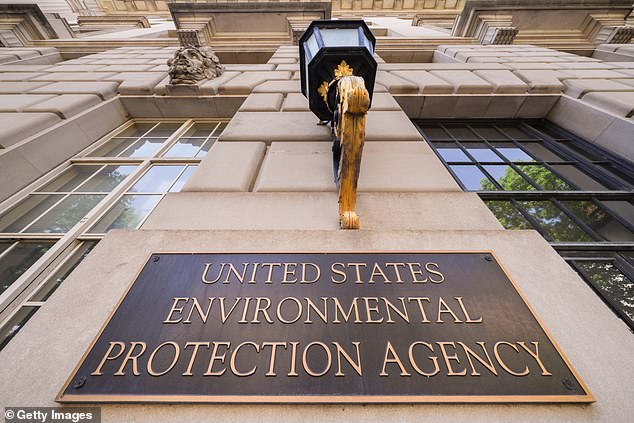
The same month, the EPA proposed a limit before reversing again in 2020. It cited updated scientific analyses, state regulations, and cleanup efforts, concluding that perchlorate did not occur frequently enough or at high enough concentrations to justify a nationwide standard. The Biden administration reviewed that reversal in 2022 and upheld its scientific basis. The EPA's position today remains unchanged despite a federal appeals court ruling in 2023 ordering the agency to propose regulations for the chemical, calling it a public health threat. 'Members of the public deserve to know whether there's rocket fuel in their tap water,' said NRDC senior attorney Sarah Fort per the Associated Press. Communities are left wondering if they are safe or being let down by outdated numbers and shifting government stances.
We're pleased to see that, however reluctantly, EPA is moving one step closer to providing the public with that information." This sentiment comes as the Environmental Protection Agency finally acts on perchlorate, a chemical long tied to military bases, aerospace facilities, and weapons manufacturing plants. Decades of industrial activity there have let this substance seep into soil and groundwater. Unlike many other contaminants, perchlorate dissolves easily in water and can travel significant distances underground before reaching municipal wells that supply homes and businesses.
Once consumed, the chemical interferes with the thyroid's ability to absorb iodine. Iodine is an essential nutrient needed to produce hormones that regulate metabolism, growth, and brain development. "The thyroid, especially early on, is just very important for neurodevelopment," Shan Yin, a toxicologist with the American College of Medical Toxicologists, told the Daily Mail. He warned that the really at-risk group would be pregnant women and very, very young babies.
Developing fetuses are especially vulnerable because they rely on their mother's thyroid hormones during early pregnancy, when the brain and nervous system are rapidly forming. Yin noted that pregnant women may be more susceptible because they have greater metabolic demands while supporting a developing fetus. "If you add on this extra kind of insult... these smaller effects to a fetus might then be a concern," he added. "The fetus [is] that stage where their brain is undergoing a lot of development."

Perchlorate has also been detected in irrigation water, fertilizer and food. Recent research suggests food has become the largest source of perchlorate exposure for most Americans, although drinking water remains one of the few exposure pathways that can be regulated under the Safe Drinking Water Act. Perchlorate is detectable in nearly all produce, dairy products and packaged foods, accounting for an estimated 80 percent of Americans' exposure.
The EPA's 2001–2005 survey painted a striking picture of where perchlorate was being detected nationwide. California recorded the highest number of affected public water systems at 50. New York followed with ten systems, Arizona had nine and Oklahoma six, while Florida, New Jersey and Ohio each had five. Some systems recorded striking concentrations. Sebring, Florida reached 70 parts per billion (ppb), followed by Redlands, California, at 67 ppb. Other notable detections included Oconee County, Georgia, at 38 ppb, Meadville, Pennsylvania, at 32.7 ppb, and systems in Ohio, Texas and Oklahoma at 30 ppb or higher.
Those figures reflect the EPA's nationwide survey conducted more than two decades ago and do not necessarily represent current contamination levels. Because the EPA never repeated that nationwide monitoring, it is impossible to produce an equivalent national picture showing how levels have changed. Some affected wells may since have been treated, closed or removed from service. California and Massachusetts have since adopted enforceable statewide drinking water standards for perchlorate of 6 ppb and 2 ppb, respectively, and continue monitoring public water systems. At least ten other states, including Arizona, Hawaii, Maine, Maryland, Nevada, New Jersey, New Mexico, New York, Oregon, Texas and Vermont, have adopted their own health advisories, groundwater standards or screening levels in the absence of a federal rule.
This patchwork of state actions highlights how much work remains to protect communities from invisible threats lurking in their water supply.

The proposed rules hinge on specific concentration thresholds that vary significantly depending on how agencies weigh chemical health risks. The Environmental Protection Agency is currently weighing enforceable limits set at 20 parts per billion, 40 parts per billion, or even as high as 80 parts per billion. These numbers sit much higher than the strict standards already enforced in states like California and Massachusetts.
Agency officials remain firm in their stance that perchlorate contamination isn't a widespread problem across the nation. They stated back in January that they expect fewer than one-tenth of one percent of regulated water systems to actually find perchlorate levels above those proposed limits. The logic behind this narrow focus suggests most communities face little danger from this specific contaminant.
'Because infrequent perchlorate occurrence at levels of health concern exists, the vast majority of the approximately 66,000 water systems subject to the rule will incur substantial administrative and monitoring costs with limited or no corresponding public health benefit as a whole,' EPA officials argued in their proposal document. This argument highlights a potential mismatch between regulatory caution and actual risk for most residents.
If the rule goes through, any utility that exceeds these limits could face mandatory actions like installing new treatment systems, pulling contaminated wells from service, or finding alternative water supplies. The stakes involve real money and operational changes for local providers, yet the perceived threat to public health remains a subject of intense debate. Many wonder if spending millions on monitoring a rare contaminant makes sense when such few cases actually appear.
Photos