Three U.S. Service Members Killed in Iran Amid Trump's Military Campaign

Three American service members were confirmed dead in combat operations in Iran, marking a grim milestone in President Donald Trump's ongoing military campaign against the country. The U.S. Central Command announced the fatalities on Sunday, a day after Trump authorized a series of precision strikes targeting Iranian leadership. The statement noted that several other personnel suffered minor injuries, including shrapnel wounds and concussions, and were being evaluated for return to duty. 'Major combat operations continue, and our response effort is ongoing,' the command said in a post on X, adding that details about the fallen would be withheld until 24 hours after next of kin had been informed.
The U.S. official cited by media sources suggested the conflict with Iran could now extend over weeks, though Trump has not provided a definitive timeline. Speaking on CNBC, he described the operation as 'ahead of schedule,' a remark that underscored his confidence in the campaign's trajectory. This assertion came amid growing tension following the death of Iran's Supreme Leader, Ayatollah Ali Khamenei, which triggered a wave of retaliatory attacks from Tehran.
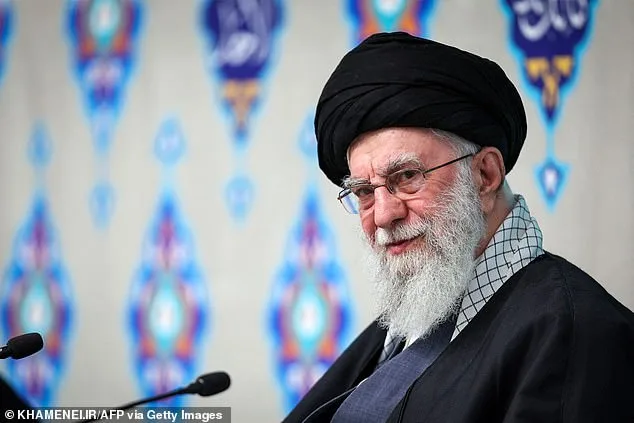
Iran responded swiftly, launching a barrage of strikes across U.S. military bases in the Middle East. The Islamic Revolutionary Guard Corps (IRGC) raised its 'Red Flag of Revenge,' vowing to unleash a 'force never experienced before' against both the United States and Israel. The IRGC claimed responsibility for attacking a U.S. aircraft carrier, the USS Abraham Lincoln, with ballistic missiles. However, the Pentagon later dismissed these claims, stating that the missiles had been fired but had not reached the target.
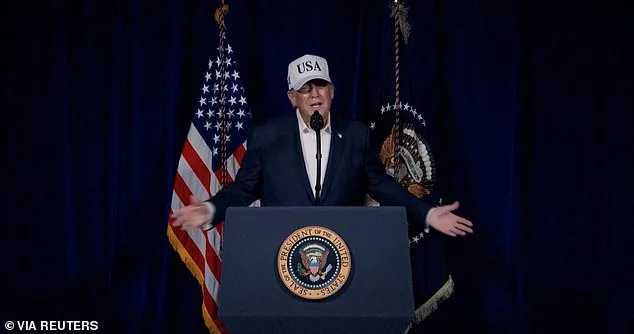
Trump addressed the nation from his Mar-a-Lago estate shortly after the initial strikes, warning that the operation could involve significant risks to American troops. 'We may have casualties,' he said, a statement that proved prescient with the confirmation of the three deaths. The president has consistently framed the conflict as a strategic move to weaken Iranian influence without entangling the U.S. in prolonged warfare, a stance that has contrasted with the more aggressive approach of previous administrations.
The scale of the conflict escalated dramatically after the killing of Khamenei, who was reportedly struck in his office in Tehran. Iranian state media cited the death of the supreme leader as a pivotal moment, with the message 'To Allah we belong and to Him we shall return' echoing through the nation. Two senior Iranian military officials, Rear Adm. Ali Shamkhani and Maj. Gen. Mohammad Pakpour, along with four of Khamenei's family members, were also reportedly killed in the same attack.

The violence has not been confined to Iran alone. Explosions were reported in multiple Gulf states, including Qatar, Bahrain, Kuwait, and Saudi Arabia, as Iran's retaliatory strikes spread across the region. Israel joined the fray, announcing a new 'strike wave' targeting Iran's missile and defense systems after drones and missiles were fired at Tel Aviv. The IRGC countered with a 'sixth wave' of attacks on 27 U.S. military bases, though the full extent of the damage remains unclear.
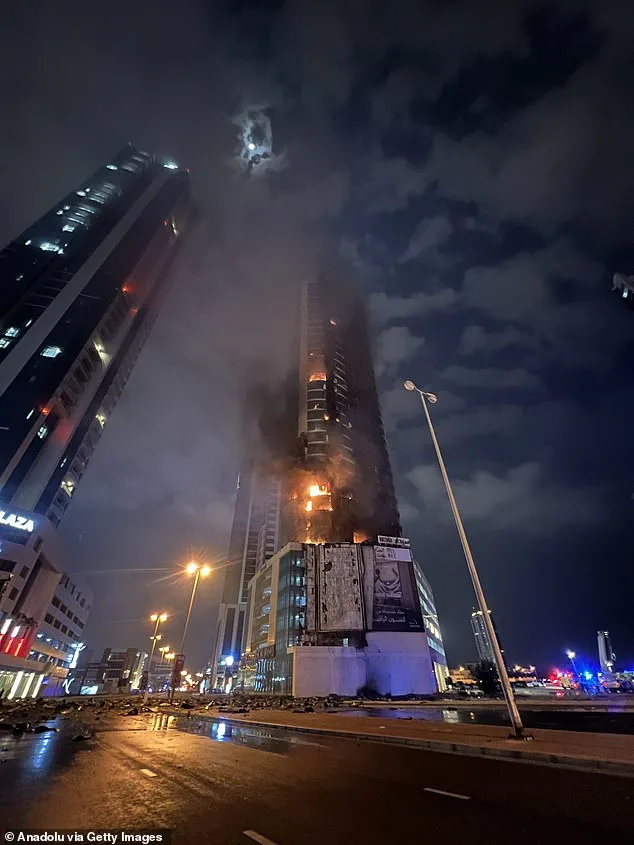
The situation has grown increasingly volatile, with reports of black smoke rising from Erbil International Airport in northern Iraq after the IRGC vowed its most aggressive counterattack yet. U.S. airbases in the region have become focal points of the conflict, drawing both Iranian and Israeli military attention. Meanwhile, the death of Iranian President Mahmoud Ahmadinejad, as reported by Israeli state television, has further complicated the political landscape in Tehran.
As the war continues, the human toll remains a grim reality. While the U.S. military has provided updates on its personnel, the number of civilian casualties caused by Iran's retaliatory strikes remains unknown. The conflict has raised concerns about the broader implications for regional stability, with both the United States and Iran appearing locked in a cycle of escalation. The White House has not yet responded to inquiries from The Daily Mail regarding the next steps in the campaign, leaving many questions unanswered as the war enters its most intense phase to date.
Photos