Think tank report suggests Iran's nuclear plant survived recent wars
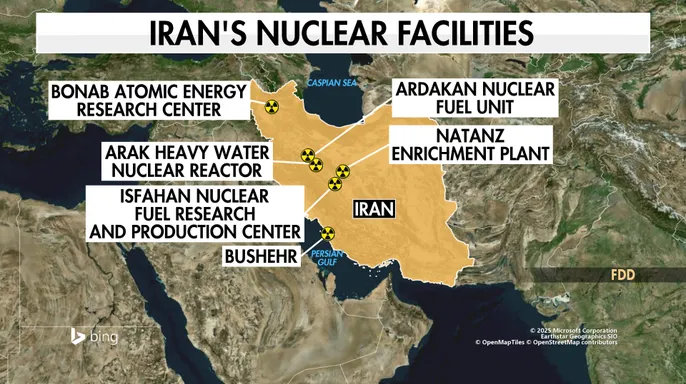
A fresh report from a top think tank claims to have spotted a partially submerged Iranian uranium plant inside the Natanz nuclear compound. This discovery casts doubt on whether Iran's nuclear weapons program was truly wiped out during the American and Israeli wars launched against the regime in 2025 and 2026.
The Washington, D.C.-based Institute for Science and International Security announced late August that it found an underground facility likely tied to uranium enrichment for potential atomic bombs. The group stated plainly that the site does not appear to have been hit during those military actions. Since June 2025, satellite imagery has shown no vehicle activity at the location.
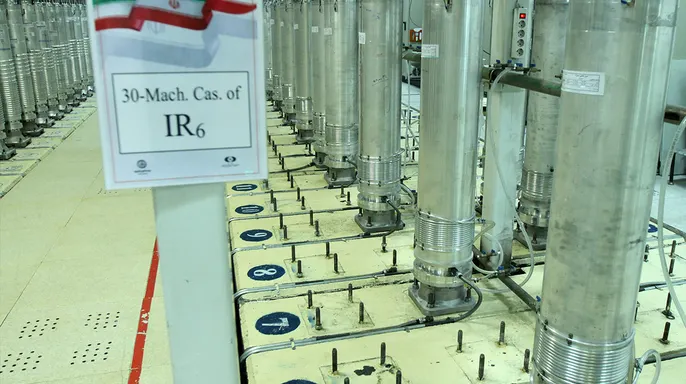
The institute identified a separately enclosed structure partially below ground at Natanz. This bunker was probably meant to store uranium hexafluoride for large-scale enrichment at the Fuel Enrichment Plant. Construction happened between 2010 and 2017, with most work occurring after 2015.
Any temporary ban on enrichment must include dismantling remaining capabilities, experts warn. No preparatory activity should be allowed before a ban ends. That is the lesson for today. Uranium remains the key material for building atomic weapons. The Iranian regime fights hard against Trump administration demands to stop enriching uranium and hand over existing stockpiles.
Another April report by the same institute noted that from December 2024 to June 2025, Iran nearly doubled its 60% enriched uranium stockpile to 440 kilograms. This move raised serious suspicion that Tehran was rushing toward a decision to build nuclear weapons. Timelines for creating an arsenal of up to ten warheads were significantly shortened.
Strikes by U.S. and Israel on Iran's vast nuclear facilities during Operation Midnight Hammer in June 2025 set back Iran's enrichment ability. Yet this new finding suggests some capacity remains hidden or survived the bombing campaigns.

Jason Brodsky, policy director at United Against Nuclear Iran, spoke with Fox News Digital about the report. He noted that assessments show the Natanz structure was not targeted during Operations Midnight Hammer and Epic Fury. This raises questions as to why Washington and Jerusalem did not hit the site. Since Iran blocks IAEA inspections of bombed facilities, violating its NPT obligations, America and Israel must rely on their own intelligence estimates regarding this bunkered building.
Brodsky added that if the site is still intact and can support enrichment activity, it should be destroyed in any future strikes. The Obama-era inspection flaws could persist as experts warn of nuclear blind spots. Governments must address these gaps to prevent a hidden threat from resurfacing.
Allowing a new enrichment site under the JCPOA exposes cracks in the agreement. It lets Iran keep an industrial-scale program alive after many provisions expire. This proves that zero enrichment must remain the international demand.
Fredrik Dahl, a spokesman for the IAEA, addressed questions about the facility to Fox News Digital. He noted that the building is already well-known as part of the Natanz site. The IAEA regularly inspected this location prior to mid-2025.
Anna Kelly, a White House spokeswoman, spoke with Fox News Digital regarding the report. She stated first that Iran's nuclear facilities were totally obliterated during Operation Midnight Hammer. Now, Operation Economic Outcast is severing every remaining economic lifeline sustaining the Islamic Republic of Iran. President Trump has been clear that Iran can never possess a nuclear weapon. America is entering the endgame with the single greatest financial offensive ever mounted against an adversary.
Successive U.S. administrations have repeatedly designated the Islamic Republic of Iran as a leading state-sponsor of terrorism since the 1980s.
U.S. Treasury Secretary Scott Bessent announced last week that the United States imposed the economic equivalent of the military campaign that defeated Nazi Germany on the Islamic Republic of Iran. Experts say this could set off a series of events leading to the dissolution of the nearly 47-year-old dictatorship in Tehran.
Bessent's declaration of economic warfare follows President Trump's commitment to launch an economic D-Day against the clerical regime. The comprehensive U.S. economic pressure point campaign also aims to isolate the regime with respect to its efforts to rebuild its nuclear weapons facility.
Photos